Browse by Category
Fiction
- Action & Adventure
- African American
- Anthologies
- Children's Fiction
- Classics
- Comics & Graphic Novels
- Coming of Age
- Contemporary
- Cultural & Regional
- Drama
- Erotica
- Fantasy
- General
- Historical Fiction
- Horror
- Humor & Satire
- Literary Fiction
- Mystery, Thriller & Suspense
- Poetry
- Religious & Inspirational
- Romance
- Science Fiction
- Short Stories
- War & Military
- Westerns
- Women's Fiction
- Young Adult
Non-Fiction
- Antiques & Collectibles
- Arts & Photography
- Biographies & Memoirs
- Business & Money
- Children's Non-Fiction
-
Computers & Technology
- Artificial Intelligence
- Computer Science
- Cybersecurity & Cryptography
- Data Science & Analytics
- Databases & Big Data
- Game Development & Design
- General
- Hardware & DIY
- Mobile App Development
- Networking & Cloud Computing
- Operating Systems
- Programming
- Robotics
- Software
- Software Engineering
- User Experience (UX) & Design
- Web Development & Design
- Cooking, Food & Wine
- Crafts, Hobbies & Home
- Education & Teaching
- Engineering
- General
- Health, Fitness & Dieting
-
History
- African History
- African History - North Africa
- African History - Sub-Saharan Africa
- American History
- American History - 20th Century
- American History - Civil War
- American History - Colonial Period
- Ancient History
- Asian History
- Asian History - China
- Asian History - India
- Asian History - Japan
- Asian History - Southeast Asia
- European History
- European History - Ancient Greece
- European History - Ancient Rome
- European History - Medieval
- European History - Modern
- European History - Renaissance
- General
- Middle Eastern History
- Military History
- Military History - Aviation
- Military History - Naval
- Social & Cultural History
- World History
- Humor & Entertainment
- Industrial Technology
- Language Learning
- Law
- LGBTQ+ Non-Fiction
- Literary Criticism
- Medical Books
- Parenting & Relationships
- Philosophy
- Politics & Social Sciences
- Reference
- Religion & Spirituality
-
Science & Math
- Agricultural Sciences
- Astronomy & Space Science
- Behavioral Sciences
- Biological Sciences
- Botany & Plant Science
- Chemistry
- Earth Sciences
- Engineering - Chemical
- Engineering - Civil
- Engineering - Electrical
- Engineering - Mechanical
- Environment
- General
- Geology
- Mathematics
- Nature & Ecology
- Oceanography
- Paleontology
- Physics
- Statistics
- Self-Help
- Sports & Outdoors
- Study Aids
- Sustainability & Green Living
- Textbooks
- Transportation
- Travel
- True Crime
- Urban Planning & Development
- Veterinary Medicine
- Writing & Publishing
Jump to Section
MixCache.com Total Access
Unlimited reading and audiobooks for every book published by MixCache.com.
Included titles carry the MTA badge.
Learn more →
Perestroika Playbook
MTA
A Practical Guide to Reform Movements, Economic Restructuring, and Political Transition
About this book:
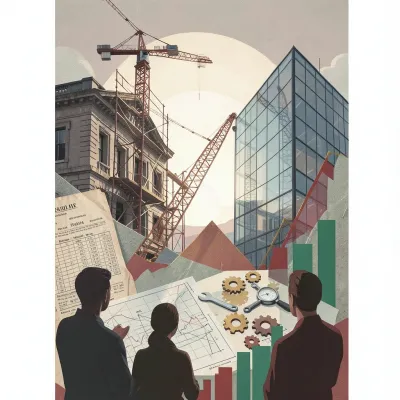
In *Perestroika Playbook*, the author provides a technical and institutional post-mortem of Mikhail Gorbachev’s attempt to restructure the Soviet Union’s stagnant command economy. The book moves beyond political history to examine reform as a "living laboratory" of policy design, analyzing how specific instruments—such as the 1987 Law on State Enterprise, the legalization of cooperatives, and the transition to a two-tier banking system—were intended to rewire incentives and redistribute authority. It argues that the fundamental challenge was not just a lack of resources, but "systemic inertia" born from decades of information distortions and soft budget constraints that allowed inefficiency to persist without consequence.
The narrative details how reformers attempted to move from central commands to indirect controls, using *glasnost* (openness) as an economic tool to surface hidden costs and mobilize public support. However, the book highlights a recurring "design-implementation gap." By granting enterprises autonomy before establishing rational prices, clear property rights, or credible bankruptcy procedures, the state accidentally created a hybrid system. This environment rewarded "insider" arbitrage and asset-stripping rather than genuine productivity. These economic contradictions were further exacerbated by political democratization, which fragmented central authority and turned fiscal federalism into a high-stakes bargaining game between Moscow and increasingly assertive republics.
A significant portion of the text is dedicated to the "sequencing and pace" of reform. The author contrasts the Soviet "gradualist" approach with the "shock therapy" of Eastern Europe and the authoritarian-led marketization of China. The book concludes that perestroika faltered because its partial reforms created a "quagmire" where the disadvantages of both plan and market persisted simultaneously. The state’s inability to harden budget constraints in the military-industrial complex and the agricultural sector meant that resources remained locked in unproductive uses, while inflation and shortages eroded the social contract, leading to the systemic collapse of 1991.
Ultimately, the book distills these historical failures into a "practical playbook" for modern reformers. It emphasizes that institutional credibility—built through enforceable laws, transparent banking, and a clear constitutional order—is more vital than the elegance of an economic blueprint. The central lesson is that reform is a "systems problem": changing incentives in one node of a complex economy will be nullified if the surrounding institutions remain rigid. For practitioners, the Soviet experience serves as a warning that ambiguity, while useful for building initial coalitions, becomes a source of terminal instability if it is not replaced by a settled legal and economic order.
What You'll Find Inside:
- Perestroika’s core diagnosis: chronic information asymmetries and misaligned incentives drove shortages, low productivity, and soft budget constraints in the Soviet command economy.
- Key reform instruments—enterprise autonomy, cooperative legalization, gradual price reform, fiscal federalism, and banking liberalization—were introduced piecemeal, creating hybrid systems that often generated new distortions.
- Glasnost functioned as an economic tool to expose hidden costs and mobilize public scrutiny, but its transparency also amplified social tensions and undermined reform credibility when institutions failed to act on the information.
- Political liberalization (democratization, party‑state restructuring) and economic reform proceeded simultaneously, multiplying veto players and turning distributional conflicts into high‑stakes contests that eroded coalition cohesion.
- The reform’s ultimate failure stemmed from sequencing gaps, institutional inertia, and the inability to build credible accountability mechanisms (hard budget constraints, property rights, enforceable courts) to sustain early gains.
Who's It For:
This book is intended for students and scholars of political economy, transition studies, and public policy who seek a detailed, applied analysis of perestroika as a case study in systemic reform. It will also benefit practitioners, policymakers, and advisors involved in designing or implementing economic restructuring and political transition in contemporary contexts, offering concrete lessons on instrument design, sequencing, coalition management, and institutional building.
Table of Contents:
- Introduction
- Chapter 1 The Late-Soviet Predicament: Stagnation, Shortages, and Systemic Inertia
- Chapter 2 Reformers Ascendant: Gorbachev’s Coalition and Mandate
- Chapter 3 Diagnosing the Plan: Information Problems and Incentives
- Chapter 4 Perestroika’s Policy Logic: From Central Commands to Indirect Controls
- Chapter 5 The Law on State Enterprise (1987): Autonomy and Accountability
- Chapter 6 Cooperatives and Small Business (1988–1989): Legalizing the Gray Economy
- Chapter 7 Price Reform: Rationing, Inflation, and the Politics of Pain
- Chapter 8 Fiscal Federalism: Center–Republic Bargains and Soft Budgets
- Chapter 9 Foreign Trade and Investment: Opening the Command Economy
- Chapter 10 Banking and Finance: From Monobank to a Two-Tier System
- Chapter 11 Agriculture and Food Supply: Overcoming the Kolkhoz Constraint
- Chapter 12 Energy and Heavy Industry: Winners, Losers, and Lock-In
- Chapter 13 Glasnost: Transparency as an Economic Instrument
- Chapter 14 Party–State Restructuring: Separation of Powers and the 19th CPSU Conference
- Chapter 15 Democratization and Elections: New Rules of Political Competition
- Chapter 16 Media, Civil Society, and Public Opinion: Managing Mobilization
- Chapter 17 Law, Courts, and Property Rights: Building a Legal Order
- Chapter 18 Nationalities and the Union Question: From Baltics to Caucasus
- Chapter 19 The Military-Industrial Complex: Conversion and Resistance
- Chapter 20 The Social Contract: Wages, Welfare, and Safety Nets
- Chapter 21 Sequencing and Pace: Gradualism, Shock Therapy, and Path Dependence
- Chapter 22 Crisis and Counterreform: 1990–1991 and the August Coup
- Chapter 23 Comparative Mirrors: China’s Reform and Eastern Europe’s Transition
- Chapter 24 Why Perestroika Faltered: Institutions, Interests, and Ideas
- Chapter 25 Lessons for Reformers: A Practical Playbook for Transition
Author:
Published By:
Date Published:
May 2, 2026
Type:
Nonfiction
Language:
English
Word Count:
69,439 words
Reading Time:
4 hours 52 minutes
Sample:
Order:
Order Perestroika Playbook (Paperback) on MixCache.com:
Buy NowPrint copy is made to order and ships worldwide. Includes the ebook free, ready to read instantly.
$5 account credit for all new MixCache.com accounts, usable toward any ebook purchase!*