Browse by Category
Fiction
- Action & Adventure
- African American
- Anthologies
- Children's Fiction
- Classics
- Comics & Graphic Novels
- Coming of Age
- Contemporary
- Cultural & Regional
- Drama
- Erotica
- Fantasy
- General
- Historical Fiction
- Horror
- Humor & Satire
- Literary Fiction
- Mystery, Thriller & Suspense
- Poetry
- Religious & Inspirational
- Romance
- Science Fiction
- Short Stories
- War & Military
- Westerns
- Women's Fiction
- Young Adult
Non-Fiction
- Antiques & Collectibles
- Arts & Photography
- Biographies & Memoirs
- Business & Money
- Children's Non-Fiction
-
Computers & Technology
- Artificial Intelligence
- Computer Science
- Cybersecurity & Cryptography
- Data Science & Analytics
- Databases & Big Data
- Game Development & Design
- General
- Hardware & DIY
- Mobile App Development
- Networking & Cloud Computing
- Operating Systems
- Programming
- Robotics
- Software
- Software Engineering
- User Experience (UX) & Design
- Web Development & Design
- Cooking, Food & Wine
- Crafts, Hobbies & Home
- Education & Teaching
- Engineering
- General
- Health, Fitness & Dieting
-
History
- African History
- African History - North Africa
- African History - Sub-Saharan Africa
- American History
- American History - 20th Century
- American History - Civil War
- American History - Colonial Period
- Ancient History
- Asian History
- Asian History - China
- Asian History - India
- Asian History - Japan
- Asian History - Southeast Asia
- European History
- European History - Ancient Greece
- European History - Ancient Rome
- European History - Medieval
- European History - Modern
- European History - Renaissance
- General
- Middle Eastern History
- Military History
- Military History - Aviation
- Military History - Naval
- Social & Cultural History
- World History
- Humor & Entertainment
- Industrial Technology
- Language Learning
- Law
- LGBTQ+ Non-Fiction
- Literary Criticism
- Medical Books
- Parenting & Relationships
- Philosophy
- Politics & Social Sciences
- Reference
- Religion & Spirituality
-
Science & Math
- Agricultural Sciences
- Astronomy & Space Science
- Behavioral Sciences
- Biological Sciences
- Botany & Plant Science
- Chemistry
- Earth Sciences
- Engineering - Chemical
- Engineering - Civil
- Engineering - Electrical
- Engineering - Mechanical
- Environment
- General
- Geology
- Mathematics
- Nature & Ecology
- Oceanography
- Paleontology
- Physics
- Statistics
- Self-Help
- Sports & Outdoors
- Study Aids
- Sustainability & Green Living
- Textbooks
- Transportation
- Travel
- True Crime
- Urban Planning & Development
- Veterinary Medicine
- Writing & Publishing
Jump to Section
MixCache.com Total Access
Unlimited reading and audiobooks for every book published by MixCache.com.
Included titles carry the MTA badge.
Learn more →
Khrushchev's Thaw and Its Limits
MTA
Reform, Culture, and Repression in the 1950s–1960s USSR
About this book:
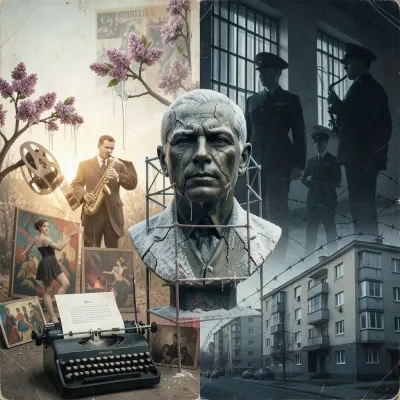
*Khrushchev’s Thaw and Its Limits* provides a comprehensive analysis of the transformative yet paradoxical era in the Soviet Union between 1953 and 1964. The book traces the systemic shift following Stalin’s death, beginning with the dismantling of the architecture of terror and culminating in Nikita Khrushchev’s "Secret Speech," which denounced the cult of personality. This period, known as the Thaw, catalyzed significant advancements in science—highlighted by the Space Race—and fostered a newfound, albeit monitored, vibrancy in literature, film, and journalism. Everyday life was equally reshaped by massive housing projects, a rebalancing of the economy toward consumer goods, and a generational shift in youth culture that cautiously embraced global influences.
However, the narrative emphasizes that these reforms were never intended to dismantle the communist system, but rather to modernize and preserve it. The state maintained a firm grip on power through evolving methods of surveillance and administrative policing, replacing mass terror with "socialist legality" and bureaucratic harassment. Key flashpoints, such as the bloody suppression of the 1962 Novocherkassk worker protests and the military interventions in Poland and Hungary, serve as stark reminders of the regime's red lines. While cultural figures and scientists tested the boundaries of the permissible, the threat of censorship and professional exile remained a constant deterrent against genuine political pluralism.
The book also explores the complexities of managing a multinational empire and a rigid command economy. Khrushchev’s ambitious but often erratic experiments, such as the Virgin Lands campaign and the decentralization of economic councils (sovnarkhozy), frequently resulted in logistical chaos and ecological strain. Internationally, the doctrine of "peaceful coexistence" coexisted with nuclear brinkmanship and the deepening ideological fracture of the Sino-Soviet split. These cumulative tensions—ranging from economic instability to the alienation of the Party elite—ultimately led to Khrushchev’s bloodless removal from power in October 1964.
Ultimately, the book argues that the Thaw was an uneven recalibration of power that exposed both the adaptability and the inherent fragility of the Soviet project. While the subsequent Brezhnev era sought to restore stability and bureaucratic order, the legacies of the Thaw persisted in the collective memory and social fabric of the USSR. By expanding the realm of the "sayable" and fostering a technically skilled, more skeptical intelligentsia, the era planted the seeds of reform and dissent that would resurface in later decades, proving that the ice, once melted, could never fully refreeze.
What You'll Find Inside:
- The book explores how Khrushchev's Thaw simultaneously liberalized culture and science while maintaining firm political boundaries, revealing the Soviet system's capacity for selective openness without relinquishing control.
- It examines key cultural developments including the publication of Solzhenitsyn's 'One Day in the Life of Ivan Denisovich,' the cinematic innovations of the period, and the vibrant but constrained literary journals that tested the limits of permissible expression.
- The work details scientific and technological achievements like the Sputnik launches and Gagarin's space flight, while analyzing how ideological constraints persisted in fields such as genetics and cybernetics despite pragmatic rehabilitations.
- It investigates social and economic transformations including the mass housing program (khrushchevkas), the Virgin Lands campaign, and changing patterns of urban life, consumption, and youth culture during the period.
- The book analyzes the limits of reform through crises like the Hungarian Uprising of 1956, the Novocherkassk shootings of 1962, and the Sino-Soviet split, demonstrating how the state reasserted control when challenged.
Who's It For:
This book is ideal for students and scholars of Soviet history, Cold War studies, and 20th-century political systems who seek a nuanced understanding of how reform and repression coexisted during Khrushchev's era. It will particularly benefit researchers interested in the interplay between cultural liberalization, scientific advancement, and political control in authoritarian contexts. General readers with a strong background in Soviet history who want to move beyond simplistic narratives of the Thaw will also find valuable insights into this complex period.
Table of Contents:
- Introduction
- Chapter 1 After Stalin: Inheriting a System
- Chapter 2 The New Course: Early Reforms and Retreats
- Chapter 3 The Secret Speech and the Politics of De‑Stalinization
- Chapter 4 Unfreezing the Press: Publishing, Journals, and Debate
- Chapter 5 Laboratories of Progress: Science, Technology, and the Space Race
- Chapter 6 Literature at Liberty’s Edge
- Chapter 7 Screens and Stages: Film and Theater in a Looser Climate
- Chapter 8 Art, Architecture, and the Shape of the Everyday
- Chapter 9 Youth, Komsomol, and Generational Change
- Chapter 10 Faith Under Pressure: Religion and the Atheist Campaign
- Chapter 11 Nations Within: The Thaw in the Republics
- Chapter 12 Law, Justice, and the Fate of the Gulag
- Chapter 13 Surveillance, Policing, and the Boundaries of Dissent
- Chapter 14 Fields of Promise: Virgin Lands and Rural Transformation
- Chapter 15 Homes, Consumption, and the New Urban Life
- Chapter 16 Rethinking the Plan: Economic Debates and the Sovnarkhoz
- Chapter 17 Peaceful Coexistence and Confrontation: Foreign Policy in Motion
- Chapter 18 The Shock of 1956: Poland, Hungary, and Soviet Power
- Chapter 19 Fracturing the Socialist Camp: The Sino–Soviet Split
- Chapter 20 Flashpoints of Control: Novocherkassk and Other Crises
- Chapter 21 Words Underground: Samizdat, Clubs, and Civic Experiment
- Chapter 22 Family, Work, and the Social Contract
- Chapter 23 Between Innovation and Dogma: Science after Lysenko
- Chapter 24 October 1964: The Fall of Khrushchev
- Chapter 25 After the Thaw: Legacies, Memories, and Paths Not Taken
Author:
Published By:
Date Published:
May 2, 2026
Type:
Nonfiction
Language:
English
Word Count:
66,047 words
Reading Time:
4 hours 38 minutes
Sample:
Order:
Order Khrushchev's Thaw and Its Limits (Hardcover) on MixCache.com:
Buy NowPrint copy is made to order and ships worldwide. Includes the ebook free, ready to read instantly.
$5 account credit for all new MixCache.com accounts, usable toward any ebook purchase!*