Browse by Category
Fiction
- Action & Adventure
- African American
- Anthologies
- Children's Fiction
- Classics
- Comics & Graphic Novels
- Coming of Age
- Contemporary
- Cultural & Regional
- Drama
- Erotica
- Fantasy
- General
- Historical Fiction
- Horror
- Humor & Satire
- Literary Fiction
- Mystery, Thriller & Suspense
- Poetry
- Religious & Inspirational
- Romance
- Science Fiction
- Short Stories
- War & Military
- Westerns
- Women's Fiction
- Young Adult
Non-Fiction
- Antiques & Collectibles
- Arts & Photography
- Biographies & Memoirs
- Business & Money
- Children's Non-Fiction
-
Computers & Technology
- Artificial Intelligence
- Computer Science
- Cybersecurity & Cryptography
- Data Science & Analytics
- Databases & Big Data
- Game Development & Design
- General
- Hardware & DIY
- Mobile App Development
- Networking & Cloud Computing
- Operating Systems
- Programming
- Robotics
- Software
- Software Engineering
- User Experience (UX) & Design
- Web Development & Design
- Cooking, Food & Wine
- Crafts, Hobbies & Home
- Education & Teaching
- Engineering
- General
- Health, Fitness & Dieting
-
History
- African History
- African History - North Africa
- African History - Sub-Saharan Africa
- American History
- American History - 20th Century
- American History - Civil War
- American History - Colonial Period
- Ancient History
- Asian History
- Asian History - China
- Asian History - India
- Asian History - Japan
- Asian History - Southeast Asia
- European History
- European History - Ancient Greece
- European History - Ancient Rome
- European History - Medieval
- European History - Modern
- European History - Renaissance
- General
- Middle Eastern History
- Military History
- Military History - Aviation
- Military History - Naval
- Social & Cultural History
- World History
- Humor & Entertainment
- Industrial Technology
- Language Learning
- Law
- LGBTQ+ Non-Fiction
- Literary Criticism
- Medical Books
- Parenting & Relationships
- Philosophy
- Politics & Social Sciences
- Reference
- Religion & Spirituality
-
Science & Math
- Agricultural Sciences
- Astronomy & Space Science
- Behavioral Sciences
- Biological Sciences
- Botany & Plant Science
- Chemistry
- Earth Sciences
- Engineering - Chemical
- Engineering - Civil
- Engineering - Electrical
- Engineering - Mechanical
- Environment
- General
- Geology
- Mathematics
- Nature & Ecology
- Oceanography
- Paleontology
- Physics
- Statistics
- Self-Help
- Sports & Outdoors
- Study Aids
- Sustainability & Green Living
- Textbooks
- Transportation
- Travel
- True Crime
- Urban Planning & Development
- Veterinary Medicine
- Writing & Publishing
Jump to Section
MixCache.com Total Access
Unlimited reading and audiobooks for every book published by MixCache.com.
Included titles carry the MTA badge.
Learn more →
Kurdish, Baluch, and Minority Politics in Iran
MTA
A focused study of ethnic minorities, autonomy demands, and state integration policies
About this book:
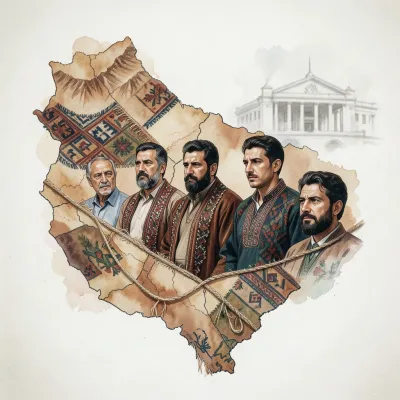
*Kurdish, Baluch, and Minority Politics in Iran* offers a comprehensive interdisciplinary analysis of ethnic and religious minorities within the Iranian state, specifically focusing on the Kurdish, Baluch, Azeri, and Arab communities. The book explores the historical evolution of these groups from the semi-autonomous tribal structures of the Qajar era through the centralized nation-building projects of the Pahlavi dynasty and the ideological governance of the Islamic Republic. It frames minority politics as a dynamic "center-periphery" struggle, where the state utilizes development, security operations, and political co-optation to manage regional identities that frequently demand greater autonomy and cultural recognition.
The text examines the specific grievances of each group: the Kurds’ long-standing struggle for political and linguistic rights; the Baluch community’s navigation of frontier economies and sectarian marginalization as Sunnis in a Shi‘i state; the Azeris’ paradox of deep economic integration alongside durable cultural claims; and the Arab population of Khuzestan’s grievances regarding resource governance and environmental degradation. Through a detailed look at the political economy of these borderlands, the book illustrates how the state’s pursuit of oil and security often creates enclaves of modernity that exclude or displace local populations, fueling cycles of protest and, in some cases, armed insurgency.
Beyond institutional politics, the book highlights the roles of civil society, digital activism, and diaspora networks in articulating minority claims. It emphasizes intersectionality, specifically how gender and generation reshape traditional hierarchies and create new forms of mobilization among women and youth. The analysis shows that digital platforms have allowed these communities to bypass state censorship, creating a transnational public sphere that links local struggles to international human rights frameworks.
The concluding chapters evaluate various models for the future of pluralism in Iran, ranging from decentralization and cultural federalism to enhanced economic justice and security sector reform. The book argues that sustainable stability requires the state to shift away from viewing diversity as a security threat and toward a model of participatory governance that recognizes linguistic and religious pluralism as structural features of the Iranian polity. Ultimately, it provides a scholarly and pragmatic framework for understanding how a multiethnic state can negotiate the tensions between national unity and regional identity.
What You'll Find Inside:
- The book provides a comparative analysis of Iran's Kurdish, Baluch, Azeri, and Arab communities, examining how historical state-building processes have shaped contemporary minority politics and autonomy demands.
- It explores the center-periphery dynamics and borderland political economy that underlie grievances over resource distribution, security policies, and cultural recognition in minority regions.
- The work traces the evolution of mobilization strategies from traditional protests and armed insurgencies to digital activism, highlighting the roles of gender, youth, and transnational networks.
- It analyzes state integration policies—including development initiatives, security operations, and cultural co-optation—and their impact on minority communities' sense of belonging and political agency.
- The book evaluates pathways toward pluralism in Iran, assessing options for decentralization, cultural rights recognition, and inclusive governance while addressing challenges posed by repression and geopolitical tensions.
Who's It For:
This book is essential reading for human rights researchers, policy practitioners focused on Middle Eastern affairs, regional specialists studying ethnic politics, and graduate students in political science or international relations who seek a historically grounded, empirically rich analysis of minority-state relations in Iran. It will particularly benefit those working on conflict prevention, autonomy movements, or inclusive governance strategies in multiethnic states.
Table of Contents:
- Introduction
- Chapter 1 Mapping Iran’s Ethnic Mosaic: Concepts and Methods
- Chapter 2 Historical Foundations: Qajar, Pahlavi, and the Making of the Modern State
- Chapter 3 Law and Identity: Constitution, Language Policy, and Citizenship
- Chapter 4 Center–Periphery Dynamics and the Political Economy of Borderlands
- Chapter 5 The Kurds of Iran: Demography, Geography, and Social Structure
- Chapter 6 Kurdish Mobilization: From Mahabad to the Present
- Chapter 7 Governance and Security in Kurdish Regions
- Chapter 8 Culture, Media, and Language Rights among Iranian Kurds
- Chapter 9 The Baluch of Sistan and Baluchestan: Society at the Frontier
- Chapter 10 Baluch Insurgency, Policing, and Development Debates
- Chapter 11 Sect, Tribe, and State: Sunni–Shi‘i Relations in Baluch and Kurdish Areas
- Chapter 12 The Azeris: Integration, Urbanization, and Regional Power
- Chapter 13 Language, Education, and Cultural Expression among Azeris
- Chapter 14 Arab Communities of Khuzestan: Oil, Environment, and Identity
- Chapter 15 Contestation and Protest in Ahvaz and the Marshlands
- Chapter 16 Migration, Displacement, and Cross-Border Networks
- Chapter 17 Parties, Militias, and Civil Society: Organizational Landscapes
- Chapter 18 Human Rights, Repression, and International Advocacy
- Chapter 19 Digital Activism, Diaspora Media, and Information Flows
- Chapter 20 Gender and Minority Politics: Women, Youth, and Intersectionality
- Chapter 21 Religion, Clerical Authority, and Minority Claims
- Chapter 22 State Integration Policies: Development, Security, and Co-optation
- Chapter 23 Negotiating Autonomy: Models, Myths, and Comparative Lessons
- Chapter 24 Scenarios and Risks: Conflict Early Warning and Peacebuilding
- Chapter 25 Futures of Pluralism in Iran: Policy Options and Research Agendas
Author:
Published By:
Date Published:
April 30, 2026
Type:
Nonfiction
Language:
English
Word Count:
72,585 words
Reading Time:
5 hours 5 minutes
Sample:
Order:
Order Kurdish, Baluch, and Minority Politics in Iran (Hardcover) on MixCache.com:
Buy NowPrint copy is made to order and ships worldwide. Includes the ebook free, ready to read instantly.
$5 account credit for all new MixCache.com accounts, usable toward any ebook purchase!*