
Browse by Category
Fiction
- Action & Adventure
- African American
- Anthologies
- Children's Fiction
- Classics
- Comics & Graphic Novels
- Coming of Age
- Contemporary
- Cultural & Regional
- Drama
- Erotica
- Fantasy
- General
- Historical Fiction
- Horror
- Humor & Satire
- Literary Fiction
- Mystery, Thriller & Suspense
- Poetry
- Religious & Inspirational
- Romance
- Science Fiction
- Short Stories
- War & Military
- Westerns
- Women's Fiction
- Young Adult
Non-Fiction
- Antiques & Collectibles
- Arts & Photography
- Biographies & Memoirs
- Business & Money
- Children's Non-Fiction
-
Computers & Technology
- Artificial Intelligence
- Computer Science
- Cybersecurity & Cryptography
- Data Science & Analytics
- Databases & Big Data
- Game Development & Design
- General
- Hardware & DIY
- Mobile App Development
- Networking & Cloud Computing
- Operating Systems
- Programming
- Robotics
- Software
- Software Engineering
- User Experience (UX) & Design
- Web Development & Design
- Cooking, Food & Wine
- Crafts, Hobbies & Home
- Education & Teaching
- Engineering
- General
- Health, Fitness & Dieting
-
History
- African History
- African History - North Africa
- African History - Sub-Saharan Africa
- American History
- American History - 20th Century
- American History - Civil War
- American History - Colonial Period
- Ancient History
- Asian History
- Asian History - China
- Asian History - India
- Asian History - Japan
- Asian History - Southeast Asia
- European History
- European History - Ancient Greece
- European History - Ancient Rome
- European History - Medieval
- European History - Modern
- European History - Renaissance
- General
- Middle Eastern History
- Military History
- Military History - Aviation
- Military History - Naval
- Social & Cultural History
- World History
- Humor & Entertainment
- Industrial Technology
- Language Learning
- Law
- LGBTQ+ Non-Fiction
- Literary Criticism
- Medical Books
- Parenting & Relationships
- Philosophy
- Politics & Social Sciences
- Reference
- Religion & Spirituality
-
Science & Math
- Agricultural Sciences
- Astronomy & Space Science
- Behavioral Sciences
- Biological Sciences
- Botany & Plant Science
- Chemistry
- Earth Sciences
- Engineering - Chemical
- Engineering - Civil
- Engineering - Electrical
- Engineering - Mechanical
- Environment
- General
- Geology
- Mathematics
- Nature & Ecology
- Oceanography
- Paleontology
- Physics
- Statistics
- Self-Help
- Sports & Outdoors
- Study Aids
- Sustainability & Green Living
- Textbooks
- Transportation
- Travel
- True Crime
- Urban Planning & Development
- Veterinary Medicine
- Writing & Publishing
Jump to Section
MixCache.com Total Access
Unlimited reading and audiobooks for every book published by MixCache.com.
Included titles carry the MTA badge.
Learn more →
The New Conservative Movement
MTA
Populism, Media Networks, and Organizational Strategy in Contemporary Right-Wing Politics
About this book:
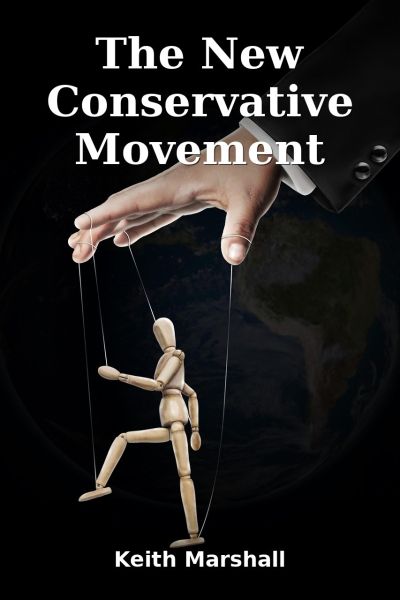
*The New Conservative Movement* provides a comprehensive organizational analysis of the contemporary American right, arguing that its recent political ascendancy is due less to ideological shifts than to the construction of a sophisticated, multi-linked "policy pipeline." This machinery moves ideas from think tanks and intellectual entrepreneurs into legislative language, which is then amplified by a sprawling media ecosystem of cable news, talk radio, and digital influencers. By leveraging platform algorithms to capture public attention and using data-driven micro-targeting, the movement converts populist grievance into a powerful fundraising and mobilization engine.
The book details how this infrastructure operates across various branches of government and society. It explores the role of legal networks like the Federalist Society in reshaping the judiciary, and the use of statehouses as "laboratories" to test model bills and preemption strategies. The narrative emphasizes that the movement’s strength lies in its ability to manage a fractious coalition of libertarians, evangelicals, and nationalists by focusing on shared cultural enemies and "culture war" flashpoints—specifically regarding education, gender, and national history.
Beyond domestic policy, the text examines the administrative state as a primary target for conservative "deconstruction" through strategic personnel appointments and rulemaking reform. It also traces the transnational links connecting American conservatism to a broader global right, showing how nationalist and anti-globalist themes are exported and reinforced across borders. This institutionalized approach allows the movement to maintain momentum even when out of power, as its philanthropic foundations and training schools ensure a continuous supply of capital and talent.
In its concluding chapters, the book assesses the ethical and democratic implications of these strategies, noting how the prioritization of narrative over fact and the delegitimization of institutions serve as "stress tests" for the American political system. It outlines potential future scenarios for the movement, ranging from an entrenchment of populist nationalism to a more pragmatic, governance-focused pivot. Ultimately, the work presents a map of a movement that has mastered the alignment of institutions, narratives, and technology to build and sustain political power in the 21st century.
What You'll Find Inside:
- The book maps the institutional, media, and grassroots architecture that enables contemporary conservative policy wins and electoral shifts, explaining the machinery that moves ideas from conception to implementation.
- It analyzes the evolution from Cold War fusionism to populist conservatism, highlighting how grievance, national identity, and cultural conflict became central organizing principles of the right.
- The book examines the sophisticated right-wing media ecosystem (cable news, talk radio, digital platforms) that amplifies narratives and creates self-reinforcing information environments.
- It details the organizational infrastructure including think tanks, legal networks, fundraising mechanisms, data operations, and state-level policy laboratories that translate ideas into political power.
- The book explores coalition management across libertarians, evangelicals, and nationalists while addressing democratic stress tests, ethical challenges, and future strategic scenarios for the movement.
Who's It For:
This book is designed for scholars, journalists, public officials, advocates, and politically engaged citizens who seek to understand the organizational infrastructure and strategic machinery of contemporary conservative politics. Rather than focusing on ideological debates, it provides a descriptive analysis of how ideas are generated, amplified, and translated into policy and electoral success through media networks, legal strategies, fundraising operations, and grassroots mobilization. Readers interested in movement building, political strategy, or the mechanics of power in American politics will find particular value in its systematic examination of the conservative movement's pipelines from idea to implementation.
Table of Contents:
- Introduction
- Chapter 1 A Movement Reconfigured: From Fusionism to Populism
- Chapter 2 Electoral Realignments: Demographic and Geographic Shifts
- Chapter 3 The Populist Narrative: Grievance, Nation, and Identity
- Chapter 4 Entrepreneurs of Ideas: Think Tanks and Policy Shops
- Chapter 5 Media Megaphones: Cable, Talk Radio, and the Digital Right
- Chapter 6 Platforms and Algorithms: Attention as Political Power
- Chapter 7 Influencers, Podcasts, and the Micro-Media Right
- Chapter 8 Fundraising Machines: Dark Money, Small Donors, and PACs
- Chapter 9 Legal Networks: Litigation Strategy and the Courts
- Chapter 10 Statehouses as Laboratories: Model Bills and Preemption
- Chapter 11 Grassroots Infrastructures: Churches, Clubs, and Canvasses
- Chapter 12 Movement Schools: Training, Conferences, and Fellowships
- Chapter 13 Data Operations: Polling, Targeting, and A/B Politics
- Chapter 14 Culture War as Strategy: Education, Gender, and History
- Chapter 15 Immigration and Security: Borders, Crime, and Order
- Chapter 16 Economic Populism: Trade, Industry, and Antitrust on the Right
- Chapter 17 Policy Pipelines: From White Papers to Whip Counts
- Chapter 18 Governing the Bureaucracy: Personnel, Rulemaking, and the Administrative State
- Chapter 19 Courts of Public Opinion: Framing, Narratives, and Metaphors
- Chapter 20 Coalition Management: Libertarians, Evangelicals, and Nationalists
- Chapter 21 Movement Philanthropy: Foundations, Donor Networks, and Endowments
- Chapter 22 International Echoes: The Global Right and Transnational Links
- Chapter 23 Counter-Movements: Progressive Responses and Cross-Pressure
- Chapter 24 Ethics, Norms, and Democratic Stress Tests
- Chapter 25 The Next Conservative Playbook: Scenarios and Strategic Choices
Author:
Published By:
Date Published:
April 27, 2026
Type:
Nonfiction
Language:
English
Word Count:
41,966 words
Reading Time:
2 hours 56 minutes
Sample:
Order:
Buy the The New Conservative Movement ebook on MixCache.com:
Buy Now
Full ebook will be available immediately
- read online or download as a PDF file.
$5 account credit for all new MixCache.com accounts, usable toward any ebook purchase!*
MixCache.com Total Access
Get unlimited access to this book + all books published by MixCache.com for $11.99/month
Subscribe to MTA




Ratings & Reviews
Ask Questions About This Book
Have a question about the content? Ask our AI assistant!
Start by asking a question about "The New Conservative Movement"
Example: "Does this book mention William Shakespeare?"
Thinking...