Browse by Category
Fiction
- Action & Adventure
- African American
- Anthologies
- Children's Fiction
- Classics
- Comics & Graphic Novels
- Coming of Age
- Contemporary
- Cultural & Regional
- Drama
- Erotica
- Fantasy
- General
- Historical Fiction
- Horror
- Humor & Satire
- Literary Fiction
- Mystery, Thriller & Suspense
- Poetry
- Religious & Inspirational
- Romance
- Science Fiction
- Short Stories
- War & Military
- Westerns
- Women's Fiction
- Young Adult
Non-Fiction
- Antiques & Collectibles
- Arts & Photography
- Biographies & Memoirs
- Business & Money
- Children's Non-Fiction
-
Computers & Technology
- Artificial Intelligence
- Computer Science
- Cybersecurity & Cryptography
- Data Science & Analytics
- Databases & Big Data
- Game Development & Design
- General
- Hardware & DIY
- Mobile App Development
- Networking & Cloud Computing
- Operating Systems
- Programming
- Robotics
- Software
- Software Engineering
- User Experience (UX) & Design
- Web Development & Design
- Cooking, Food & Wine
- Crafts, Hobbies & Home
- Education & Teaching
- Engineering
- General
- Health, Fitness & Dieting
-
History
- African History
- African History - North Africa
- African History - Sub-Saharan Africa
- American History
- American History - 20th Century
- American History - Civil War
- American History - Colonial Period
- Ancient History
- Asian History
- Asian History - China
- Asian History - India
- Asian History - Japan
- Asian History - Southeast Asia
- European History
- European History - Ancient Greece
- European History - Ancient Rome
- European History - Medieval
- European History - Modern
- European History - Renaissance
- General
- Middle Eastern History
- Military History
- Military History - Aviation
- Military History - Naval
- Social & Cultural History
- World History
- Humor & Entertainment
- Industrial Technology
- Language Learning
- Law
- LGBTQ+ Non-Fiction
- Literary Criticism
- Medical Books
- Parenting & Relationships
- Philosophy
- Politics & Social Sciences
- Reference
- Religion & Spirituality
-
Science & Math
- Agricultural Sciences
- Astronomy & Space Science
- Behavioral Sciences
- Biological Sciences
- Botany & Plant Science
- Chemistry
- Earth Sciences
- Engineering - Chemical
- Engineering - Civil
- Engineering - Electrical
- Engineering - Mechanical
- Environment
- General
- Geology
- Mathematics
- Nature & Ecology
- Oceanography
- Paleontology
- Physics
- Statistics
- Self-Help
- Sports & Outdoors
- Study Aids
- Sustainability & Green Living
- Textbooks
- Transportation
- Travel
- True Crime
- Urban Planning & Development
- Veterinary Medicine
- Writing & Publishing
Jump to Section
MixCache.com Total Access
Unlimited reading and audiobooks for every book published by MixCache.com.
Included titles carry the MTA badge.
Learn more →
The Atlantic Passage: A Human and Economic History of the Transatlantic Slave Trade
MTA
An integrated account of the people, economies, and voyages that constituted the transatlantic slave trade
About this book:

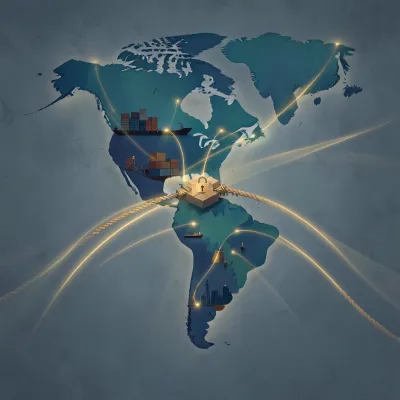
*The Atlantic Passage* provides a comprehensive human and economic history of the transatlantic slave trade, framing it as a sophisticated global system that integrated the economies and cultures of Africa, Europe, and the Americas. The book moves from the pre-contact societies of West and West Central Africa to the development of the "Atlantic Triangle," detailing how European capital and maritime technology harnessed African political dynamics and inland trade networks. By examining the cold logistics of shipping, insurance, and credit alongside the harrowing realities of the Middle Passage, the text highlights the chilling transformation of human beings into commodified capital and the immense wealth this extraction generated for the burgeoning capitalist world.
The narrative places a central focus on African agency and the internal dynamics of states like Asante, Dahomey, and Kongo, illustrating how they navigated, resisted, or harnessed the trade to build regional power. This political evolution was mirrored by the brutal "breaking-in" processes and plantation regimes in the Americas, where enslaved people were subjected to industrial-scale exploitation in sugar, cotton, and coffee production. Throughout, the book emphasizes the constant presence of resistance, ranging from subtle acts of sabotage and the preservation of African cultural identities to monumental events like maroonage and the Haitian Revolution, which fundamentally challenged the global slave system.
The later chapters analyze the complex transition from legal abolition to an era of illegal trade and persistent structural inequality. The book argues that the formal end of slavery did not erase its impact; instead, the "afterlives" of the trade manifested in systemic racism, economic disparities, and new forms of coerced labor like convict leasing and sharecropping. By interweaving quantitative data from shipping records with qualitative evidence from archaeology, oral traditions, and slave narratives, the book reconstructs a legacy of profound trauma and remarkable resilience. It concludes that the modern Atlantic world—its financial institutions, racial hierarchies, and vibrant diasporic cultures—remains inextricably linked to the centuries of forced migration and exploitation that constituted the Atlantic Passage.
What You'll Find Inside:
- The transatlantic slave trade operated as an integrated system linking African interiors to American markets through coastal forts, maritime circuits, and plantation economies.
- The book examines both the human dimension (capture, Middle Passage, resistance) and economic mechanics (pricing, finance, insurance) of the slave trade using interdisciplinary methods.
- African states were active participants who experienced state formation, political fragmentation, and militarization through their engagement with the Atlantic trade.
- Diasporic cultures emerged through syncretic processes, creating new religious, linguistic, and artistic traditions across the Americas that persist today.
- The trade's legacies endure in modern demographic structures, racial inequalities, and economic systems on both sides of the Atlantic, shaping contemporary global inequities.
Who's It For:
This book is intended for students, scholars, and researchers specializing in Atlantic history, African diaspora studies, economic history, or slavery studies. It will particularly benefit readers seeking a comprehensive, interdisciplinary analysis that connects human experiences with economic structures, political transformations, and cultural legacies across four centuries of transatlantic exchange. Academics and graduate students interested in methodological approaches to historical reconstruction will find value in its use of shipping records, archaeology, oral traditions, and demographic data.
Table of Contents:
- Introduction
- Chapter 1 Before the Trade: Africa, Europe, and the Atlantic on the Eve of Contact
- Chapter 2 First Encounters: Iberian Voyages and the Birth of an Atlantic System
- Chapter 3 Coasts of Exchange: Forts, Factories, and Ports from Senegambia to Angola
- Chapter 4 Inland Networks: Caravans, Brokers, and the Politics of Capture
- Chapter 5 Pricing Humanity: Markets, Currencies, and the Guns-for-Slaves Economy
- Chapter 6 Ships, Insurance, and Credit: The Business of Slaving Voyages
- Chapter 7 Building a Voyage: Crews, Cargoes, and Maritime Technology
- Chapter 8 The Middle Passage: Experience, Mortality, and Survival at Sea
- Chapter 9 Resistance at Sea: Revolt, Sabotage, and Navigating Freedom
- Chapter 10 Archaeology of the Littoral: Barracoons, Burials, and Material Traces
- Chapter 11 African States in Flux: Asante, Dahomey, Kongo, and the Dynamics of Power
- Chapter 12 Gendered Captivity: Women, Men, and Children in the Trade
- Chapter 13 Landing in the Americas: Quarantine, Sale, and Breaking-In
- Chapter 14 Plantation Regimes: Sugar, Cotton, Coffee, and the Making of Wealth
- Chapter 15 Diasporic Cultures: Religion, Language, and Art across the Atlantic
- Chapter 16 Maroons and Borderlands: Communities of Flight and Negotiation
- Chapter 17 Revolt and Revolution: Saint-Domingue and the Politics of Emancipation
- Chapter 18 Abolition and Its Limits: Law, Patrols, and the Illegal Trade
- Chapter 19 Atlantic Capital: Finance, Insurance Markets, and Global Commerce
- Chapter 20 Demography and Disease: Population Shifts and Public Health Legacies
- Chapter 21 African Economies Reconsidered: Growth, Disruption, and Opportunity Costs
- Chapter 22 Memory and Trauma: Oral Histories, Testimony, and Memorial Landscapes
- Chapter 23 The Afterlives of Slavery: Citizenship, Race, and Inequality
- Chapter 24 Methods and Evidence: Shipping Records, Data, and Historical Reconstruction
- Chapter 25 The Atlantic World in Perspective: Integration, Consequence, and Continuity
Author:
Published By:
Date Published:
January 18, 2026
Type:
Nonfiction
Language:
English
Word Count:
73,255 words
Reading Time:
5 hours 8 minutes
Sample:
Order:
Order The Atlantic Passage: A Human and Economic History of the Transatlantic Slave Trade (Paperback) on MixCache.com:
Buy NowPrint copy is made to order and ships worldwide. Includes the ebook free, ready to read instantly.
$5 account credit for all new MixCache.com accounts, usable toward any ebook purchase!*