Browse by Category
Fiction
- Action & Adventure
- African American
- Anthologies
- Children's Fiction
- Classics
- Comics & Graphic Novels
- Coming of Age
- Contemporary
- Cultural & Regional
- Drama
- Erotica
- Fantasy
- General
- Historical Fiction
- Horror
- Humor & Satire
- Literary Fiction
- Mystery, Thriller & Suspense
- Poetry
- Religious & Inspirational
- Romance
- Science Fiction
- Short Stories
- War & Military
- Westerns
- Women's Fiction
- Young Adult
Non-Fiction
- Antiques & Collectibles
- Arts & Photography
- Biographies & Memoirs
- Business & Money
- Children's Non-Fiction
-
Computers & Technology
- Artificial Intelligence
- Computer Science
- Cybersecurity & Cryptography
- Data Science & Analytics
- Databases & Big Data
- Game Development & Design
- General
- Hardware & DIY
- Mobile App Development
- Networking & Cloud Computing
- Operating Systems
- Programming
- Robotics
- Software
- Software Engineering
- User Experience (UX) & Design
- Web Development & Design
- Cooking, Food & Wine
- Crafts, Hobbies & Home
- Education & Teaching
- Engineering
- General
- Health, Fitness & Dieting
-
History
- African History
- African History - North Africa
- African History - Sub-Saharan Africa
- American History
- American History - 20th Century
- American History - Civil War
- American History - Colonial Period
- Ancient History
- Asian History
- Asian History - China
- Asian History - India
- Asian History - Japan
- Asian History - Southeast Asia
- European History
- European History - Ancient Greece
- European History - Ancient Rome
- European History - Medieval
- European History - Modern
- European History - Renaissance
- General
- Middle Eastern History
- Military History
- Military History - Aviation
- Military History - Naval
- Social & Cultural History
- World History
- Humor & Entertainment
- Industrial Technology
- Language Learning
- Law
- LGBTQ+ Non-Fiction
- Literary Criticism
- Medical Books
- Parenting & Relationships
- Philosophy
- Politics & Social Sciences
- Reference
- Religion & Spirituality
-
Science & Math
- Agricultural Sciences
- Astronomy & Space Science
- Behavioral Sciences
- Biological Sciences
- Botany & Plant Science
- Chemistry
- Earth Sciences
- Engineering - Chemical
- Engineering - Civil
- Engineering - Electrical
- Engineering - Mechanical
- Environment
- General
- Geology
- Mathematics
- Nature & Ecology
- Oceanography
- Paleontology
- Physics
- Statistics
- Self-Help
- Sports & Outdoors
- Study Aids
- Sustainability & Green Living
- Textbooks
- Transportation
- Travel
- True Crime
- Urban Planning & Development
- Veterinary Medicine
- Writing & Publishing
Jump to Section
MixCache.com Total Access
Unlimited reading and audiobooks for every book published by MixCache.com.
Included titles carry the MTA badge.
Learn more →
Monsoon Empires
MTA
Maritime Networks, Shipbuilding, and Power in South and Southeast Asia
About this book:

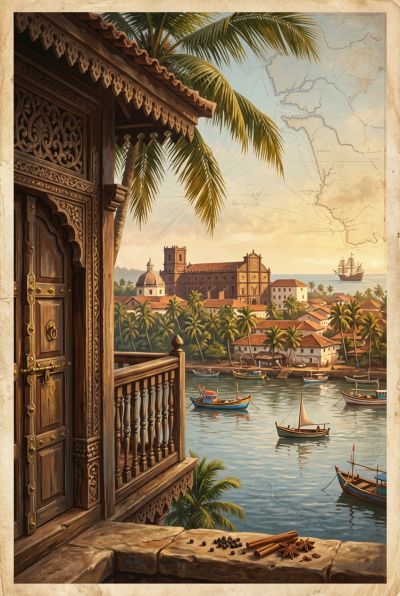
"Monsoon Empires" explores how the seasonal monsoon winds fundamentally shaped maritime trade, shipbuilding, and political power across South and Southeast Asia for centuries. The book argues that these wind systems did more than merely propel ships; they structured technologies, institutions, and political governance, leading to the emergence of "monsoon empires" that thrived by harnessing and adapting to these rhythms. It draws a rich dialogue between economic analysis and maritime archaeology, using historical records, price series, and merchant correspondence alongside wreck sites, hull timbers, and ceramic scatters to reconstruct the complex oceanic economies.
The book delves into the technological innovations driven by the monsoon, detailing how hulls were designed to "breathe" with the waves (stitched planks in the Indian Ocean) or provide stability and safety through compartmentalization (bulkhead-divided junks in the South China Sea). It examines the specialized industries that supported shipbuilding, tracing supply chains for materials like teak, iron, and coir fiber, and highlighting how shipyards meticulously organized labor around the monsoon calendar. Navigation and pilotage are explored as sophisticated crafts, blending empirical observation of stars, currents, and weather signs with traditional knowledge, crucial for safely traversing vast, often hazardous, seas.
A significant portion of the book is dedicated to the "gateways" of the monsoon—major ports like Aden, Malacca, and Guangzhou—analyzing their unique ecologies, the institutions of exchange (brokers, guilds, credit networks) that facilitated trade, and the "cargoes of empire" such as pepper, textiles, porcelain, and bullion that fueled these economies. It also highlights the "corridors of faith," showing how religious movements and pilgrimages intertwined with commercial routes, spreading ideas and cultures across the littoral. The human element, including seafarers, slaves, and migrants, is examined as the vital labor force sustaining these floating households and vast networks.
The narrative also addresses the inherent risks of maritime trade, discussing pre-modern forms of insurance like bottomry loans and commenda partnerships, and the constant threat of piracy, which shaped naval power and protection rackets. The book dedicates significant attention to regional networks, including Gujarat's trade with the Western Indian Ocean, the Coromandel coast's role in the Bay of Bengal circuits, and the intricate spice routes of Java and Borneo. It further details the impact of "imperial encounters" with Portuguese, Dutch, and English companies, who attempted to dominate these existing systems, often adapting to the monsoon's realities rather than fully overcoming them. Finally, "Monsoon Empires" concludes by connecting historical climate variability (IOD, ENSO) to market volatility, and reflecting on the enduring legacies of these maritime systems in modern ports and for future maritime challenges.
What You'll Find Inside:
- Explore how the seasonal monsoon winds didn't just propel ships but fundamentally structured maritime technologies, institutions, and political power across South and Southeast Asia.
- Discover the ingenious shipbuilding techniques—like stitched-plank hulls in the Indian Ocean and bulkhead-divided junks in the South China Sea—adapted to the unique demands of monsoon weather and diverse materials.
- Uncover the complex interplay of economic analysis and maritime archaeology, using price series and customs ledgers alongside wreck sites and cargo remnants to reveal ancient trade networks.
- Understand the crucial role of key commodities—pepper, textiles, porcelain, and bullion—in connecting distant shores and fueling the economies of 'monsoon empires' from Aden to Ayutthaya.
- Examine how climate variability, like the Indian Ocean Dipole (IOD) and El Niño (ENSO), created market volatility and forced maritime societies to develop sophisticated risk management and adaptation strategies.
Who's It For:
This book is for historians, archaeologists, and anyone interested in the pre-modern economic, social, and technological history of South and Southeast Asia. It will particularly appeal to those fascinated by maritime history, global trade networks, and the profound impact of climate on human civilizations and political power across the Indian Ocean and the South China Sea.
Table of Contents:
- Introduction
- Chapter 1 Winds That Made an Ocean: The Monsoon System Explained
- Chapter 2 Boats That Breathed with the Weather: Hulls, Rigs, and Seakeeping
- Chapter 3 Timber, Iron, and Fiber: Materials, Shipyards, and Labor
- Chapter 4 Reading Skies and Seas: Navigation, Pilotage, and Knowledge
- Chapter 5 Gateways of the Monsoon: Port Ecologies from Aden to Ayutthaya
- Chapter 6 Brokers, Guilds, and Merchants: Institutions of Exchange
- Chapter 7 Cargoes of Empire: Pepper, Textiles, Porcelain, and Bullion
- Chapter 8 Corridors of Faith: Religion, Ritual, and Maritime Piety
- Chapter 9 Households Afloat: Seafarers, Slaves, and Migrants
- Chapter 10 Risk, Insurance, and the Price of Weather
- Chapter 11 Amphoras to Stoneware: Maritime Archaeology of Wrecks and Wharves
- Chapter 12 Gujarat and the Western Indian Ocean Networks
- Chapter 13 Coromandel, Sri Lanka, and the Bay of Bengal Circuits
- Chapter 14 The Straits of Malacca: Malacca, Aceh, and Johor
- Chapter 15 Java, Borneo, and the Spice Routes
- Chapter 16 The South China Sea: Champa, Vietnam, and the Pearl River Delta
- Chapter 17 War at Sea: Piracy, Protection, and Naval Power
- Chapter 18 Sovereigns of the Littoral: Coastal Polities and Thalassocracies
- Chapter 19 Water, Grain, and Power: Hinterlands and Maritime States
- Chapter 20 Maps, Monsoons, and Mental Worlds: Cartography and Cosmography
- Chapter 21 Teak and Trade: Shipbuilding Centers and Supply Chains
- Chapter 22 Imperial Encounters: Portuguese, Dutch, and English in Monsoon Waters
- Chapter 23 Climate Variability and Shock: IOD, ENSO, and Market Volatility
- Chapter 24 Scales and Systems: Modeling Oceanic Economies
- Chapter 25 Legacies of the Monsoon: Modern Ports and Maritime Futures
Author:
Published By:
Date Published:
January 11, 2026
Type:
Nonfiction
Language:
English
Word Count:
82,907 words
Reading Time:
5 hours 48 minutes
Sample:
Order:
Order Monsoon Empires (Hardcover) on MixCache.com:
Buy NowPrint copy is made to order and ships worldwide. Includes the ebook free, ready to read instantly.
$5 account credit for all new MixCache.com accounts, usable toward any ebook purchase!*