
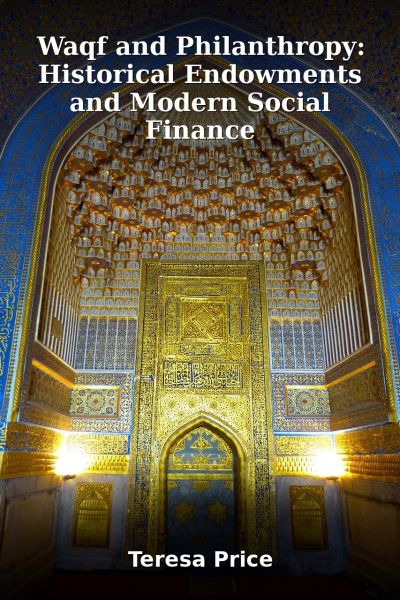
The following is an excerpt from “Waqf and Philanthropy: Historical Endowments and Modern Social Finance” by Teresa Price, available on MixCache.com.
Introduction
Waqf—endowment in the Islamic tradition—has long stood at the intersection of faith, community, and public purpose. For centuries, awqaf financed education, healthcare, water systems, roads, and spaces for social life. Their distinctive legal architecture protected capital in perpetuity while directing its fruits toward community benefit. This book revisits those roots and examines how the same ethical impulse can be reinterpreted for today’s development challenges, from inclusive education and primary care to affordable housing and resilient cities.
The past matters because institutions carry memory. Classical jurists refined the rules that shaped what assets could be endowed, how trustees were appointed, and how revenues were distributed. Communities devised governance solutions—sometimes elegant, sometimes imperfect—to guard against capture and neglect. Understanding these classical design choices reveals why some awqaf thrived for generations while others faltered, and it offers enduring lessons about stewardship, participation, and accountability.
Yet waqf has never been static. Reformist currents, state centralization, and codification across the nineteenth and twentieth centuries transformed the sector. In many contexts, administrative consolidation improved oversight; in others, it curbed local initiative or diverted assets from their social purpose. Postcolonial trajectories layered new legislation, bureaucracies, and hybrid organizational forms. By tracing these shifts, we see not only the constraints that practitioners face today but also the windows of possibility that open when law, finance, and civic energy align.
In the present, Islamic social finance provides a broader canvas on which waqf can operate alongside zakat and voluntary charity. Cash waqf and waqf shares, mission-aligned investment policies, and partnerships with development finance and impact investors are expanding the toolkit. Digital platforms enable small donors to participate, while governance frameworks—Shariah boards, independent audits, and transparent reporting—help sustain trust. The challenge is to connect enduring principles with contemporary mechanisms without diluting purpose or compromising ethics.
This book is written for practitioners, funders, and policy planners seeking models that convert generosity into durable public value. We present actionable templates for designing endowments, structuring blended capital, and developing waqf land for education, healthcare, and urban infrastructure. We also propose metrics that align Maqasid al-Shariah with widely used development indicators, allowing organizations to track outcomes as well as outputs and to communicate results across diverse stakeholders.
Finally, we look ahead. Climate adaptation, demographic shifts, and rapid urbanization demand institutions that are both anchored and agile. Waqf, when thoughtfully governed and prudently invested, can underwrite long-term solutions: green public spaces, equitable transit, resilient water systems, and research that diffuses widely shared benefits. The chapters that follow combine historical insight with contemporary practice to help readers design endowments that honor their origins while meeting the urgent needs of our time.
Read “Waqf and Philanthropy: Historical Endowments and Modern Social Finance” on MixCache.com →
Please log in or create an account to leave a comment.
No comments yet. Be the first to say something.