
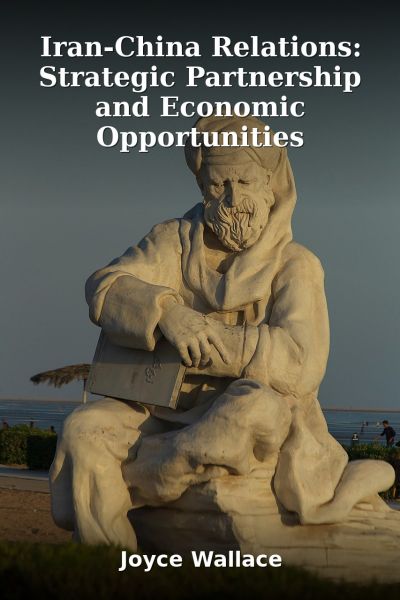
The following is an excerpt from “Iran-China Relations: Strategic Partnership and Economic Opportunities” by Joyce Wallace, available on MixCache.com.
Introduction
Iran-China relations have moved from episodic engagement to a complex, multi-dimensional partnership that blends strategic alignment with pragmatic economics. This book examines how the two countries have converged around complementary needs: Iran’s search for resilient growth and external diversification, and China’s drive for secure energy, westward connectivity, and risk-spread across volatile supply chains. In doing so, we analyze how recent accords, infrastructure initiatives, and technology links are reshaping not only bilateral ties but also the regional balance across the Middle East, Central Asia, and the Indian Ocean.
The 21st century introduced both headwinds and openings for this relationship. Sanctions pressure on Iran altered trade patterns and financing channels, incentivizing workarounds that often elevated Chinese firms as buyers, builders, and technology providers. At the same time, China’s outward economic strategy emphasized corridors, ports, and digital networks that knit new markets to its manufacturing and financial ecosystems. This confluence created opportunities for energy and infrastructure cooperation, while also exposing both countries—and their commercial partners—to regulatory, reputational, and operational risks that demand sober assessment.
Energy is the gravitational center of the relationship, but it is not the whole story. Oil, gas, and petrochemicals anchor trade flows and investment dialogues, yet pipelines, railways, industrial parks, and data infrastructure are equally central to long-term value creation. Financing models range from engineering–procurement–construction contracts and supplier credits to more experimental arrangements, including local-currency settlement and creative collateralization. These mechanisms promise deal flow but also require careful navigation of compliance regimes, contract enforcement, and shifting risk premiums.
Strategically, Chinese engagement expands Iran’s foreign policy options by reducing overreliance on any single external partner and by knitting Iran into multiple overland and maritime routes. For Beijing, Iran offers a geoeconomic hinge between the Persian Gulf, the Caucasus, and South Asia, as well as a test bed for managing projects under conditions of sanctions and security volatility. Yet neither side seeks a formal alliance. The partnership is better understood as layered hedging: selective deepening where interests align, caution where costs or blowback could be high, and continuous recalibration as regional dynamics evolve.
For investors and policymakers, the implications are concrete. Opportunities exist in upstream and midstream energy efficiency, gas monetization, power grid upgrades, mining value chains, logistics, and the digital economy. But they sit alongside challenges: export controls, secondary sanctions exposure, banking de-risking, technology transfer sensitivities, environmental obligations, and local-content politics. Success therefore depends on granular due diligence, robust compliance frameworks, and partnerships that can adapt to policy shifts and market shocks.
This book provides the tools to make those judgments. It blends political economy analysis with sectoral deep dives and real-world case studies, culminating in scenario planning to 2035 and a practical policy playbook. Readers will find a balanced assessment of risks and opportunities, an explanation of how Belt and Road elements intersect with Iran’s development priorities, and a clear guide to where commercial value and strategic leverage are most likely to emerge.
Read “Iran-China Relations: Strategic Partnership and Economic Opportunities” on MixCache.com →
Please log in or create an account to leave a comment.
No comments yet. Be the first to say something.