Browse by Category
Fiction
- Action & Adventure
- African American
- Anthologies
- Children's Fiction
- Classics
- Comics & Graphic Novels
- Coming of Age
- Contemporary
- Cultural & Regional
- Drama
- Erotica
- Family Life
- Fantasy
- General
- Historical Fiction
- Horror
- Humor & Satire
- Literary Fiction
- Mystery, Thriller & Suspense
- Poetry
- Religious & Inspirational
- Romance
- Science Fiction
- Short Stories
- War & Military
- Westerns
- Women's Fiction
- Young Adult
Non-Fiction
- Antiques & Collectibles
- Arts & Photography
- Biographies & Memoirs
- Business & Money
- Children's Non-Fiction
-
Computers & Technology
- Artificial Intelligence
- Computer Science
- Cybersecurity & Cryptography
- Data Science & Analytics
- Databases & Big Data
- Game Development & Design
- General
- Hardware & DIY
- Mobile App Development
- Networking & Cloud Computing
- Operating Systems
- Programming
- Robotics
- Software
- Software Engineering
- User Experience (UX) & Design
- Web Development & Design
- Cooking, Food & Wine
- Crafts, Hobbies & Home
- Education & Teaching
- Engineering
- General
- Health, Fitness & Dieting
-
History
- African History
- African History - North Africa
- African History - Sub-Saharan Africa
- American History
- American History - 20th Century
- American History - Civil War
- American History - Colonial Period
- Ancient History
- Asian History
- Asian History - China
- Asian History - India
- Asian History - Japan
- Asian History - Southeast Asia
- European History
- European History - Ancient Greece
- European History - Ancient Rome
- European History - Medieval
- European History - Modern
- European History - Renaissance
- General
- Middle Eastern History
- Military History
- Military History - Aviation
- Military History - Naval
- Social & Cultural History
- World History
- Humor & Entertainment
- Industrial Technology
- Language Learning
- Law
- LGBTQ+ Non-Fiction
- Literary Criticism
- Medical Books
- Parenting & Relationships
- Philosophy
- Politics & Social Sciences
- Reference
- Religion & Spirituality
-
Science & Math
- Agricultural Sciences
- Astronomy & Space Science
- Behavioral Sciences
- Biological Sciences
- Botany & Plant Science
- Chemistry
- Earth Sciences
- Engineering - Chemical
- Engineering - Civil
- Engineering - Electrical
- Engineering - Mechanical
- Environment
- General
- Geology
- Mathematics
- Nature & Ecology
- Oceanography
- Paleontology
- Physics
- Statistics
- Self-Help
- Sports & Outdoors
- Study Aids
- Sustainability & Green Living
- Textbooks
- Transportation
- Travel
- True Crime
- Urban Planning & Development
- Veterinary Medicine
- Writing & Publishing
Jump to Section
MixCache.com Total Access
Unlimited reading and audiobooks for every book published by MixCache.com.
Included titles carry the MTA badge.
Learn more →
The Nile
MTA
A History
About this book:
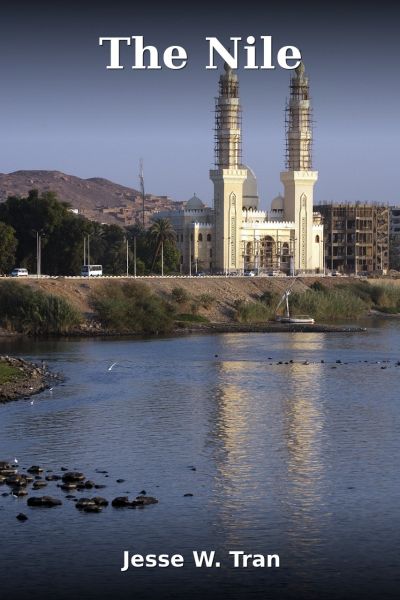
The Nile has served as the unyielding lifeblood of Egypt and northeastern Africa for millennia, its geological origins in the Ethiopian Highlands and East African Rift creating a predictable artery of water and fertile silt that allowed civilization to flourish in an otherwise arid landscape. From the prehistoric settlements of the Paleolithic era through the unification of Upper and Lower Egypt around 3100 BCE, the river dictated the rhythm of life, enabling the agricultural surpluses that powered the pyramid-building Old Kingdom and the imperial expansions of the New Kingdom. Even during periods of fragmentation like the Intermediate Periods or foreign domination by Persians, Greeks, Romans, and later Arab and Ottoman rulers, the Nile remained the central organizing feature—economic, political, and spiritual—around which Egyptian society coalesced, its annual inundation structuring the calendar, economy, and religious cosmology of the land.
The modern era brought a radical shift from passive reliance to aggressive engineering. Napoleon’s expedition sparked scientific fascination, while Muhammad Ali’s 19th-century conversion to perennial irrigation and the British construction of the Aswan Low Dam intensified agricultural output for global markets, particularly cotton. The mid-20th century saw the ultimate expression of this control with the Aswan High Dam, a Cold War project that ended the ancient flood cycle, secured water storage and hydroelectricity, but displaced Nubian communities, trapped fertile silt, and triggered ecological consequences like delta erosion and salinity. This engineering triumph cemented Egypt’s hydro-hegemony, enshrined in colonial-era treaties (1929, 1959) that allocated the vast majority of the river’s flow to the lower riparian states.
In the 21st century, the geopolitics of the Nile have been upended by the Grand Ethiopian Renaissance Dam (GERD). As Ethiopia asserts its sovereign right to develop the Blue Nile headwaters—source of over 80% of the water—for hydropower and development, the colonial legal framework has collapsed. Egypt and Sudan face existential threats to water security amidst explosive population growth and climate volatility, leading to tense, unresolved negotiations over filling schedules and drought mitigation. The dispute exemplifies the basin's central dilemma: a finite, fragile resource subjected to unilateral mega-projects and competing nationalisms rather than integrated management.
Today, the Nile confronts a convergence of crises—pollution from megacities and agriculture, invasive species, saltwater intrusion in the sinking delta, and the unpredictable hydrology of a warming climate—that no single nation can solve alone. While the Nile Basin Initiative offers a forum for cooperation, a binding, basin-wide legal framework remains elusive. The river’s future hinges on whether its eleven riparian states can transcend zero-sum nationalism to embrace equitable utilization and shared stewardship, transforming a history of control and conflict into one of collective resilience for the hundreds of millions who depend on its flow.
What You'll Find Inside:
- A comprehensive geological and historical journey tracing the Nile from its ancient origins 30 million years ago to its role as the lifeblood of Egyptian civilization and modern geopolitical flashpoint.
- Detailed analysis of how the Nile's predictable inundation enabled the rise of agriculture, state formation, and monumental architecture from Pre-Dynastic settlements through the pyramid-building Old Kingdom and imperial New Kingdom.
- Examination of successive foreign dominations—Persian, Greek, Roman, Arab, Ottoman, and British—each reshaping the Nile Valley's administration, culture, and hydraulic engineering while the river remained the constant economic engine.
- In-depth coverage of modern hydraulic mega-projects including the Aswan Low and High Dams and the Grand Ethiopian Renaissance Dam, revealing how 20th and 21st century engineering transformed the river into a regulated resource and ignited basin-wide water rights conflicts.
- Exploration of the Nile's enduring cultural legacy as a divine force in pharaonic religion, a cradle of Christian monasticism, a symbol of Islamic civilization, and a persistent muse for art, literature, and Egyptian national identity through millennia of change.
Who's It For:
This book is ideal for history enthusiasts, students of African and Middle Eastern studies, and general readers seeking a sweeping yet accessible narrative of one of the world's most iconic rivers. It will particularly appeal to those interested in the interplay between geography, hydrology, and civilization-building, as well as readers concerned with contemporary transboundary water politics and environmental challenges in the Nile Basin.
Table of Contents:
- Introduction
- Chapter 1 The Gift of the Nile: Geological Origins and Early Significance
- Chapter 2 Cradle of Civilization: Pre-Dynastic Settlements and the Rise of Agriculture
- Chapter 3 Unification and the Old Kingdom: The Nile as the Artery of a New State
- Chapter 4 The First Intermediate Period: A Divided River
- Chapter 5 The Middle Kingdom: Resurgence, Canals, and the Fayum
- Chapter 6 The Second Intermediate Period and the Hyksos: Control of the Delta
- Chapter 7 The New Kingdom: Imperial Ambitions and the Nile's Reach
- Chapter 8 Amarna and Its Aftermath: Religious Revolution and Riverine Life
- Chapter 9 Decline and Foreign Rule: The Nile Under Persian and Greek Dominion
- Chapter 10 Cleopatra's Nile: Roman Influence and the End of Pharaonic Egypt
- Chapter 11 Roman Granary: The Nile as the Breadbasket of an Empire
- Chapter 12 Early Christianity and the Nile: Monasticism Along the River
- Chapter 13 The Arab Conquest: Islam Arrives and Transforms the Nile Valley
- Chapter 14 Fatimid Cairo: A New Capital on the Nile
- Chapter 15 Mamluks and Ottomans: The Nile in Medieval and Early Modern Eras
- Chapter 16 Napoleon's Expedition: Scientific Discovery and Strategic Interest in the Nile
- Chapter 17 Muhammad Ali and Modernization: Engineering the Nile
- Chapter 18 British Occupation: Controlling the Nile's Waters
- Chapter 19 The Scramble for Africa: The Nile's Sources and Colonial Ambition
- Chapter 20 Aswan Dam Old and New: Managing the River for a Growing Nation
- Chapter 21 The Nile in the 20th Century: Independence, Politics, and Water Rights
- Chapter 22 The Grand Ethiopian Renaissance Dam: A New Era of Nile Politics
- Chapter 23 The Nile Today: Environment, Pollution, and Conservation
- Chapter 24 The Nile's Cultural Legacy: Art, Literature, and Modern Identity
- Chapter 25 The Future of the Nile: Challenges and Hopes for a Vital River
Author:
Published By:
Date Published:
November 24, 2026
Type:
Nonfiction
Language:
English
Word Count:
41,247 words
Reading Time:
2 hours 53 minutes
Sample:
Order:
Order The Nile (Paperback) on MixCache.com:
Buy NowPrint copy is made to order and ships worldwide. Includes the ebook free, ready to read instantly.
$5 account credit for all new MixCache.com accounts, usable toward any ebook purchase!*