Browse by Category
Fiction
- Action & Adventure
- African American
- Anthologies
- Children's Fiction
- Classics
- Comics & Graphic Novels
- Coming of Age
- Contemporary
- Cultural & Regional
- Drama
- Erotica
- Family Life
- Fantasy
- General
- Historical Fiction
- Horror
- Humor & Satire
- Literary Fiction
- Mystery, Thriller & Suspense
- Poetry
- Religious & Inspirational
- Romance
- Science Fiction
- Short Stories
- War & Military
- Westerns
- Women's Fiction
- Young Adult
Non-Fiction
- Antiques & Collectibles
- Arts & Photography
- Biographies & Memoirs
- Business & Money
- Children's Non-Fiction
-
Computers & Technology
- Artificial Intelligence
- Computer Science
- Cybersecurity & Cryptography
- Data Science & Analytics
- Databases & Big Data
- Game Development & Design
- General
- Hardware & DIY
- Mobile App Development
- Networking & Cloud Computing
- Operating Systems
- Programming
- Robotics
- Software
- Software Engineering
- User Experience (UX) & Design
- Web Development & Design
- Cooking, Food & Wine
- Crafts, Hobbies & Home
- Education & Teaching
- Engineering
- General
- Health, Fitness & Dieting
-
History
- African History
- African History - North Africa
- African History - Sub-Saharan Africa
- American History
- American History - 20th Century
- American History - Civil War
- American History - Colonial Period
- Ancient History
- Asian History
- Asian History - China
- Asian History - India
- Asian History - Japan
- Asian History - Southeast Asia
- European History
- European History - Ancient Greece
- European History - Ancient Rome
- European History - Medieval
- European History - Modern
- European History - Renaissance
- General
- Middle Eastern History
- Military History
- Military History - Aviation
- Military History - Naval
- Social & Cultural History
- World History
- Humor & Entertainment
- Industrial Technology
- Language Learning
- Law
- LGBTQ+ Non-Fiction
- Literary Criticism
- Medical Books
- Parenting & Relationships
- Philosophy
- Politics & Social Sciences
- Reference
- Religion & Spirituality
-
Science & Math
- Agricultural Sciences
- Astronomy & Space Science
- Behavioral Sciences
- Biological Sciences
- Botany & Plant Science
- Chemistry
- Earth Sciences
- Engineering - Chemical
- Engineering - Civil
- Engineering - Electrical
- Engineering - Mechanical
- Environment
- General
- Geology
- Mathematics
- Nature & Ecology
- Oceanography
- Paleontology
- Physics
- Statistics
- Self-Help
- Sports & Outdoors
- Study Aids
- Sustainability & Green Living
- Textbooks
- Transportation
- Travel
- True Crime
- Urban Planning & Development
- Veterinary Medicine
- Writing & Publishing
Jump to Section
MixCache.com Total Access
Unlimited reading and audiobooks for every book published by MixCache.com.
Included titles carry the MTA badge.
Learn more →
Kim Il Sung
MTA
Founder of North Korea
About this book:
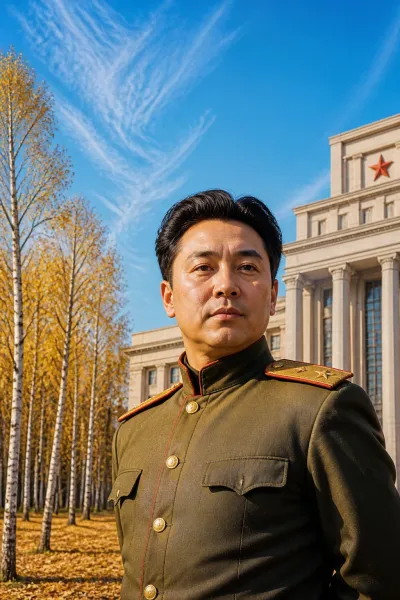
Kim Il Sung’s life traced a remarkable trajectory from an anti-Japanese guerrilla fighter in Manchuria to the founder and supreme leader of the Democratic People’s Republic of Korea. Born Kim Song Ju in 1912 under Japanese colonial rule, his formative years were defined by nationalist resistance and a turn toward communism. Forced into exile in the Soviet Union during the late 1930s, he received military training and ideological indoctrination that prepared him for power. With Soviet backing following Japan’s defeat in 1945, he returned to northern Korea, systematically consolidating authority by marginalizing rival communist factions, establishing a centralized party-state, and launching a sweeping land reform. The formal establishment of the DPRK in 1948 solidified the peninsula's division, setting the stage for his audacious, Soviet- and Chinese-backed invasion of the South in 1950. The ensuing Korean War brought his regime to the brink of collapse before Chinese intervention saved it, leaving the peninsula devastated and permanently divided by an armistice in 1953.
In the post-war decades, Kim Il Sung transformed the DPRK into a highly personalized totalitarian state anchored by the ideology of *Juche* (self-reliance). He purged all internal opposition—most notably the domestic, Yenan, and Soviet-Korean factions—replacing collective leadership with a monolithic system centered on his "Great Leader" personality cult. *Juche* became the justification for political independence from Moscow and Beijing during the Sino-Soviet split, economic autarky prioritizing heavy industry and military spending, and a diplomatic strategy of non-alignment punctuated by provocations against the South and the United States. This period saw impressive post-war reconstruction and industrialization, driven by mass mobilization campaigns like the Chollima Movement, but the rigid command economy eventually stagnated under the weight of militarization, isolation, and ideological rigidity.
The 1980s and early 1990s brought existential challenges as the Soviet bloc collapsed, severing vital aid and trade. Kim Il Sung refused to reform, doubling down on *Juche* even as the economy imploded, leading to a catastrophic famine—the "Arduous March"—that killed hundreds of thousands. Simultaneously, he orchestrated the world's first communist dynastic succession, meticulously grooming his son Kim Jong Il for two decades through party appointments, mythmaking around the "Paektu bloodline," and a secondary personality cult. In his final years, facing economic ruin and the loss of patrons, Kim displayed pragmatic flexibility by engaging the United States over the nuclear issue, culminating in the 1994 Agreed Framework. He died weeks later, leaving behind a nuclear-armed, dynastic garrison state defined by his singular vision—a unique synthesis of Korean nationalism, Stalinist governance, and hereditary rule that continues to define North Korea today.
What You'll Find Inside:
- Kim Il Sung's transformation from an anti-Japanese guerrilla fighter in Manchuria to the Soviet-backed founder of North Korea, detailing his early revolutionary activities and exile in the USSR.
- The establishment of the Democratic People's Republic of Korea in 1948 and Kim's ruthless consolidation of power through factional purges, a pervasive personality cult, and the creation of a totalitarian state apparatus.
- The origins, course, and devastating impact of the Korean War (1950-1953), which cemented the peninsula's division and shaped North Korea's militarized, siege mentality.
- The development of Juche (self-reliance) as the state's guiding ideology, driving political independence, economic autarky, and a massive military-first policy that defined North Korea's unique path.
- The unprecedented dynastic succession to Kim Jong Il, the economic collapse and famine of the 1990s following the Soviet bloc's demise, and the enduring legacy of a hereditary dictatorship armed with nuclear ambitions.
Who's It For:
This book is essential reading for students and scholars of Cold War history, Korean studies, and totalitarian regimes, as well as general readers seeking to understand the historical roots of the Kim dynasty. It provides a comprehensive biography that explains how Kim Il Sung forged a unique communist monarchy that persists today, making it invaluable for anyone analyzing North Korea's political system, its nuclear program, or the geopolitical dynamics of the Korean Peninsula.
Table of Contents:
- Introduction
- Chapter 1 Early Life and Korean Nationalism
- Chapter 2 The Seeds of Revolution
- Chapter 3 Guerrilla Warfare in Manchuria
- Chapter 4 Exile in the Soviet Union
- Chapter 5 The Korean Peninsula After World War II
- Chapter 6 The Soviet Influence and the Rise of Kim Il Sung
- Chapter 7 Establishing the Democratic People's Republic of Korea
- Chapter 8 Consolidating Power
- Chapter 9 The Korean War: Origins and Outbreak
- Chapter 10 The Early Stages of the Conflict
- Chapter 11 Intervention and Escalation
- Chapter 12 Stalemate and Armistice
- Chapter 13 Post-War Reconstruction and Ideological Development
- Chapter 14 Juche: Self-Reliance as State Ideology
- Chapter 15 Economic Policies and Challenges
- Chapter 16 Cultural Revolution and Personality Cult
- Chapter 17 Foreign Relations and Non-Alignment
- Chapter 18 Succession Planning and Kim Jong Il
- Chapter 19 Internal Purges and Political Control
- Chapter 20 The Cult of Personality Intensifies
- Chapter 21 The Decline of the Soviet Bloc and North Korea's Isolation
- Chapter 22 Economic Hardship and Famine
- Chapter 23 Kim Il Sung's Final Years
- Chapter 24 Legacy and Impact on North Korea
- Chapter 25 Kim Il Sung in Historical Context
Author:
Published By:
Date Published:
November 23, 2026
Type:
Nonfiction
Language:
English
Word Count:
38,294 words
Reading Time:
2 hours 41 minutes
Sample:
Order:
Order Kim Il Sung (Paperback) on MixCache.com:
Buy NowPrint copy is made to order and ships worldwide. Includes the ebook free, ready to read instantly.
$5 account credit for all new MixCache.com accounts, usable toward any ebook purchase!*