Browse by Category
Fiction
- Action & Adventure
- African American
- Anthologies
- Children's Fiction
- Classics
- Comics & Graphic Novels
- Coming of Age
- Contemporary
- Cultural & Regional
- Drama
- Erotica
- Family Life
- Fantasy
- General
- Historical Fiction
- Horror
- Humor & Satire
- Literary Fiction
- Mystery, Thriller & Suspense
- Poetry
- Religious & Inspirational
- Romance
- Science Fiction
- Short Stories
- War & Military
- Westerns
- Women's Fiction
- Young Adult
Non-Fiction
- Antiques & Collectibles
- Arts & Photography
- Biographies & Memoirs
- Business & Money
- Children's Non-Fiction
-
Computers & Technology
- Artificial Intelligence
- Computer Science
- Cybersecurity & Cryptography
- Data Science & Analytics
- Databases & Big Data
- Game Development & Design
- General
- Hardware & DIY
- Mobile App Development
- Networking & Cloud Computing
- Operating Systems
- Programming
- Robotics
- Software
- Software Engineering
- User Experience (UX) & Design
- Web Development & Design
- Cooking, Food & Wine
- Crafts, Hobbies & Home
- Education & Teaching
- Engineering
- General
- Health, Fitness & Dieting
-
History
- African History
- African History - North Africa
- African History - Sub-Saharan Africa
- American History
- American History - 20th Century
- American History - Civil War
- American History - Colonial Period
- Ancient History
- Asian History
- Asian History - China
- Asian History - India
- Asian History - Japan
- Asian History - Southeast Asia
- European History
- European History - Ancient Greece
- European History - Ancient Rome
- European History - Medieval
- European History - Modern
- European History - Renaissance
- General
- Middle Eastern History
- Military History
- Military History - Aviation
- Military History - Naval
- Social & Cultural History
- World History
- Humor & Entertainment
- Industrial Technology
- Language Learning
- Law
- LGBTQ+ Non-Fiction
- Literary Criticism
- Medical Books
- Parenting & Relationships
- Philosophy
- Politics & Social Sciences
- Reference
- Religion & Spirituality
-
Science & Math
- Agricultural Sciences
- Astronomy & Space Science
- Behavioral Sciences
- Biological Sciences
- Botany & Plant Science
- Chemistry
- Earth Sciences
- Engineering - Chemical
- Engineering - Civil
- Engineering - Electrical
- Engineering - Mechanical
- Environment
- General
- Geology
- Mathematics
- Nature & Ecology
- Oceanography
- Paleontology
- Physics
- Statistics
- Self-Help
- Sports & Outdoors
- Study Aids
- Sustainability & Green Living
- Textbooks
- Transportation
- Travel
- True Crime
- Urban Planning & Development
- Veterinary Medicine
- Writing & Publishing
Jump to Section
MixCache.com Total Access
Unlimited reading and audiobooks for every book published by MixCache.com.
Included titles carry the MTA badge.
Learn more →
A History of CMS Energy
MTA
The Story of an S&P 500 Company
About this book:
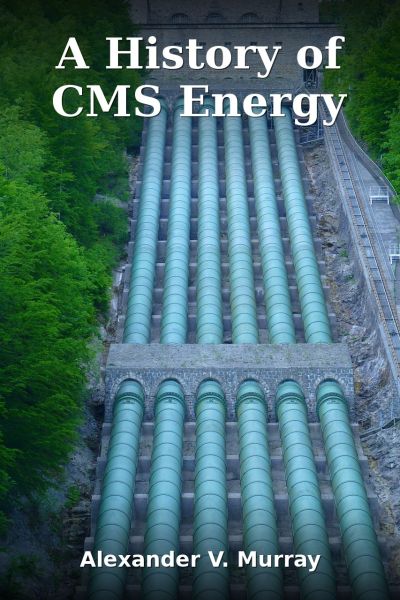
CMS Energy's history traces its roots to the late 19th century, beginning with William A. Foote's entrepreneurial ventures in electric lighting and hydropower in Adrian and Jackson, Michigan. The 1910 merger orchestrated by Samuel Insull consolidated regional utilities into Consumers Power Company, creating a statewide system that fueled Michigan's industrial rise, particularly the automotive sector, through the Roaring Twenties and the Great Depression. The company proved essential during World War II as Michigan became the "Arsenal of Democracy," and the post-war era brought a massive expansion of natural gas infrastructure, converting manufactured gas systems to natural gas and developing vast underground storage fields that remain a strategic national asset.
The latter half of the 20th century saw Consumers Power embrace nuclear energy with the pioneering Big Rock Point and the larger Palisades plant, though the ambitious Midland nuclear project became a financial catastrophe, nearly bankrupting the company in the 1980s. This crisis precipitated the 1987 formation of CMS Energy as a holding company under William T. McCormick Jr., enabling diversification into independent power production, gas marketing, and international ventures. While the successful conversion of Midland into a gas-fired cogeneration plant stabilized finances, the early 2000s brought a new crisis driven by the Enron scandal's fallout and underperforming global assets, resulting in a $5.3 billion loss and a strategic retreat back to core regulated utility operations in Michigan.
Under successive leadership—David Joos, John Russell, Dan Malone, and Patti Poppe—CMS Energy executed a disciplined "back-to-basics" recovery, divesting non-core assets to strengthen Consumers Energy. The 2010s and 2020s marked a definitive pivot toward sustainability, characterized by the aggressive deployment of smart grid technologies, Advanced Metering Infrastructure, and a "Clean Energy Plan" targeting net-zero carbon emissions by 2040. This strategy involves accelerated coal plant retirements, massive investments in wind, solar, and battery storage, and grid hardening for climate resilience, positioning the utility as a leader in the clean energy transition.
Throughout its evolution, CMS Energy has remained deeply intertwined with Michigan's economic and social fabric. Its legacy is defined by the physical infrastructure powering the state's homes and industries, its role as a major employer and taxpayer, and a workforce culture adapted through generations of technological change. By navigating complex regulatory landscapes, financial crises, and the imperative of decarbonization, the company has demonstrated enduring resilience, transforming from a collection of local light plants into an S&P 500 entity committed to delivering reliable, affordable, and increasingly sustainable energy for Michigan's future.
What You'll Find Inside:
- The century-long evolution of CMS Energy from small municipal electric plants in the 1880s to Michigan's largest utility serving 6.8 million customers, shaped by visionaries like William Foote and Samuel Insull.
- How the company survived existential crises including the Great Depression, the Midland nuclear plant financial disaster, the Enron-era market collapse, and the early 2000s $5.3 billion loss through strategic restructuring and regulatory navigation.
- The technological transformation of Michigan's energy infrastructure: from hydroelectric dams and coal plants to nuclear power (Big Rock Point, Palisades), natural gas dominance, and the modern pivot to wind, solar, and battery storage.
- The pivotal 1987 formation of CMS Energy as a holding company enabling diversification into international power generation, gas marketing, and oil exploration, followed by a strategic return to a regulated utility focus after 2000s financial turmoil.
- The company's contemporary Clean Energy Plan targeting net-zero carbon by 2040, integrating smart grid technologies, grid hardening for climate resilience, and balancing affordability with decarbonization under Michigan regulatory oversight.
Who's It For:
This book is ideal for business historians, energy industry professionals, and investors seeking a comprehensive case study of utility evolution over 130+ years. Michigan residents and policy makers will gain deep insight into the infrastructure, regulatory decisions, and economic forces that shaped the state's power system. Corporate strategists and leadership students will find valuable lessons in crisis management, diversification cycles, and long-term adaptation to technological disruption and climate imperatives.
Table of Contents:
- Introduction
- Chapter 1 The Dawn of Power: Early Michigan and the Genesis of Consumers Energy
- Chapter 2 Samuel Insull and the Electrification of Michigan
- Chapter 3 The Roaring Twenties and Expansion
- Chapter 4 Surviving the Great Depression: Challenges and Resilience
- Chapter 5 World War II: Powering the Arsenal of Democracy
- Chapter 6 Post-War Boom and the Rise of Natural Gas
- Chapter 7 The Nuclear Age: Big Rock Point and Palisades
- Chapter 8 Environmental Awakening and Regulatory Shifts
- Chapter 9 The Energy Crisis of the 1970s
- Chapter 10 Diversification and the Formation of CMS Energy
- Chapter 11 Navigating Deregulation and Competition
- Chapter 12 International Ventures and Global Ambitions
- Chapter 13 The IT Revolution and Modernization
- Chapter 14 Crisis and Recovery: Challenges in the Early 2000s
- Chapter 15 A Focus on Renewables: Wind and Solar
- Chapter 16 Smart Grid Technologies and Infrastructure Upgrades
- Chapter 17 Community Engagement and Corporate Responsibility
- Chapter 18 Leadership Transitions and Strategic Realignments
- Chapter 19 Adapting to Climate Change: Mitigation and Adaptation
- Chapter 20 The Future of Energy: Innovation and Investment
- Chapter 21 Economic Impact and Regional Development
- Chapter 22 Employee Culture and Workforce Evolution
- Chapter 23 Regulatory Landscape and Advocacy Efforts
- Chapter 24 Financial Performance and Shareholder Value
- Chapter 25 CMS Energy's Enduring Legacy
Author:
Published By:
Date Published:
November 19, 2026
Type:
Nonfiction
Language:
English
Word Count:
38,038 words
Reading Time:
2 hours 40 minutes
Sample:
Order:
Order A History of CMS Energy (Paperback) on MixCache.com:
Buy NowPrint copy is made to order and ships worldwide. Includes the ebook free, ready to read instantly.
$5 account credit for all new MixCache.com accounts, usable toward any ebook purchase!*