Browse by Category
Fiction
- Action & Adventure
- African American
- Anthologies
- Children's Fiction
- Classics
- Comics & Graphic Novels
- Coming of Age
- Contemporary
- Cultural & Regional
- Drama
- Erotica
- Fantasy
- General
- Historical Fiction
- Horror
- Humor & Satire
- Literary Fiction
- Mystery, Thriller & Suspense
- Poetry
- Religious & Inspirational
- Romance
- Science Fiction
- Short Stories
- War & Military
- Westerns
- Women's Fiction
- Young Adult
Non-Fiction
- Antiques & Collectibles
- Arts & Photography
- Biographies & Memoirs
- Business & Money
- Children's Non-Fiction
-
Computers & Technology
- Artificial Intelligence
- Computer Science
- Cybersecurity & Cryptography
- Data Science & Analytics
- Databases & Big Data
- Game Development & Design
- General
- Hardware & DIY
- Mobile App Development
- Networking & Cloud Computing
- Operating Systems
- Programming
- Robotics
- Software
- Software Engineering
- User Experience (UX) & Design
- Web Development & Design
- Cooking, Food & Wine
- Crafts, Hobbies & Home
- Education & Teaching
- Engineering
- General
- Health, Fitness & Dieting
-
History
- African History
- African History - North Africa
- African History - Sub-Saharan Africa
- American History
- American History - 20th Century
- American History - Civil War
- American History - Colonial Period
- Ancient History
- Asian History
- Asian History - China
- Asian History - India
- Asian History - Japan
- Asian History - Southeast Asia
- European History
- European History - Ancient Greece
- European History - Ancient Rome
- European History - Medieval
- European History - Modern
- European History - Renaissance
- General
- Middle Eastern History
- Military History
- Military History - Aviation
- Military History - Naval
- Social & Cultural History
- World History
- Humor & Entertainment
- Industrial Technology
- Language Learning
- Law
- LGBTQ+ Non-Fiction
- Literary Criticism
- Medical Books
- Parenting & Relationships
- Philosophy
- Politics & Social Sciences
- Reference
- Religion & Spirituality
-
Science & Math
- Agricultural Sciences
- Astronomy & Space Science
- Behavioral Sciences
- Biological Sciences
- Botany & Plant Science
- Chemistry
- Earth Sciences
- Engineering - Chemical
- Engineering - Civil
- Engineering - Electrical
- Engineering - Mechanical
- Environment
- General
- Geology
- Mathematics
- Nature & Ecology
- Oceanography
- Paleontology
- Physics
- Statistics
- Self-Help
- Sports & Outdoors
- Study Aids
- Sustainability & Green Living
- Textbooks
- Transportation
- Travel
- True Crime
- Urban Planning & Development
- Veterinary Medicine
- Writing & Publishing
Jump to Section
MixCache.com Total Access
Unlimited reading and audiobooks for every book published by MixCache.com.
Included titles carry the MTA badge.
Learn more →
The Hidden Life of Coral Reefs
MTA
How Ocean Ecosystems Shape Our Planet
About this book:
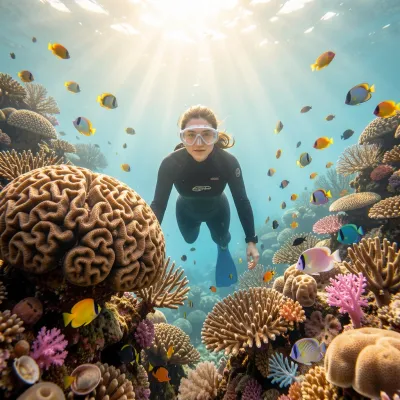
Coral reefs are living underwater cities built by tiny coral polyps that secrete calcium carbonate skeletons, often in partnership with photosynthetic algae called zooxanthellae. This symbiosis fuels reef growth, drives the dazzling colors of corals, and underpins the massive biological productivity of these ecosystems. Reefs exhibit extraordinary diversity, from massive brain corals and delicate branching staghorns to flexible soft corals, sponges, mollusks, crustaceans, echinoderms, and thousands of fish species, creating complex habitats that support a quarter of all marine life despite covering less than one percent of the ocean floor.
These ecosystems provide invaluable services to humanity: they act as natural breakwaters that dissipate up to 97% of wave energy, protecting coastlines from storms and erosion; they serve as critical nurseries and feeding grounds for fisheries that sustain the livelihoods and food security of hundreds of millions; they are a rich source of biochemical compounds for pharmaceuticals, including painkillers, anticancer agents, and antiviral drugs; and they generate billions of dollars through tourism and cultural value. The reef’s structural complexity and biodiversity also drive nutrient cycling and support interconnected habitats like mangroves and seagrass beds.
However, coral reefs face unprecedented threats. Climate‑driven ocean warming triggers mass bleaching events by disrupting the coral‑zooxanthellae symbiosis, while ocean acidification reduces carbonate ion availability, weakening skeletal growth and making reefs more vulnerable to erosion. Local stressors such as nutrient runoff, sedimentation, chemical and plastic pollution, and destructive fishing practices (blast fishing, cyanide fishing, overfishing of herbivores and apex predators) further degrade reef health, diminish resilience, and can shift reefs from coral‑dominated to algae‑dominated states. Deep‑sea corals, though less visible, also suffer from trawling, acidification, and climate‑altered currents.
Conservation hinges on both global and local action. Reducing greenhouse gas emissions is essential to curb warming and acidification, while marine protected areas, sustainable fisheries management, improved water quality, reef restoration projects, and community‑based stewardship can bolster resilience and recovery. Protecting coral reefs safeguards not only marine biodiversity but also the coastal protection, food security, medical potential, and cultural heritage that these living cities provide to the planet. The future of reefs depends on humanity’s commitment to mitigating climate change, alleviating local pressures, and fostering a renewed sense of stewardship for these vital ocean ecosystems.
What You'll Find Inside:
- Explains coral polyp biology, symbiosis with zooxanthellae, and how this partnership fuels reef-building and calcification.
- Details the vast diversity of hard and soft coral forms and their roles in creating complex reef habitats that support marine life.
- Highlights ecosystem services provided by reefs: coastal protection, fisheries and food security, pharmaceutical discoveries, and tourism revenue.
- Outlines the primary threats to coral reefs: climate‑induced bleaching, ocean acidification, pollution, overfishing, and destructive practices.
- Describes conservation strategies such as marine protected areas, sustainable fisheries, coral restoration, and the necessity of global climate action.
Who's It For:
This book is ideal for undergraduate and graduate marine biology students, environmental scientists, conservation practitioners, policymakers, and educated general readers who seek a comprehensive, science‑based understanding of coral reef ecology, the challenges they face, and the actions needed to protect them.
Table of Contents:
- Introduction: The Ocean's Living Cities
- Chapter 1: What Are Coral Reefs? Defining the Architects of the Deep
- Chapter 2: The Coral Animal: Polyps, Skeletons, and Symbiosis
- Chapter 3: A Rainbow Under the Waves: The Diversity of Hard Corals
- Chapter 4: Soft Corals and Their Kin: Beyond the Stony Structures
- Chapter 5: The Algal Engine: Zooxanthellae and the Power of Photosynthesis
- Chapter 6: Reef Builders Through Time: A Geological History of Coral Ecosystems
- Chapter 7: From Larva to Colony: The Life Cycle of a Coral
- Chapter 8: Reproduction Strategies: Spawning, Budding, and Genetic Exchange
- Chapter 9: The Reef as Habitat: A Home for Millions
- Chapter 10: Fish of the Reef: Adaptations, Roles, and Stunning Diversity
- Chapter 11: Invertebrate Wonders: Crabs, Snails, Starfish, and More
- Chapter 12: Predators and Prey: The Delicate Balance of Reef Food Webs
- Chapter 13: Ocean Currents and Coral Dispersal: Connecting Reefs Across the Globe
- Chapter 14: The Great Barrier Reef: A Colossus of Coral Life
- Chapter 15: Reefs of the Indo-Pacific: Biodiversity Hotspots and Unique Adaptations
- Chapter 16: Caribbean Reefs: Resilience in the Face of Change
- Chapter 17: Deep-Sea Corals: Hidden Gardens in the Abyss
- Chapter 18: Ecosystem Services: How Reefs Benefit Humanity
- Chapter 19: Coastal Protection: Reefs as Natural Breakwaters
- Chapter 20: Fisheries and Food Security: The Reef's Bounty
- Chapter 21: Pharmaceutical Frontiers: Discoveries from the Coral Kingdom
- Chapter 22: Climate Change: The Gravest Threat to Coral Reefs
- Chapter 23: Ocean Acidification: Dissolving the Foundations of the Reef
- Chapter 24: Pollution and Overfishing: Local Stressors, Global Impacts
- Chapter 25: Conservation and Hope: Protecting the Future of Coral Reefs
Author:
Published By:
Date Published:
August 15, 2026
Type:
Nonfiction
Language:
English
Word Count:
43,435 words
Reading Time:
3 hours 3 minutes
Sample:
Order:
Order The Hidden Life of Coral Reefs (Paperback) on MixCache.com:
Buy NowPrint copy is made to order and ships worldwide. Includes the ebook free, ready to read instantly.
$5 account credit for all new MixCache.com accounts, usable toward any ebook purchase!*