Browse by Category
Fiction
- Action & Adventure
- African American
- Anthologies
- Children's Fiction
- Classics
- Comics & Graphic Novels
- Coming of Age
- Contemporary
- Cultural & Regional
- Drama
- Erotica
- Fantasy
- General
- Historical Fiction
- Horror
- Humor & Satire
- Literary Fiction
- Mystery, Thriller & Suspense
- Poetry
- Religious & Inspirational
- Romance
- Science Fiction
- Short Stories
- War & Military
- Westerns
- Women's Fiction
- Young Adult
Non-Fiction
- Antiques & Collectibles
- Arts & Photography
- Biographies & Memoirs
- Business & Money
- Children's Non-Fiction
-
Computers & Technology
- Artificial Intelligence
- Computer Science
- Cybersecurity & Cryptography
- Data Science & Analytics
- Databases & Big Data
- Game Development & Design
- General
- Hardware & DIY
- Mobile App Development
- Networking & Cloud Computing
- Operating Systems
- Programming
- Robotics
- Software
- Software Engineering
- User Experience (UX) & Design
- Web Development & Design
- Cooking, Food & Wine
- Crafts, Hobbies & Home
- Education & Teaching
- Engineering
- General
- Health, Fitness & Dieting
-
History
- African History
- African History - North Africa
- African History - Sub-Saharan Africa
- American History
- American History - 20th Century
- American History - Civil War
- American History - Colonial Period
- Ancient History
- Asian History
- Asian History - China
- Asian History - India
- Asian History - Japan
- Asian History - Southeast Asia
- European History
- European History - Ancient Greece
- European History - Ancient Rome
- European History - Medieval
- European History - Modern
- European History - Renaissance
- General
- Middle Eastern History
- Military History
- Military History - Aviation
- Military History - Naval
- Social & Cultural History
- World History
- Humor & Entertainment
- Industrial Technology
- Language Learning
- Law
- LGBTQ+ Non-Fiction
- Literary Criticism
- Medical Books
- Parenting & Relationships
- Philosophy
- Politics & Social Sciences
- Reference
- Religion & Spirituality
-
Science & Math
- Agricultural Sciences
- Astronomy & Space Science
- Behavioral Sciences
- Biological Sciences
- Botany & Plant Science
- Chemistry
- Earth Sciences
- Engineering - Chemical
- Engineering - Civil
- Engineering - Electrical
- Engineering - Mechanical
- Environment
- General
- Geology
- Mathematics
- Nature & Ecology
- Oceanography
- Paleontology
- Physics
- Statistics
- Self-Help
- Sports & Outdoors
- Study Aids
- Sustainability & Green Living
- Textbooks
- Transportation
- Travel
- True Crime
- Urban Planning & Development
- Veterinary Medicine
- Writing & Publishing
Jump to Section

Want unlimited access to all books published by MixCache.com (plus their audiobooks)? Try MixCache.com Total Access. Look for the MTA badge on book covers to identify included titles.
Access to infinite ebooks: Don't see the book you want? Suggest it and we'll create it (free!) for you from scratch with our powerful AI book writer. Then read it with MTA - besides profiting from any sales it makes!
Crime in Developing Contexts: Urban Violence, Informal Economies, and State Fragility
MTA
Case Studies from Latin America, Africa, and Southeast Asia
About this book:
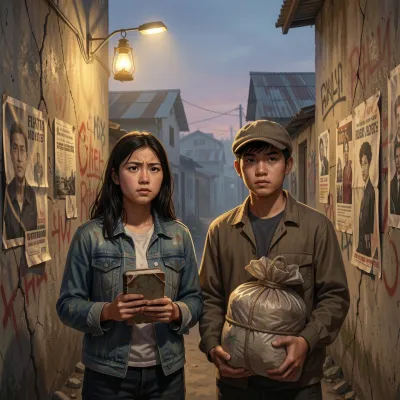
Crime in Developing Contexts: Urban Violence, Informal Economies, and State Fragility presents a comprehensive analysis of how interconnected systemic vulnerabilities drive criminal activity across Latin America, Africa, and Southeast Asia. The book argues that weak governance—characterized by institutional deficits, corruption, limited state presence, and eroded public trust—creates power vacuums that criminal groups exploit to provide alternative forms of authority, security, and economic opportunity. This dynamic is profoundly intertwined with youth unemployment and marginalization, where limited legitimate pathways push young people toward illicit economies offering income, identity, and belonging, particularly in informal settlements where state services are absent. Furthermore, informal economies, while vital for survival, frequently become breeding grounds for illicit activities such as counterfeit trade, drug distribution, human trafficking, and resource exploitation due to their unregulated nature, cash-based transactions, and vulnerability to criminal extortion and infiltration, blurring the lines between subsistence and criminality.
This theoretical framework is substantiated through diverse regional case studies. Central American cities illustrate how deported gangs like MS-13 and Barrio 18 established territorial control through extortion and violence, exploiting state weakness and youth marginalization. Andean nations reveal the nexus between cocaine trafficking, systemic corruption compromising security and judicial systems, and the devastation of rural livelihoods. Sub-Saharan Africa showcases how resource-based conflicts (e.g., blood diamonds, conflict minerals) empower militias amid state fragility, while the Sahel demonstrates how historic trade routes facilitate illicit trafficking of humans, weapons, drugs, and fuel, fueling political instability. Southeast Asian megacities highlight sophisticated human trafficking networks exploiting informal labor demands and porous borders, and emerging economies reveal the rise of cybercrime and digital black markets leveraging technological adoption outpacing cybersecurity defenses. These cases underscore transnational links, where local illicit economies feed into global criminal supply chains, and state fragility in one region enables transnational organized crime to thrive.
The book then critically examines intervention strategies, emphasizing that effective responses must move beyond punitive measures to address root causes while building local capacity and trust. Community policing initiatives are analyzed for their potential to rebuild police-community relationships through visible engagement, problem-oriented approaches, and local partnerships, though challenged by institutional corruption and resource constraints. Justice reform strategies focus on strengthening judicial independence, reducing case backlogs, professionalizing law enforcement, combating sector-specific corruption, and improving access to justice for marginalized groups. Alternative livelihoods and economic empowerment programs—encompassing vocational training, entrepreneurship support, microfinance, and youth centers—are presented as crucial for providing viable options to at-risk youth, particularly when integrated with education, health, and social inclusion initiatives. The text stresses that sustainable crime reduction requires holistic approaches targeting poverty, inequality, gender disparities, environmental degradation, and governance failures simultaneously, recognizing that initiatives like mental health support, safe schools, land tenure reform, and economic diversification are intrinsically linked to resilience.
Ultimately, the work concludes that lasting security arises not from suppression alone but from building resilient, inclusive communities where individuals have genuine stakes in the formal economy and society. This involves strengthening social capital, empowering local leadership, investing in quality education and comprehensive healthcare (including mental health), formalizing and regulating informal economies to reduce criminal vulnerability, ensuring transparent and accountable justice systems, fostering inter-agency government collaboration, promoting gender equity, and leveraging context-specific adaptation rather than one-size-fits-all solutions. The book advocates for sustained political will, international cooperation focused on capacity building and respecting local ownership, robust monitoring and evaluation, and the vital role of civil society in advocacy, service delivery, and accountability. It frames resilience as a dynamic, continuous process of transforming vulnerability into enduring strength through investments in human development, good governance, and community agency, shifting the paradigm from merely surviving crime to actively fostering secure, just, and prosperous societies.
What You'll Find Inside:
- The critical link between weak governance structures and urban violence in developing cities
- How youth unemployment and social marginalization fuel criminal recruitment and gang dynamics
- Informal economies as both survival mechanisms and breeding grounds for illicit activities
- State fragility creating enabling conditions for organized crime to proliferate
- The necessity of context-specific adaptation strategies for effective crime reduction
Who's It For:
This book is essential reading for practitioners, policymakers, and researchers working on crime prevention and justice reform in developing regions. It provides valuable insights for those tackling urban violence, informal economies, and state fragility in Latin America, Africa, and Southeast Asia, offering both diagnostic analysis and practical solutions grounded in extensive case studies.
Author:
Published By:
Date Published:
August 10, 2026
Type:
Nonfiction
Word Count:
51,099 words
Reading Time:
3 hours 35 minutes
Sample:
Order:
Click to order this paperback:
Buy NowPrint copy is made to order and ships worldwide. Includes the ebook free, ready to read instantly.
$5 account credit for all new MixCache.com accounts, usable toward any ebook purchase!*