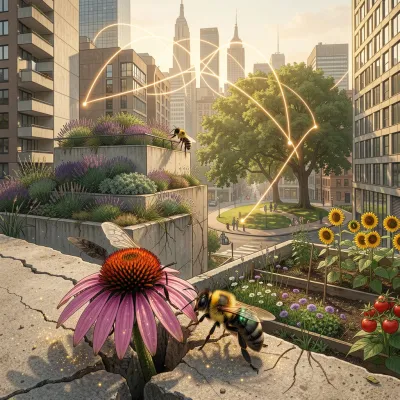
The Secret Life of Urban Bees
MTA
How City Hives Influence Pollination
About this book:

The Secret Life of Urban Bees reveals that cities, far from being ecological deserts, host a rich diversity of bee species—including honeybees, bumblebees, and numerous solitary bees—that have adapted remarkably to urban life. These pollinators exploit the varied floral resources found in community gardens, parks, roadside verges, and even balcony plantings, benefit from the urban heat island effect that extends foraging seasons, and demonstrate flexible nesting strategies ranging from rooftop hives and cavity‑nesting in building crevices to ground nests in patches of bare soil. Their sophisticated navigation, using sun compasses, polarized light, landmarks, and the waggle dance, allows them to traverse fragmented cityscapes despite obstacles like traffic, wind tunnels, and light pollution.
Urban bees nevertheless face significant threats from air and water pollution, heavy metals, pesticide exposure—especially systemic neonicotinoids—and pathogens such as Varroa mites, Nosema, and various viruses, which are often exacerbated by habitat fragmentation and high colony density. Climate change further stresses populations through phenological mismatches, extreme weather, and shifting species ranges. In response, green spaces, community gardens, rooftop apiaries, and balcony habitats provide crucial refuges, while practices like planting native, succession‑blooming flora, providing water sources, and preserving nesting sites bolster bee health and resilience.
Human engagement is vital: citizen science initiatives generate large‑scale data on bee distribution and health; habitat mapping using GIS and remote sensing identifies foraging and nesting corridors; pollinator‑friendly urban planning creates green corridors, reduces pesticide use, and integrates green roofs and vertical gardens; policies regulate pesticides, protect nesting sites, and support urban beekeeping and agriculture; educational programs foster public awareness and stewardship; and the economic value of urban pollination—seen in increased garden yields, higher property values, and the market for unique urban honey—underscores the benefits of investing in bee‑friendly cities. The book concludes with a global perspective on urban pollinator initiatives and a clear call to action for individuals and policymakers to plant for pollinators, provide nesting habitats, support responsible beekeeping, advocate for protective policies, and participate in citizen science to ensure the continued buzz of urban bees in our shared ecosystems.
What You'll Find Inside:
- Urban environments offer diverse, year-round floral resources and warmer temperatures that can boost bee foraging and honey production despite challenges like habitat fragmentation.
- Different bee species—honeybees, bumblebees, and solitary bees—employ unique nesting and foraging strategies to thrive in city habitats ranging from rooftops to sidewalk cracks.
- Urban beekeeping, green roofs, community gardens, and bee hotels create vital habitats and foraging corridors that support pollinator biodiversity in dense cities.
- Pollution, pesticides, pathogens, and climate change pose significant threats to urban bee health, requiring integrated management and mitigation strategies.
- Citizen science, informed policy, and educational initiatives are essential for monitoring urban bee populations and fostering bee-friendly cities.
Who's It For:
This book is ideal for urban residents, gardeners, and balcony growers who want to support pollinators; beekeepers seeking best practices for city hives; city planners and policymakers interested in green infrastructure and pollinator protection; and educators, students, or anyone curious about how bees adapt to and enrich urban ecosystems.
Author:
Published By:
Date Published:
August 8, 2026
Type:
Nonfiction
Word Count:
35,298 words
Reading Time:
2 hours 28 minutes
Sample:
Order:
Click to order this paperback:
Buy NowPrint copy is made to order and ships worldwide. Includes the ebook free, ready to read instantly.
$5 account credit for all new MixCache.com accounts, usable toward any ebook purchase!*