
Browse by Category
Fiction
- Action & Adventure
- African American
- Anthologies
- Children's Fiction
- Classics
- Comics & Graphic Novels
- Coming of Age
- Contemporary
- Cultural & Regional
- Drama
- Erotica
- Fantasy
- General
- Historical Fiction
- Horror
- Humor & Satire
- Literary Fiction
- Mystery, Thriller & Suspense
- Poetry
- Religious & Inspirational
- Romance
- Science Fiction
- Short Stories
- War & Military
- Westerns
- Women's Fiction
- Young Adult
Non-Fiction
- Antiques & Collectibles
- Arts & Photography
- Biographies & Memoirs
- Business & Money
- Children's Non-Fiction
-
Computers & Technology
- Artificial Intelligence
- Computer Science
- Cybersecurity & Cryptography
- Data Science & Analytics
- Databases & Big Data
- Game Development & Design
- General
- Hardware & DIY
- Mobile App Development
- Networking & Cloud Computing
- Operating Systems
- Programming
- Robotics
- Software
- Software Engineering
- User Experience (UX) & Design
- Web Development & Design
- Cooking, Food & Wine
- Crafts, Hobbies & Home
- Education & Teaching
- Engineering
- General
- Health, Fitness & Dieting
-
History
- African History
- African History - North Africa
- African History - Sub-Saharan Africa
- American History
- American History - 20th Century
- American History - Civil War
- American History - Colonial Period
- Ancient History
- Asian History
- Asian History - China
- Asian History - India
- Asian History - Japan
- Asian History - Southeast Asia
- European History
- European History - Ancient Greece
- European History - Ancient Rome
- European History - Medieval
- European History - Modern
- European History - Renaissance
- General
- Middle Eastern History
- Military History
- Military History - Aviation
- Military History - Naval
- Social & Cultural History
- World History
- Humor & Entertainment
- Industrial Technology
- Language Learning
- Law
- LGBTQ+ Non-Fiction
- Literary Criticism
- Medical Books
- Parenting & Relationships
- Philosophy
- Politics & Social Sciences
- Reference
- Religion & Spirituality
-
Science & Math
- Agricultural Sciences
- Astronomy & Space Science
- Behavioral Sciences
- Biological Sciences
- Botany & Plant Science
- Chemistry
- Earth Sciences
- Engineering - Chemical
- Engineering - Civil
- Engineering - Electrical
- Engineering - Mechanical
- Environment
- General
- Geology
- Mathematics
- Nature & Ecology
- Oceanography
- Paleontology
- Physics
- Statistics
- Self-Help
- Sports & Outdoors
- Study Aids
- Sustainability & Green Living
- Textbooks
- Transportation
- Travel
- True Crime
- Urban Planning & Development
- Veterinary Medicine
- Writing & Publishing
Jump to Section

Want unlimited access to all books published by MixCache.com (plus their audiobooks)? Try MixCache.com Total Access. Look for the MTA badge on book covers to identify included titles.
Access to infinite ebooks: Don't see the book you want? Suggest it and we'll create it (free!) for you from scratch with our powerful AI book writer. Then read it with MTA - besides profiting from any sales it makes!
A History of Enbridge
MTA
The Story of a Global Company
About this book:
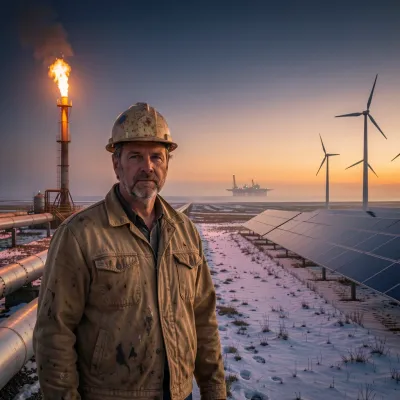
Enbridge traces its origins to the 1949 founding of the Interprovincial Pipe Line Company (IPL) to move oil from Alberta’s Leduc discovery to eastern markets, a project that spurred rapid expansion across Canada and into the United States through the Lakehead subsidiary. Over the 1950s‑1970s IPL grew into the world’s longest crude‑oil pipeline, then began diversifying into natural gas distribution and transmission in the 1970s‑80s, laying the groundwork for a broader energy‑infrastructure portfolio. The 1990s‑2000s marked an aggressive acquisition era—highlighted by the purchase of Consumers’ Gas and the 1998 rebranding to Enbridge—that added storage, processing, natural‑gas‑liquids (NGL) capabilities, and midstream services, while early international ventures such as the Ocensa pipeline in Colombia and offshore projects in the Gulf of Mexico signaled a nascent global ambition.
From the 2000s onward Enbridge expanded into renewable energy (wind, solar, geothermal), offshore and marine operations, and power generation, leveraging its project‑development expertise and strong cash flows from regulated assets. Simultaneously it deepened its midstream mastery through storage, blending, fractionation, and marketing, and became the primary transporter of Canada’s oil‑sands heavy oil and dilbit, investing heavily in terminal facilities, diluent return lines, and flow‑assurance technology. The company also built a growing NGL business, expanded into European offshore wind (e.g., Rampion), explored Asia‑Pacific LNG and renewable opportunities, and continuously upgraded its technology with SCADA, smart‑pig inspections, GIS, predictive analytics, and cybersecurity measures. Throughout its history Enbridge has confronted operational crises—most notably the 2010 Kalamazoo River spill—prompting major integrity‑management overhauls, and has navigated evolving regulatory landscapes, Indigenous‑rights consultations, and geopolitical pressures that shape cross‑border energy security.
Today Enbridge operates a vast, integrated network of crude‑oil and liquids pipelines, natural‑gas transmission and distribution utilities, significant renewable‑power generation assets, and emerging low‑carbon initiatives in hydrogen, carbon‑capture‑utilization‑storage, and energy storage. Its strategy balances the optimization of legacy hydrocarbon infrastructure with aggressive growth in clean‑energy sectors, aiming for net‑zero emissions by 2050 while delivering stable cash flows and shareholder returns. The company emphasizes safety, environmental stewardship, community and Indigenous partnerships, technological innovation, and disciplined financial management as it positions itself as a global energy leader capable of bridging traditional and future energy systems across North America, Europe, and select Asia‑Pacific markets.
What You'll Find Inside:
- Chronicles Enbridge's evolution from a single Canadian pipeline operator into a global energy infrastructure giant, detailing its founding after the 1947 Leduc oil strike and its relentless expansion across North America.
- Explores the company's strategic diversification beyond crude oil pipelines into natural gas distribution, midstream services (storage, processing, marketing), and a growing portfolio of renewable energy assets including wind, solar, and offshore.
- Examines Enbridge's response to major operational crises, particularly the 2010 Kalamazoo River spill, and how it led to overhauls in safety culture, pipeline integrity management, and emergency response protocols.
- Covers Enbridge's international expansion into Europe through offshore wind investments and its cautious forays into Asia-Pacific and South America, highlighting the geopolitical and regulatory challenges of operating globally.
- Details Enbridge's commitment to decarbonization and net-zero emissions by 2050, including investments in hydrogen, carbon capture and storage (CCUS), and the modernization of its existing infrastructure to reduce methane leaks and improve efficiency.
Who's It For:
This book is ideal for energy industry professionals, business strategists, and investors seeking a deep understanding of how a major midstream company grew and adapted over decades. It also serves as a valuable case study for students of corporate history, business management, and energy policy, offering insights into infrastructure development, regulatory navigation, and the transition to a lower-carbon energy future.
Author:
Published By:
Date Published:
July 27, 2026
Type:
Nonfiction
Language:
English
Word Count:
36,829 words
Reading Time:
2 hours 35 minutes
Sample:
Order:
Order A History of Enbridge (Paperback) on MixCache.com:
Buy NowPrint copy is made to order and ships worldwide. Includes the ebook free, ready to read instantly.
$5 account credit for all new MixCache.com accounts, usable toward any ebook purchase!*


