Browse by Category
Fiction
- Action & Adventure
- African American
- Anthologies
- Children's Fiction
- Classics
- Comics & Graphic Novels
- Coming of Age
- Contemporary
- Cultural & Regional
- Drama
- Erotica
- Fantasy
- General
- Historical Fiction
- Horror
- Humor & Satire
- Literary Fiction
- Mystery, Thriller & Suspense
- Poetry
- Religious & Inspirational
- Romance
- Science Fiction
- Short Stories
- War & Military
- Westerns
- Women's Fiction
- Young Adult
Non-Fiction
- Antiques & Collectibles
- Arts & Photography
- Biographies & Memoirs
- Business & Money
- Children's Non-Fiction
-
Computers & Technology
- Artificial Intelligence
- Computer Science
- Cybersecurity & Cryptography
- Data Science & Analytics
- Databases & Big Data
- Game Development & Design
- General
- Hardware & DIY
- Mobile App Development
- Networking & Cloud Computing
- Operating Systems
- Programming
- Robotics
- Software
- Software Engineering
- User Experience (UX) & Design
- Web Development & Design
- Cooking, Food & Wine
- Crafts, Hobbies & Home
- Education & Teaching
- Engineering
- General
- Health, Fitness & Dieting
-
History
- African History
- African History - North Africa
- African History - Sub-Saharan Africa
- American History
- American History - 20th Century
- American History - Civil War
- American History - Colonial Period
- Ancient History
- Asian History
- Asian History - China
- Asian History - India
- Asian History - Japan
- Asian History - Southeast Asia
- European History
- European History - Ancient Greece
- European History - Ancient Rome
- European History - Medieval
- European History - Modern
- European History - Renaissance
- General
- Middle Eastern History
- Military History
- Military History - Aviation
- Military History - Naval
- Social & Cultural History
- World History
- Humor & Entertainment
- Industrial Technology
- Language Learning
- Law
- LGBTQ+ Non-Fiction
- Literary Criticism
- Medical Books
- Parenting & Relationships
- Philosophy
- Politics & Social Sciences
- Reference
- Religion & Spirituality
-
Science & Math
- Agricultural Sciences
- Astronomy & Space Science
- Behavioral Sciences
- Biological Sciences
- Botany & Plant Science
- Chemistry
- Earth Sciences
- Engineering - Chemical
- Engineering - Civil
- Engineering - Electrical
- Engineering - Mechanical
- Environment
- General
- Geology
- Mathematics
- Nature & Ecology
- Oceanography
- Paleontology
- Physics
- Statistics
- Self-Help
- Sports & Outdoors
- Study Aids
- Sustainability & Green Living
- Textbooks
- Transportation
- Travel
- True Crime
- Urban Planning & Development
- Veterinary Medicine
- Writing & Publishing
Jump to Section
MixCache.com Total Access
Unlimited reading and audiobooks for every book published by MixCache.com.
Included titles carry the MTA badge.
Learn more →
A History of ASML Holding
MTA
The Story of a Global Company
About this book:
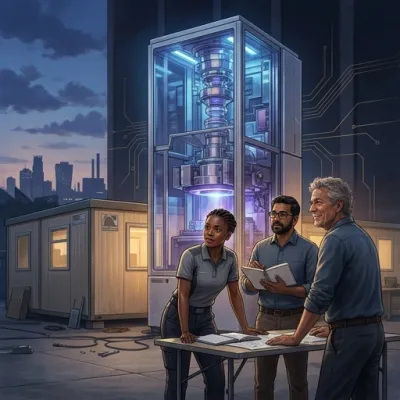
ASML Holding's journey began in 1984 as a joint venture between Philips and ASM International, born from a small team in a temporary Eindhoven office ("the portacabin") determined to develop competitive lithography equipment to reduce dependence on foreign suppliers. Despite early technical hurdles and market skepticism, ASML forged its foundational principles: a commitment to technological excellence, customer collaboration, agility, entrepreneurial ownership, and talent cultivation. The company weathered the semiconductor slump of the late 1980s/early 1990s through cost-cutting protected R&D, deepened customer relationships, and agile innovation, emerging stronger with the PAS 5500 stepper series that established it as a credible contender in the lithography market against Japanese giants Nikon and Canon.
The mid-to-late 1990s marked ASML's rise through technological leaps in miniaturization, driven by Deep Ultraviolet (DUV) lithography and the pivotal innovation of immersion technology, which extended the life of 193 nm lithography far beyond expectations. Simultaneously, ASML built strategic alliances, most critically with Carl Zeiss SMT for optics, and pursued a global expansion strategy targeting Asia's booming semiconductor hubs. This era solidified ASML's approach of intense customer collaboration, focused R&D, and ecosystem building. Navigating the dot-com boom and bust reinforced the importance of financial prudence and protecting long-term R&D investments, while ASML continuously refined DUV machines for efficiency, throughput, and total cost of ownership, making them the industry workhorse for nodes down to 14 nm.
The defining challenge and triumph came with Extreme Ultraviolet (EUV) lithography—a multi-decade, multi-billion-euro bet requiring breakthroughs in reflective optics, laser-produced plasma sources, ultra-high vacuum systems, and mask technology. Overcoming immense hurdles like source power, debris mitigation, and system integration was enabled by ASML's unique co-investment model with key customers (Intel, Samsung, TSMC), deep partnerships (Zeiss, Cymer acquisition), and relentless systems integration expertise. EUV entered high-volume manufacturing around 2016, giving ASML an unrivaled monopoly in advanced lithography. This dominance was reinforced by continuous improvement (High-NA EUV), a formidable IP portfolio, a complex global supply chain, and the company's talent factory, corporate culture of resilience and collaboration, and expanding ecosystem beyond lithography into metrology, inspection, and computational patterning. ASML's technology has become indispensable to Moore's Law, enabling the digital revolution from smartphones to AI, while navigating significant geopolitical tensions and embracing sustainability as a core responsibility. Its legacy lies not just in market leadership, but in enabling the foundational technology that powers virtually every aspect of modern life.
What You'll Find Inside:
- ASML originated as a 1984 joint venture between Philips and ASM International, founded on principles of technological excellence, customer collaboration, agility, entrepreneurial spirit, and talent focus.
- The company’s evolution from early steppers to DUV, immersion lithography, and finally EUV (including High‑NA EUV) enabled it to continually push Moore’s Law and secure a near‑monopoly on the most advanced chipmaking tools.
- Strategic alliances—particularly with Carl Zeiss, key customers (Intel, Samsung, TSMC), and multinational consortia—were essential for sharing risks, co‑developing breakthrough technologies, and maintaining innovation leadership.
- ASML navigated multiple market downturns (semiconductor slump, dot‑com bust) by protecting R&D, deepening customer relationships, optimizing operations, and building a resilient global supply chain.
- Beyond lithography, ASML expanded into metrology, inspection, computational patterning, and data analytics, while confronting geopolitical pressures, IP challenges, and sustainability expectations that shape its role as a critical enabler of the digital age.
Who's It For:
This book is ideal for technology executives, engineers, and investors in the semiconductor and high‑tech equipment sectors who want to understand ASML’s strategic decisions, technological evolution, and market dynamics. It also serves business historians, students of innovation and corporate strategy, and policymakers interested in the interplay of technology, global supply chains, and geopolitics. Anyone curious about how a single company’s breakthroughs in lithography have powered the digital revolution will find valuable insights.
Table of Contents:
- Introduction
- Chapter 1: The Genesis of a Giant: Early Days and Founding Principles
- Chapter 2: Forging Ahead: Early Innovations and Market Entry
- Chapter 3: Battling the Odds: Surviving the Semiconductor Slump
- Chapter 4: A New Era: The Emergence of Stepper Technology
- Chapter 5: Global Ambitions: Expanding Beyond European Borders
- Chapter 6: The Lithography Wars: Competing in a Fierce Market
- Chapter 7: Technological Leaps: Pushing the Boundaries of Miniaturization
- Chapter 8: Strategic Alliances: Partnerships that Shaped the Future
- Chapter 9: The Dot-Com Boom and Bust: Navigating Market Volatility
- Chapter 10: Deep Ultraviolet (DUV): The Workhorse of Chipmaking
- Chapter 11: Acquisitions and Growth: Expanding the Technological Portfolio
- Chapter 12: The Drive for Efficiency: Optimizing Production and Performance
- Chapter 13: Extreme Ultraviolet (EUV): A Bet on the Future
- Chapter 14: Overcoming Challenges: The Long Road to EUV Commercialization
- Chapter 15: Global Supply Chains: ASML's Intricate Network
- Chapter 16: Intellectual Property and Innovation: Protecting the Edge
- Chapter 17: The Talent Factory: Nurturing Engineers and Scientists
- Chapter 18: Corporate Culture: Values, Vision, and Leadership
- Chapter 19: Sustainability and Responsibility: Beyond Profits
- Chapter 20: Geopolitical Crossroads: Navigating International Relations
- Chapter 21: The ASML Ecosystem: Customers, Suppliers, and Competitors
- Chapter 22: Beyond Lithography: Exploring New Frontiers
- Chapter 23: Market Dominance: The Unrivaled Position
- Chapter 24: The Future of Moore's Law: ASML's Role in the Next Generation
- Chapter 25: A Global Impact: ASML's Enduring Legacy
Author:
Published By:
Date Published:
July 26, 2026
Type:
Nonfiction
Language:
English
Word Count:
38,513 words
Reading Time:
2 hours 42 minutes
Sample:
Order:
Order A History of ASML Holding (Paperback) on MixCache.com:
Buy NowPrint copy is made to order and ships worldwide. Includes the ebook free, ready to read instantly.
$5 account credit for all new MixCache.com accounts, usable toward any ebook purchase!*