
Browse by Category
Fiction
- Action & Adventure
- African American
- Anthologies
- Children's Fiction
- Classics
- Comics & Graphic Novels
- Coming of Age
- Contemporary
- Cultural & Regional
- Drama
- Erotica
- Fantasy
- General
- Historical Fiction
- Horror
- Humor & Satire
- Literary Fiction
- Mystery, Thriller & Suspense
- Poetry
- Religious & Inspirational
- Romance
- Science Fiction
- Short Stories
- War & Military
- Westerns
- Women's Fiction
- Young Adult
Non-Fiction
- Antiques & Collectibles
- Arts & Photography
- Biographies & Memoirs
- Business & Money
- Children's Non-Fiction
-
Computers & Technology
- Artificial Intelligence
- Computer Science
- Cybersecurity & Cryptography
- Data Science & Analytics
- Databases & Big Data
- Game Development & Design
- General
- Hardware & DIY
- Mobile App Development
- Networking & Cloud Computing
- Operating Systems
- Programming
- Robotics
- Software
- Software Engineering
- User Experience (UX) & Design
- Web Development & Design
- Cooking, Food & Wine
- Crafts, Hobbies & Home
- Education & Teaching
- Engineering
- General
- Health, Fitness & Dieting
-
History
- African History
- African History - North Africa
- African History - Sub-Saharan Africa
- American History
- American History - 20th Century
- American History - Civil War
- American History - Colonial Period
- Ancient History
- Asian History
- Asian History - China
- Asian History - India
- Asian History - Japan
- Asian History - Southeast Asia
- European History
- European History - Ancient Greece
- European History - Ancient Rome
- European History - Medieval
- European History - Modern
- European History - Renaissance
- General
- Middle Eastern History
- Military History
- Military History - Aviation
- Military History - Naval
- Social & Cultural History
- World History
- Humor & Entertainment
- Industrial Technology
- Language Learning
- Law
- LGBTQ+ Non-Fiction
- Literary Criticism
- Medical Books
- Parenting & Relationships
- Philosophy
- Politics & Social Sciences
- Reference
- Religion & Spirituality
-
Science & Math
- Agricultural Sciences
- Astronomy & Space Science
- Behavioral Sciences
- Biological Sciences
- Botany & Plant Science
- Chemistry
- Earth Sciences
- Engineering - Chemical
- Engineering - Civil
- Engineering - Electrical
- Engineering - Mechanical
- Environment
- General
- Geology
- Mathematics
- Nature & Ecology
- Oceanography
- Paleontology
- Physics
- Statistics
- Self-Help
- Sports & Outdoors
- Study Aids
- Sustainability & Green Living
- Textbooks
- Transportation
- Travel
- True Crime
- Urban Planning & Development
- Veterinary Medicine
- Writing & Publishing
Jump to Section
MixCache.com Total Access
Unlimited reading and audiobooks for every book published by MixCache.com.
Included titles carry the MTA badge.
Learn more →
Guyana's Colonial Crossroads: Plantation Economies and Ethnic Divisions
MTA
How British Guiana Became a Diverse Republic
About this book:
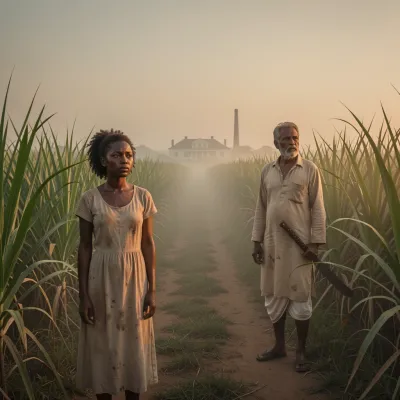
Guyana's colonial history, rooted in the plantation economy established by the Dutch and consolidated by the British, fundamentally shaped the nation's demographic composition, social structure, and enduring challenges. The insatiable demand for labor to cultivate sugar led to the brutal enslavement of Africans, followed by the systematic importation of indentured laborers from India after emancipation. This created a society marked by profound ethnic diversity but also by deep-seated divisions, as the colonial administration actively employed "divide and rule" tactics to maintain control. The economic dependency on a single export commodity, sugar, left the colony vulnerable to global market fluctuations and perpetuated a cycle of underdevelopment, while the rigid ethnic stratification formalized by the colonial state became the defining feature of Guyanese society.
The rise of nationalist movements in the mid-20th century, epitomized by the multi-ethnic People's Progressive Party (PPP), briefly offered a vision of unified self-determination. However, this promise was shattered by the intervention of Cold War geopolitics. The British suspension of the constitution in 1953 and the subsequent manipulation of the electoral system, backed by the United States, deliberately exacerbated ethnic tensions to prevent a perceived communist government from taking power. This external interference fractured the PPP along ethnic lines, with Forbes Burnham's People's National Congress (PNC) consolidating Afro-Guyanese support and Cheddi Jagan's PPP drawing primarily from the Indo-Guyanese population, setting the stage for decades of political polarization.
After independence in 1966, the Burnham regime pursued an ambitious but ultimately disastrous socialist experiment, nationalizing key industries and promoting a "Co-operative Republic" ideology. Economic mismanagement, political repression, and the erosion of democratic institutions led to widespread poverty, chronic shortages, and a massive brain drain as skilled citizens emigrated. The authoritarian PNC government manipulated elections, suppressed dissent, and centralized power until internal and external pressures, including the end of the Cold War, forced a return to democracy in 1992. The incoming PPP government implemented painful structural adjustment programs to revive the economy, shifting from state control to market liberalization, which brought macroeconomic stability but also social costs and uneven benefits.
The discovery of vast offshore oil reserves in the 2010s has presented Guyana with its most significant opportunity and challenge. The prospect of unprecedented wealth has reignited hopes for overcoming historical underdevelopment, but it also threatens to exacerbate existing ethnic divisions, weaken democratic institutions, and create a "resource curse" if not managed transparently and equitably. Contemporary Guyana continues to navigate the legacies of its colonial past—economic dependency, political polarization, and ethnic distrust—as it seeks to use its oil revenues to build a diversified economy, strengthen governance, forge a more inclusive national identity, and address the unfinished business of creating a truly equitable and unified republic.
What You'll Find Inside:
- How the plantation economy, first under the Dutch and then the British, created a society defined by deep ethnic divisions and power imbalances that persist to this day.
- The dual legacies of African enslavement and Indian indentured labor, and how these distinct diasporic populations forged separate communities and identities within a colonial framework.
- The role of colonial 'divide and rule' strategies and Cold War geopolitics in fracturing nationalist movements and entrenching ethnic polarization in Guyana's politics.
- The transition from a socialist, authoritarian Co-operative Republic under Forbes Burnham to a period of economic liberalization and the challenges of democratic restoration after 1992.
- How Guyana's recent oil boom presents a transformative, yet precarious, opportunity to address historical economic dependency and ethnic grievances, weighed down by the risks of the 'resource curse'.
Who's It For:
This book is essential for students and scholars of Caribbean history, post-colonial studies, and ethnic conflict. It also provides crucial context for policymakers, diplomats, and business professionals working in or with modern Guyana, offering deep insights into the historical roots of its current political and economic landscape.
Table of Contents:
- Introduction
- Chapter 1 The Arrival: Indigenous Peoples and Early European Encounters
- Chapter 2 Sugar and Spice: The Genesis of the Plantation Economy
- Chapter 3 Dutch Influence: Early Colonial Administration and Labor Systems
- Chapter 4 British Conquest: Shifting Powers and the Consolidation of Control
- Chapter 5 The Abolition of Slavery: A New Labor Crisis Emerges
- Chapter 6 Indentured Labor: The Influx of Indian Workers
- Chapter 7 African Resilience: Post-Emancipation Communities and Struggles
- Chapter 8 A Society Divided: The Formalization of Ethnic Stratification
- Chapter 9 Economic Dependency: The Enduring Legacy of the Plantation Model
- Chapter 10 The Rise of New Elites: Creoles and the Struggle for Representation
- Chapter 11 Nationalist Stirrings: Early Movements for Self-Determination
- Chapter 12 The Cold War Context: Geopolitics and Guyanese Politics
- Chapter 13 The People's Progressive Party: A Multi-Ethnic Alliance
- Chapter 14 Forbes Burnham and the People's National Congress: A Shift in Power
- Chapter 15 Ethnic Polarization Deepens: The Fracturing of Political Unity
- Chapter 16 From Self-Government to Independence: The Road to 1966
- Chapter 17 The Co-operative Republic: Crafting a New National Identity
- Chapter 18 Socialist Experimentation: Economic Policies and Their Impact
- Chapter 19 Brain Drain and Emigration: The Social Consequences of Economic Hardship
- Chapter 20 Political Repression and Authoritarianism: Challenges to Democracy
- Chapter 21 The Return to Democracy: Internal and External Pressures
- Chapter 22 Economic Liberalization and Structural Adjustment
- Chapter 23 The Oil Boom: New Challenges and Opportunities
- Chapter 24 Contemporary Guyana: Navigating Diversity in the 21st Century
- Chapter 25 Unfinished Business: Addressing Historical Legacies and Future Prospects
Author:
Published By:
Date Published:
July 17, 2026
Type:
Nonfiction
Language:
English
Word Count:
36,397 words
Reading Time:
2 hours 33 minutes
Sample:
Order:
Order Guyana's Colonial Crossroads: Plantation Economies and Ethnic Divisions (Paperback) on MixCache.com:
Buy NowPrint copy is made to order and ships worldwide. Includes the ebook free, ready to read instantly.
$5 account credit for all new MixCache.com accounts, usable toward any ebook purchase!*


