
Browse by Category
Fiction
- Action & Adventure
- African American
- Anthologies
- Children's Fiction
- Classics
- Comics & Graphic Novels
- Coming of Age
- Contemporary
- Cultural & Regional
- Drama
- Erotica
- Fantasy
- General
- Historical Fiction
- Horror
- Humor & Satire
- Literary Fiction
- Mystery, Thriller & Suspense
- Poetry
- Religious & Inspirational
- Romance
- Science Fiction
- Short Stories
- War & Military
- Westerns
- Women's Fiction
- Young Adult
Non-Fiction
- Antiques & Collectibles
- Arts & Photography
- Biographies & Memoirs
- Business & Money
- Children's Non-Fiction
-
Computers & Technology
- Artificial Intelligence
- Computer Science
- Cybersecurity & Cryptography
- Data Science & Analytics
- Databases & Big Data
- Game Development & Design
- General
- Hardware & DIY
- Mobile App Development
- Networking & Cloud Computing
- Operating Systems
- Programming
- Robotics
- Software
- Software Engineering
- User Experience (UX) & Design
- Web Development & Design
- Cooking, Food & Wine
- Crafts, Hobbies & Home
- Education & Teaching
- Engineering
- General
- Health, Fitness & Dieting
-
History
- African History
- African History - North Africa
- African History - Sub-Saharan Africa
- American History
- American History - 20th Century
- American History - Civil War
- American History - Colonial Period
- Ancient History
- Asian History
- Asian History - China
- Asian History - India
- Asian History - Japan
- Asian History - Southeast Asia
- European History
- European History - Ancient Greece
- European History - Ancient Rome
- European History - Medieval
- European History - Modern
- European History - Renaissance
- General
- Middle Eastern History
- Military History
- Military History - Aviation
- Military History - Naval
- Social & Cultural History
- World History
- Humor & Entertainment
- Industrial Technology
- Language Learning
- Law
- LGBTQ+ Non-Fiction
- Literary Criticism
- Medical Books
- Parenting & Relationships
- Philosophy
- Politics & Social Sciences
- Reference
- Religion & Spirituality
-
Science & Math
- Agricultural Sciences
- Astronomy & Space Science
- Behavioral Sciences
- Biological Sciences
- Botany & Plant Science
- Chemistry
- Earth Sciences
- Engineering - Chemical
- Engineering - Civil
- Engineering - Electrical
- Engineering - Mechanical
- Environment
- General
- Geology
- Mathematics
- Nature & Ecology
- Oceanography
- Paleontology
- Physics
- Statistics
- Self-Help
- Sports & Outdoors
- Study Aids
- Sustainability & Green Living
- Textbooks
- Transportation
- Travel
- True Crime
- Urban Planning & Development
- Veterinary Medicine
- Writing & Publishing
Jump to Section
MixCache.com Total Access
Unlimited reading and audiobooks for every book published by MixCache.com.
Included titles carry the MTA badge.
Learn more →
Softball
MTA
A Concise History
About this book:
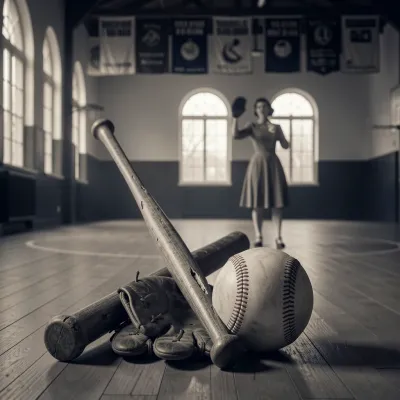
Softball emerged in 1887 from a spontaneous indoor game in Chicago, invented by George Hancock, who adapted baseball rules for a safer, more accessible format using a large, soft ball and a stick-like bat. This informal start gradually evolved into a structured sport, with the Amateur Softball Association (ASA) formalizing rules and organizing national competitions by 1933. The sport split into distinct variations—fastpitch and slowpitch—catering to different skill levels and preferences. Fastpitch became a high-speed, competitive discipline with elite athletes, while slowpitch emphasized accessibility and recreational play, fostering widespread community engagement. Both forms thrived, with women’s softball gaining prominence through pioneers like the Raybestos Brakettes and college programs that flourished under Title IX, which expanded opportunities for female athletes.
The mid-to-late 20th century marked softball’s golden age, driven by post-war growth, industrial leagues, and the rise of iconic players. Men’s fastpitch produced legends like Eddie Feigner, while women’s fastpitch excelled internationally, culminating in Olympic inclusion in 1996. Softball’s Olympic journey was tumultuous: it captivated audiences in Atlanta, Sydney, and Athens before being removed in 2005, only to return for Tokyo 2021. Despite setbacks, the World Baseball Softball Confederation (WBSC) and governing bodies worked to sustain global interest, though professional leagues struggled with financial viability. Innovations in equipment, such as aluminum and composite bats, and advancements in coaching, analytics, and technology, continually reshaped gameplay.
Youth and collegiate programs became vital pipelines for talent, emphasizing skill development and community building. Slowpitch’s inclusive structure and slowpitch’s recreational appeal ensured broad participation, while college softball’s NCAA Women’s College World Series (WCWS) became a major spectacle, showcasing elite athletes and fostering fan engagement. Softball’s cultural influence extended beyond athletics, serving as a social connector through local leagues, corporate teams, and international competitions. Its ability to adapt—from wartime morale boosting to embracing technology—reflected its enduring relevance and universal appeal.
Today, softball faces challenges like declining youth participation and an uncertain Olympic future, yet its resilience persists. The sport’s legacy lies in its accessibility, inclusivity, and role in empowering athletes, particularly women. From its humble gymnasium origins to its global footprint, softball remains a testament to innovation, adaptability, and the profound human connections fostered through shared athletic passion. Its future hinges on balancing tradition with modernization, ensuring the game continues to inspire future generations while preserving its foundational spirit of community and competition.
What You'll Find Inside:
- Explore the origins of softball from a 1887 Chicago gymnasium game to a global sport, highlighting key innovators like George Hancock.
- Discover the pivotal role of the Amateur Softball Association (ASA) and International Softball Federation (ISF) in standardizing rules and governing the sport worldwide.
- Learn about softball's Olympic journey, including its debut in 1996, removal after 2008, and triumphant return at the 2020 Tokyo Games.
- Understand the evolution of softball equipment from improvised boxing gloves and sticks to advanced aluminum, composite, and composite bats shaping modern play.
- Examine softball's cultural significance in fostering community, empowering women in sports, and serving as a cornerstone of youth and collegiate athletics.
Who's It For:
This book is ideal for softball players, coaches, and enthusiasts seeking to understand the sport's rich history and development. It will also benefit sports historians, educators, and fans interested in the cultural and social impact of recreational and competitive athletics on a global scale.
Table of Contents:
- Introduction
- Chapter 1 The Early Days: From Indoor Baseball to Softball
- Chapter 2 George Hancock and the Birth of a Sport
- Chapter 3 The Game Spreads: Early Growth and Regional Variations
- Chapter 4 Establishing the Rules: Standardizing the Game
- Chapter 5 The Amateur Softball Association (ASA) and Early Governance
- Chapter 6 World War II and its Impact on Softball
- Chapter 7 Post-War Boom: Softball's Golden Age
- Chapter 8 Fastpitch vs. Slowpitch: Diverging Paths
- Chapter 9 Women in Softball: Pioneers and Powerhouses
- Chapter 10 Men's Fastpitch: A Tradition of Excellence
- Chapter 11 The Rise of Slowpitch: Accessibility and Popularity
- Chapter 12 International Growth and the ISF (International Softball Federation)
- Chapter 13 Softball in the Olympics: A Dream Realized
- Chapter 14 Olympic Heartbreak: Removal and the Fight for Reinstatement
- Chapter 15 Professional Softball Leagues: Attempts and Challenges
- Chapter 16 College Softball: A Hotbed of Talent
- Chapter 17 Youth Softball: Developing Future Stars
- Chapter 18 Equipment Evolution: Bats, Balls, and Gloves
- Chapter 19 Coaching and Strategy: The Mental Game
- Chapter 20 Legendary Players: Icons of the Diamond
- Chapter 21 Memorable Moments and Historic Games
- Chapter 22 The Influence of Technology on Softball
- Chapter 23 Softball's Cultural Impact and Community
- Chapter 24 The Future of Softball: Challenges and Opportunities
- Chapter 25 Softball's Enduring Legacy
Author:
Published By:
Date Published:
July 15, 2026
Type:
Nonfiction
Language:
English
Word Count:
34,802 words
Reading Time:
2 hours 26 minutes
Sample:
Order:
Order Softball (Paperback) on MixCache.com:
Buy NowPrint copy is made to order and ships worldwide. Includes the ebook free, ready to read instantly.
$5 account credit for all new MixCache.com accounts, usable toward any ebook purchase!*


