Browse by Category
Fiction
- Action & Adventure
- African American
- Anthologies
- Children's Fiction
- Classics
- Comics & Graphic Novels
- Coming of Age
- Contemporary
- Cultural & Regional
- Drama
- Erotica
- Fantasy
- General
- Historical Fiction
- Horror
- Humor & Satire
- Literary Fiction
- Mystery, Thriller & Suspense
- Poetry
- Religious & Inspirational
- Romance
- Science Fiction
- Short Stories
- War & Military
- Westerns
- Women's Fiction
- Young Adult
Non-Fiction
- Antiques & Collectibles
- Arts & Photography
- Biographies & Memoirs
- Business & Money
- Children's Non-Fiction
-
Computers & Technology
- Artificial Intelligence
- Computer Science
- Cybersecurity & Cryptography
- Data Science & Analytics
- Databases & Big Data
- Game Development & Design
- General
- Hardware & DIY
- Mobile App Development
- Networking & Cloud Computing
- Operating Systems
- Programming
- Robotics
- Software
- Software Engineering
- User Experience (UX) & Design
- Web Development & Design
- Cooking, Food & Wine
- Crafts, Hobbies & Home
- Education & Teaching
- Engineering
- General
- Health, Fitness & Dieting
-
History
- African History
- African History - North Africa
- African History - Sub-Saharan Africa
- American History
- American History - 20th Century
- American History - Civil War
- American History - Colonial Period
- Ancient History
- Asian History
- Asian History - China
- Asian History - India
- Asian History - Japan
- Asian History - Southeast Asia
- European History
- European History - Ancient Greece
- European History - Ancient Rome
- European History - Medieval
- European History - Modern
- European History - Renaissance
- General
- Middle Eastern History
- Military History
- Military History - Aviation
- Military History - Naval
- Social & Cultural History
- World History
- Humor & Entertainment
- Industrial Technology
- Language Learning
- Law
- LGBTQ+ Non-Fiction
- Literary Criticism
- Medical Books
- Parenting & Relationships
- Philosophy
- Politics & Social Sciences
- Reference
- Religion & Spirituality
-
Science & Math
- Agricultural Sciences
- Astronomy & Space Science
- Behavioral Sciences
- Biological Sciences
- Botany & Plant Science
- Chemistry
- Earth Sciences
- Engineering - Chemical
- Engineering - Civil
- Engineering - Electrical
- Engineering - Mechanical
- Environment
- General
- Geology
- Mathematics
- Nature & Ecology
- Oceanography
- Paleontology
- Physics
- Statistics
- Self-Help
- Sports & Outdoors
- Study Aids
- Sustainability & Green Living
- Textbooks
- Transportation
- Travel
- True Crime
- Urban Planning & Development
- Veterinary Medicine
- Writing & Publishing
Jump to Section

Want unlimited access to all books published by MixCache.com (plus their audiobooks)? Try MixCache.com Total Access. Look for the MTA badge on book covers to identify included titles.
Access to infinite ebooks: Don't see the book you want? Suggest it and we'll create it (free!) for you from scratch with our powerful AI book writer. Then read it with MTA - besides profiting from any sales it makes!
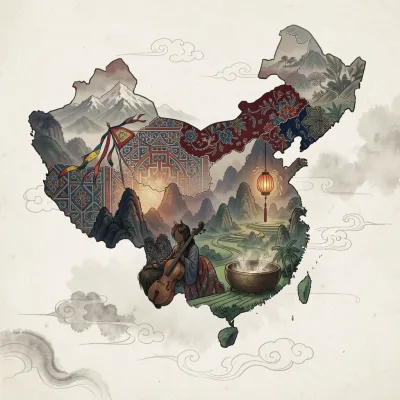
Seeds of Revolution: Political Movements in China's Provinces
MTA
Peasant uprisings, republicanism, and revolutionary mobilization — one province per chapter
About this book:

**Summary:**
This book argues that national revolutions in China originated and were shaped by local provincial dynamics rather than singular, nationwide events. Through detailed case studies of twenty-five provinces, it examines how ecological, economic, social, and administrative structures influenced the forms and trajectories of political contention. From peasant uprisings in Anhui (Chapter One) and ethnic revolts in Gansu (Chapter Three) to maritime networks-driven reform in Fujian (Chapter Two) and merchant-led internationalism in Guangdong (Chapter Four), each province developed distinct repertoires of mobilization. These ranged from secret societies and guerrilla warfare to labor strikes, student protests, and cross-border networks, illustrating how revolution was “contingent and path-dependent” on local conditions. The book uses narrative history integrated with political science concepts—such as diffusion, brokerage, and opportunity structures—to demonstrate how local grievances gathered in villages, factories, and markets, aggregating through conduits like railways, rivers, and diaspora associations into broader national movements.
The analysis spans from the late Qing Dynasty’s collapse and early republican experiments through the Warlord Era and Japanese occupation to the Communist victory in 1949. Each chapter traces how provincial “frontiers” (Gansu, Xinjiang), “heartlands” (Henan, Hunan), and “ports” (Fujian, Jiangsu) experienced unique pressures—tax burdens, ethnic tensions, industrial exploitation—that ignited localized resistance. These pressures were often channeled by intermediaries—merchants, military officers, religious leaders, or diaspora brokers—who connected grassroots discontent to national ideologies. For instance, Guangdong’s revolutionaries leveraged overseas networks, while Fujian’s maritime connections disseminated reformist ideas. Similarly, Shandong’s Confucian heritage clashed with nationalist fervor (Chapter Nineteen), and Xinjiang’s cross-border caravan routes enabled separatist movements (Chapter Twenty-Five). The book underscores how similar national shocks—like the fall of the Qing or Japanese invasion—produced divergent outcomes across provinces due to variations in local structures and historical precedents.
The study emphasizes scale, showing how mobilization began at the local level—through kinship networks, guilds, student circles, or militias—and scaled up through infrastructure and institutions. Provincial capitals mediated between central authorities and peripheral populations, amplifying some demands while muting others. For example, labor strikes in Heilongjiang (Chapter Nine) and rural soviets in Sichuan (Chapter Twenty-One) reflected industrial and agrarian grievances, respectively, while the Long March’s passage through Shaanxi (Chapter Eighteen) and the Taiping Rebellion’s roots in Guangxi (Chapter Five) demonstrated how geographic refuges enabled sustained resistance. The book also highlights the interplay of memory and power, noting how states codified certain episodes and silenced others, shaping future contention. Events like the Dungan Revolt in Gansu (Chapter Three) or the Miao Rebellion in Guizhou (Chapter Six) were remembered as symbols of injustice, influencing later revolutionary and post-revolutionary movements.
Across all chapters, the book illustrates that China’s revolutionary history is a “braided stream” of provincial grievances channeled by institutions, accelerated by networks, and redirected by geography. While some provinces—like Jiangxi (Chapter Fourteen), the “cradle of the revolution”—saw explicit Communist base-building, others—such as Zhejiang (Chapter Twenty-Three) with its commercial activism—contributed through different means. The conclusion reiterates that the seeds of revolution were provincial, rooted in local struggles over resources, identity, and governance, yet their cumulative harvest was national, reshaping China’s political landscape. By treating each province as a “laboratory,” the book argues that understanding these variations is essential for comprehending revolution as a process of local initiative meeting national opportunity.
What You'll Find Inside:
- Explore how local ecological, economic, and social structures in 24 Chinese provinces shaped distinct forms of revolutionary mobilization, from peasant uprisings to ethnic revolts.
- Analyze the role of geography—from maritime networks in Fujian to frontier dynamics in Gansu—in determining how political movements developed and spread.
- Examine the interplay of transnational influences, including diaspora networks, foreign trade, and ideological diffusion, in fueling anti-imperial and reformist movements.
- Investigate how secret societies, merchant associations, and rural councils functioned as intermediaries, translating local grievances into broader political action.
- Trace the evolution of revolutionary strategies across different eras, from late imperial rebellions to Communist-led rural soviets, revealing patterns of continuity and change.
Who's It For:
This book is for scholars and students of Chinese history, political science, and comparative revolutions who seek to understand how grassroots movements and provincial dynamics shaped national transformations. It will particularly benefit researchers studying the intersection of ecology, economy, and social organization in revolutionary contexts, as well as practitioners interested in how local agency interacts with broader political processes. The interdisciplinary approach, combining archival history with political science frameworks, makes it accessible to readers seeking both narrative depth and analytical rigor.
Author:
Published By:
Date Published:
June 14, 2026
Type:
Nonfiction
Language:
English
Word Count:
47,800 words
Reading Time:
3 hours 21 minutes
Sample:
Order:
Order Seeds of Revolution: Political Movements in China's Provinces (Paperback) on MixCache.com:
Buy NowPrint copy is made to order and ships worldwide. Includes the ebook free, ready to read instantly.
$5 account credit for all new MixCache.com accounts, usable toward any ebook purchase!*