Browse by Category
Fiction
- Action & Adventure
- African American
- Anthologies
- Children's Fiction
- Classics
- Comics & Graphic Novels
- Coming of Age
- Contemporary
- Cultural & Regional
- Drama
- Erotica
- Fantasy
- General
- Historical Fiction
- Horror
- Humor & Satire
- Literary Fiction
- Mystery, Thriller & Suspense
- Poetry
- Religious & Inspirational
- Romance
- Science Fiction
- Short Stories
- War & Military
- Westerns
- Women's Fiction
- Young Adult
Non-Fiction
- Antiques & Collectibles
- Arts & Photography
- Biographies & Memoirs
- Business & Money
- Children's Non-Fiction
-
Computers & Technology
- Artificial Intelligence
- Computer Science
- Cybersecurity & Cryptography
- Data Science & Analytics
- Databases & Big Data
- Game Development & Design
- General
- Hardware & DIY
- Mobile App Development
- Networking & Cloud Computing
- Operating Systems
- Programming
- Robotics
- Software
- Software Engineering
- User Experience (UX) & Design
- Web Development & Design
- Cooking, Food & Wine
- Crafts, Hobbies & Home
- Education & Teaching
- Engineering
- General
- Health, Fitness & Dieting
-
History
- African History
- African History - North Africa
- African History - Sub-Saharan Africa
- American History
- American History - 20th Century
- American History - Civil War
- American History - Colonial Period
- Ancient History
- Asian History
- Asian History - China
- Asian History - India
- Asian History - Japan
- Asian History - Southeast Asia
- European History
- European History - Ancient Greece
- European History - Ancient Rome
- European History - Medieval
- European History - Modern
- European History - Renaissance
- General
- Middle Eastern History
- Military History
- Military History - Aviation
- Military History - Naval
- Social & Cultural History
- World History
- Humor & Entertainment
- Industrial Technology
- Language Learning
- Law
- LGBTQ+ Non-Fiction
- Literary Criticism
- Medical Books
- Parenting & Relationships
- Philosophy
- Politics & Social Sciences
- Reference
- Religion & Spirituality
-
Science & Math
- Agricultural Sciences
- Astronomy & Space Science
- Behavioral Sciences
- Biological Sciences
- Botany & Plant Science
- Chemistry
- Earth Sciences
- Engineering - Chemical
- Engineering - Civil
- Engineering - Electrical
- Engineering - Mechanical
- Environment
- General
- Geology
- Mathematics
- Nature & Ecology
- Oceanography
- Paleontology
- Physics
- Statistics
- Self-Help
- Sports & Outdoors
- Study Aids
- Sustainability & Green Living
- Textbooks
- Transportation
- Travel
- True Crime
- Urban Planning & Development
- Veterinary Medicine
- Writing & Publishing
Jump to Section
MixCache.com Total Access
Unlimited reading and audiobooks for every book published by MixCache.com.
Included titles carry the MTA badge.
Learn more →A History of the Virgin Islands
About this book:
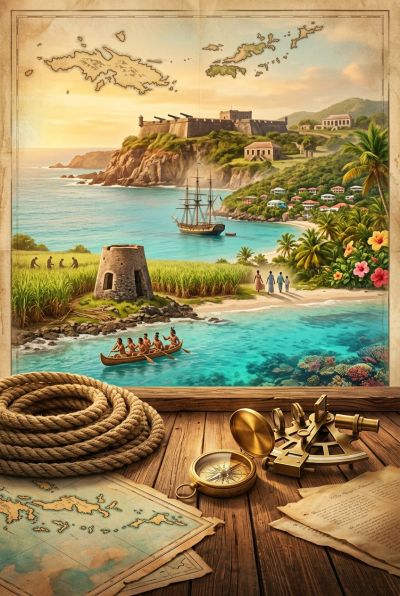
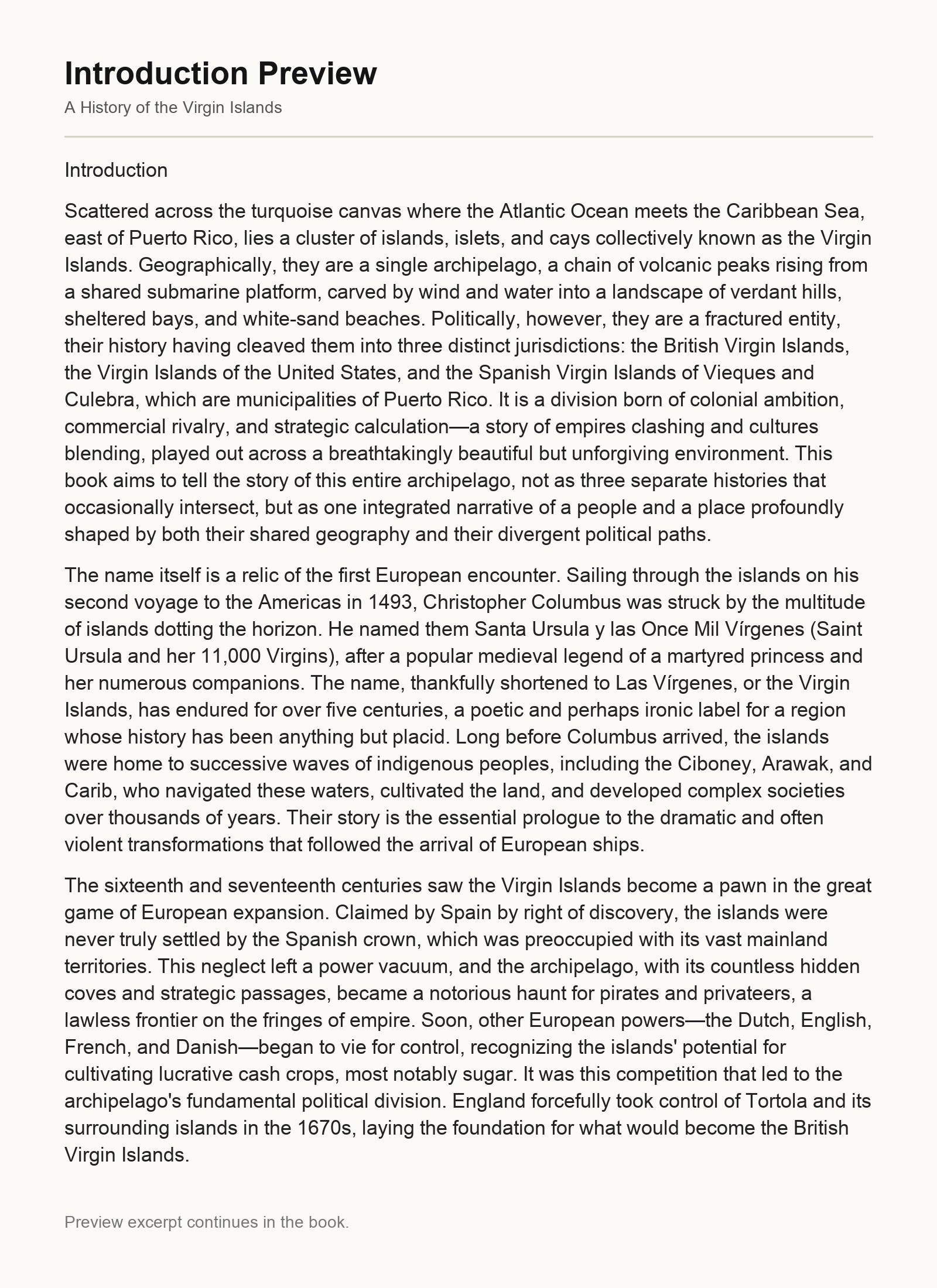
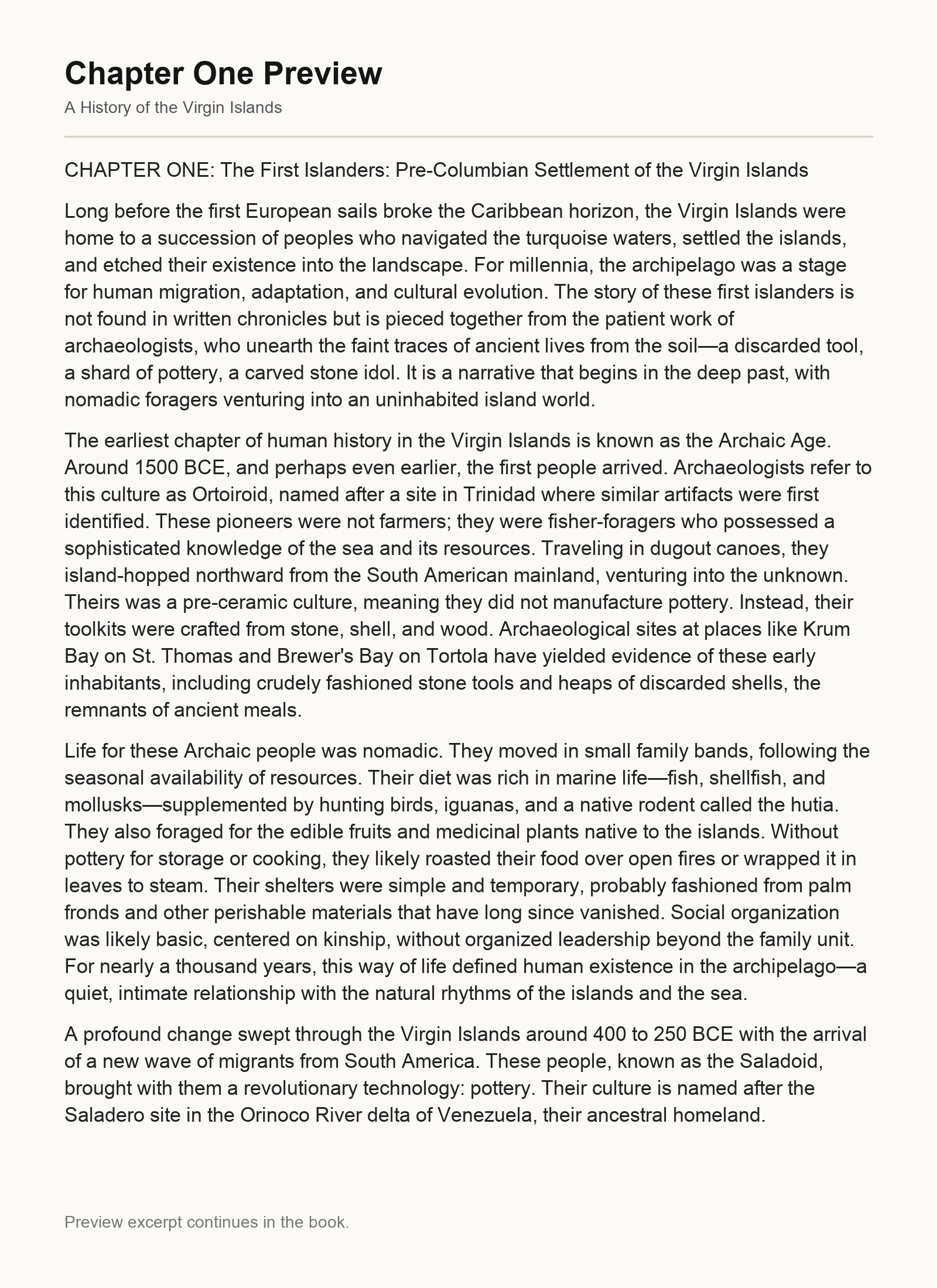
Discover the full sweep of the Virgin Islands’ past in a single, compelling narrative that treats the archipelago as one interconnected story rather than three separate histories. From the earliest Archaic foragers who fished the turquoise waters around 1500 BCE to the vibrant Taíno societies that greeted Columbus, the book reveals how indigenous life laid the cultural foundations that still echo today. Readers will walk through the centuries of European rivalry, seeing how Spain’s neglect turned the islands into a haven for pirates, how the Dutch, English, and Danish vied for control, and how the resulting division into British, Danish, and Spanish zones set the stage for dramatically different futures.
The heart of the work follows the rise and fall of the plantation economy, detailing the brutal sugar‑and‑slave system that reshaped the land, demographics, and culture of the islands. Chapters on the 1733 St. John slave insurrection, the 1848 emancipation revolt on St. Croix, and the 1878 Fireburn illuminate the relentless resistance of enslaved Africans and their descendants, while the post‑emancipation sections trace the struggle for land, the emergence of peasant proprietors, and the slow shift from sugar to tourism and finance. The narrative also covers the unique paths of Vieques and Culebra, from Spanish buffer zones to U.S. naval bases and the modern grassroots movements that ended decades of bombing.
Readers will gain insight into the political evolution of each territory: the establishment of Danish and British colonial administrations, the 1917 transfer of the Danish West Indies to the United States, the long campaign for civil government and citizenship in the U.S. Virgin Islands, the gradual autonomy of the British Virgin Islands, and the ongoing quest for self‑determination in Vieques and Culebra. Cultural chapters explore the Creole language, music like Quelbe and Calypso, festive traditions such as Carnival and the August Emancipation Festival, and the culinary heritage that blends African, European, and Caribbean influences. Environmental sections reveal how coral reefs, hurricanes, and military contamination have shaped contemporary challenges and conservation efforts across the archipelago.
By the end, the reader will understand how geography, colonial ambition, economic transformation, and grassroots activism have woven together to create the complex, resilient society of the Virgin Islands today—a place where history is not a distant backdrop but a living presence in language, music, land struggles, and the ongoing pursuit of a shared, prosperous future.
What You'll Find Inside:
- The book traces the complete history of the Virgin Islands archipelago from pre-Columbian indigenous peoples through European colonization, slavery, emancipation, and into the 21st century, showing how geography united the islands while political divisions created distinct historical paths.
- It details the brutal plantation economy built on enslaved African labor that transformed the islands' society and landscape, including significant resistance movements like the 1733 St. John slave insurrection and the 1878 Fireburn rebellion on St. Croix.
- The work examines how the archipelago was divided among three powers (British, Danish/U.S., Spanish) and follows their divergent political, economic, and social developments, from naval rule to tourism economies to military conflicts in Vieques.
- It covers the rise of tourism as a new economic foundation, the development of offshore finance in the British Virgin Islands, and the prolonged struggle to end U.S. Navy bombing exercises on Vieques through grassroots activism.
- The book explores enduring cultural legacies like Creole language, Quelbe music, Carnival traditions, and the ongoing environmental challenges facing the archipelago's fragile ecosystems in the era of climate change and globalization.
Who's It For:
This comprehensive history is ideal for students and scholars of Caribbean studies, colonial history, and African diaspora studies, as well as general readers with connections to the Virgin Islands or interest in how slavery, emancipation, and post-colonial development shaped this unique archipelago. It will also appeal to anyone seeking to understand the complex interplay of geography, economics, and politics that created the modern Virgin Islands' divided yet interconnected society.
Table of Contents:
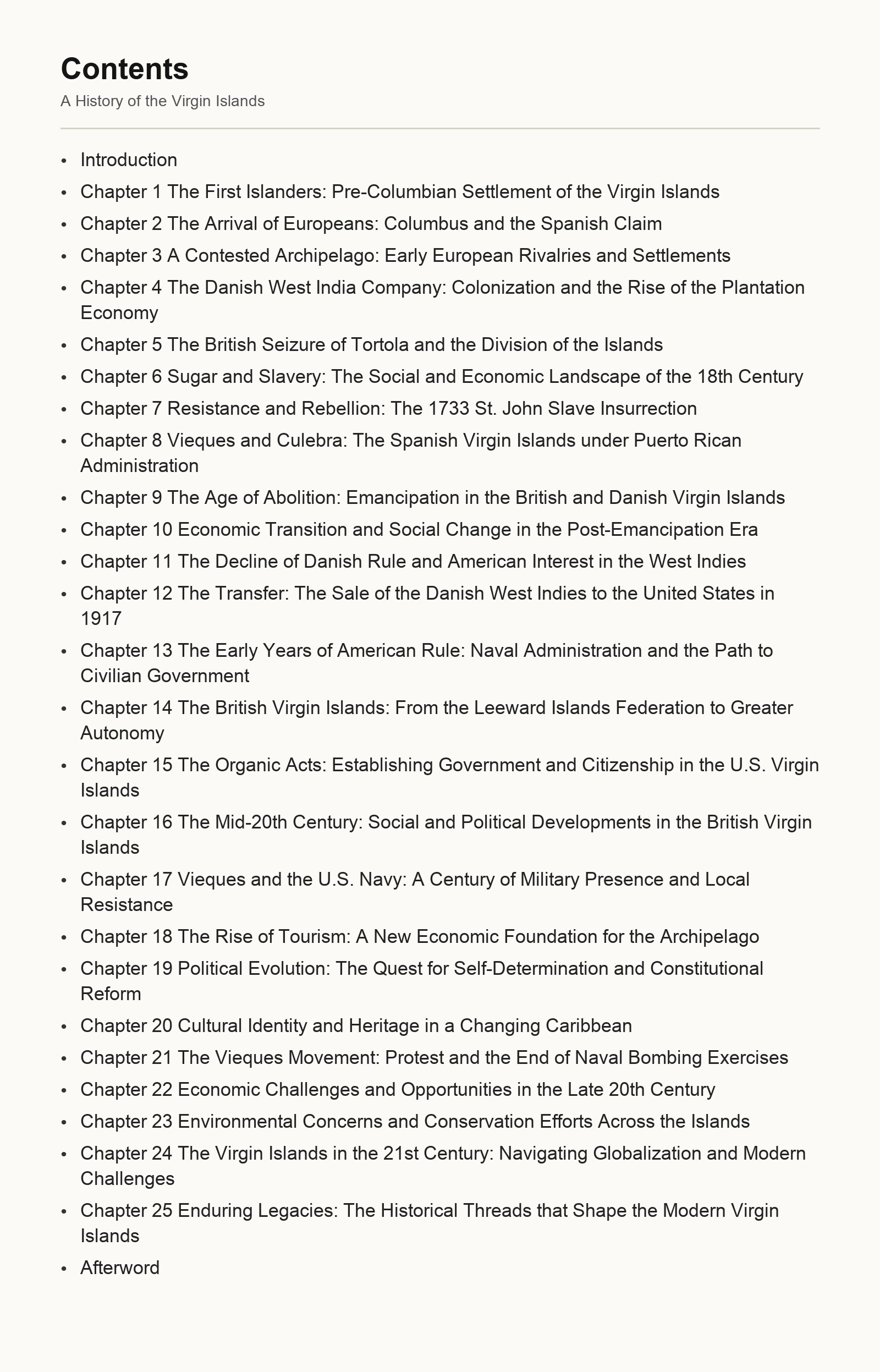
- Introduction
- Chapter 1 The First Islanders: Pre-Columbian Settlement of the Virgin Islands
- Chapter 2 The Arrival of Europeans: Columbus and the Spanish Claim
- Chapter 3 A Contested Archipelago: Early European Rivalries and Settlements
- Chapter 4 The Danish West India Company: Colonization and the Rise of the Plantation Economy
- Chapter 5 The British Seizure of Tortola and the Division of the Islands
- Chapter 6 Sugar and Slavery: The Social and Economic Landscape of the 18th Century
- Chapter 7 Resistance and Rebellion: The 1733 St. John Slave Insurrection
- Chapter 8 Vieques and Culebra: The Spanish Virgin Islands under Puerto Rican Administration
- Chapter 9 The Age of Abolition: Emancipation in the British and Danish Virgin Islands
- Chapter 10 Economic Transition and Social Change in the Post-Emancipation Era
- Chapter 11 The Decline of Danish Rule and American Interest in the West Indies
- Chapter 12 The Transfer: The Sale of the Danish West Indies to the United States in 1917
- Chapter 13 The Early Years of American Rule: Naval Administration and the Path to Civilian Government
- Chapter 14 The British Virgin Islands: From the Leeward Islands Federation to Greater Autonomy
- Chapter 15 The Organic Acts: Establishing Government and Citizenship in the U.S. Virgin Islands
- Chapter 16 The Mid-20th Century: Social and Political Developments in the British Virgin Islands
- Chapter 17 Vieques and the U.S. Navy: A Century of Military Presence and Local Resistance
- Chapter 18 The Rise of Tourism: A New Economic Foundation for the Archipelago
- Chapter 19 Political Evolution: The Quest for Self-Determination and Constitutional Reform
- Chapter 20 Cultural Identity and Heritage in a Changing Caribbean
- Chapter 21 The Vieques Movement: Protest and the End of Naval Bombing Exercises
- Chapter 22 Economic Challenges and Opportunities in the Late 20th Century
- Chapter 23 Environmental Concerns and Conservation Efforts Across the Islands
- Chapter 24 The Virgin Islands in the 21st Century: Navigating Globalization and Modern Challenges
- Chapter 25 Enduring Legacies: The Historical Threads that Shape the Modern Virgin Islands
- Afterword
Author:
Published By:
Date Published:
May 27, 2026
Type:
Nonfiction
Language:
English
Also Available In:
Word Count:
44,149 words
Reading Time:
3 hours 6 minutes
Sample:
Order:
Order A History of the Virgin Islands (Paperback) on MixCache.com:
Buy NowPrint copy is made to order and ships worldwide. Includes the ebook free, ready to read instantly.
$5 account credit for all new MixCache.com accounts, usable toward any ebook purchase!*