Browse by Category
Fiction
- Action & Adventure
- African American
- Anthologies
- Children's Fiction
- Classics
- Comics & Graphic Novels
- Coming of Age
- Contemporary
- Cultural & Regional
- Drama
- Erotica
- Fantasy
- General
- Historical Fiction
- Horror
- Humor & Satire
- Literary Fiction
- Mystery, Thriller & Suspense
- Poetry
- Religious & Inspirational
- Romance
- Science Fiction
- Short Stories
- War & Military
- Westerns
- Women's Fiction
- Young Adult
Non-Fiction
- Antiques & Collectibles
- Arts & Photography
- Biographies & Memoirs
- Business & Money
- Children's Non-Fiction
-
Computers & Technology
- Artificial Intelligence
- Computer Science
- Cybersecurity & Cryptography
- Data Science & Analytics
- Databases & Big Data
- Game Development & Design
- General
- Hardware & DIY
- Mobile App Development
- Networking & Cloud Computing
- Operating Systems
- Programming
- Robotics
- Software
- Software Engineering
- User Experience (UX) & Design
- Web Development & Design
- Cooking, Food & Wine
- Crafts, Hobbies & Home
- Education & Teaching
- Engineering
- General
- Health, Fitness & Dieting
-
History
- African History
- African History - North Africa
- African History - Sub-Saharan Africa
- American History
- American History - 20th Century
- American History - Civil War
- American History - Colonial Period
- Ancient History
- Asian History
- Asian History - China
- Asian History - India
- Asian History - Japan
- Asian History - Southeast Asia
- European History
- European History - Ancient Greece
- European History - Ancient Rome
- European History - Medieval
- European History - Modern
- European History - Renaissance
- General
- Middle Eastern History
- Military History
- Military History - Aviation
- Military History - Naval
- Social & Cultural History
- World History
- Humor & Entertainment
- Industrial Technology
- Language Learning
- Law
- LGBTQ+ Non-Fiction
- Literary Criticism
- Medical Books
- Parenting & Relationships
- Philosophy
- Politics & Social Sciences
- Reference
- Religion & Spirituality
-
Science & Math
- Agricultural Sciences
- Astronomy & Space Science
- Behavioral Sciences
- Biological Sciences
- Botany & Plant Science
- Chemistry
- Earth Sciences
- Engineering - Chemical
- Engineering - Civil
- Engineering - Electrical
- Engineering - Mechanical
- Environment
- General
- Geology
- Mathematics
- Nature & Ecology
- Oceanography
- Paleontology
- Physics
- Statistics
- Self-Help
- Sports & Outdoors
- Study Aids
- Sustainability & Green Living
- Textbooks
- Transportation
- Travel
- True Crime
- Urban Planning & Development
- Veterinary Medicine
- Writing & Publishing
Jump to Section
MixCache.com Total Access
Unlimited reading and audiobooks for every book published by MixCache.com.
Included titles carry the MTA badge.
Learn more →A History of Assyria MTA
About this book:
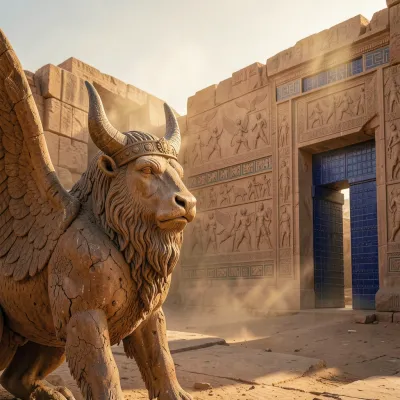
Assyria emerged on the fertile banks of the Tigris in northern Mesopotamia, where the city of Aššur grew from a modest settlement into a cult‑center and trading hub. Early Assyrian kings balanced royal authority with a council of elders, and the Old Assyrian period (c. 1950‑1750 BCE) saw the city’s wealth built on a far‑flung merchant network—the karum colonies in Anatolia that exchanged Assyrian textiles for Anatolian tin. The collapse of this mercantile system gave way to the Middle Assyrian state, which centralized power, created a provincial bureaucracy, and produced a stringent legal code that regulated marriage, property, and social hierarchy while fostering a professional army skilled in siegecraft and chariot warfare.
The Neo‑Assyrian empire was forged by Tiglath‑Pileser III (745‑727 BCE), who shattered the old provincial system, replaced hereditary governors with royal appointees (often eunuchs), expanded a standing professional army, and instituted mass deportations and direct annexation to integrate conquered lands. His successors—Sargon II, Sennacherib, and Esarhaddon—continued this trajectory: Sargon II founded the ideological capital Dur‑Šarrukin and cemented Assyrian claims over Babylonia; Sennacherib transformed Nineveh with massive walls, palaces, and hydraulic engineering while campaigning relentlessly in the Levant and destroying Babylon; Esarhaddon reunited the empire after a fratricidal civil war, rebuilt Babylon, and conquered Egypt, bringing the Nile under Assyrian rule. These rulers projected power through monumental art, religious rhetoric that linked the king to the god Aššur, and a policy of moving populations to break resistance and supply labor for imperial projects.
At its zenith under Ashurbanipal (668‑627 BCE), Assyria combined military triumphs—crushing the Babylonian revolt, destroying Elam, and maintaining control over Egypt—with unparalleled intellectual achievement. Ashurbanipal’s Royal Library at Nineveh gathered tens of thousands of cuneiform tablets preserving literary, scientific, omen, and administrative texts from across Mesopotamia, while his palace reliefs celebrated lion hunts, victories, and divine favor. The empire’s economy rested on agriculture, tribute, and state‑controlled trade, extracting grain, metals, timber, and luxury goods from provinces to fill royal treasuries and fund building projects. Provincial administration relied on loyal governors, an intelligence network, and the deportation of peoples to weaken local loyalties; religion permeated statecraft, with Aššur as the supreme deity and Ištar, Ninurta, and others invoked in war and ritual, while daily life for most Assyrians revolved around mud‑brick houses, marketplaces, fields, and the rhythms of family and craft.
After Ashurbanipal’s death, internal strains—including succession struggles, costly wars, and overstretched resources—combined with external pressures from a resurgent Babylon under Nabopolassar and the Medes under Cyaxares. In 614 BCe the Medes sacked the ancient cult center Aššur, and in 612 BCe a Medo‑Babylonian coalition besieged and destroyed Nineveh, burning its palaces but inadvertently preserving its library beneath the debris. The last Assyrian king, Aššur‑uballiṭ II, held out at Harran until 609 BCe, after which Assyrian political independence ended at the Battle of Carchemish (605 BCe). Assyria’s legacy survived in the traditions of its successors, in biblical and classical memory, and was resurrected in the nineteenth century when excavations at Khorsabad, Nimrud, and Nineveh revealed palaces, reliefs, and the royal library, launching modern Assyriology and ongoing scholarly work that continues to reassess the empire’s rise, its innovative statecraft, and its profound impact on the ancient Near East.
What You'll Find Inside:
- Assyria evolved from a merchant city-state centered on Aššur into the first true land empire through military innovation, administrative centralization, and claims of universal kingship.
- The Old Assyrian karum trade network linked Mesopotamia to Anatolia, revealing early Assyrian commercial sophistication, legal contracts, and a vibrant merchant diaspora.
- Middle Assyrian legal codes and provincial administration established royal authority, social hierarchies, and a systematic approach to governing conquered territories.
- Neo-Assyrian rulers built a professional army, mastered siegecraft, enacted mass deportations, and created Ashurbanipal’s Royal Library, integrating knowledge and empire-wide control.
- Despite its collapse due to overextension and rebellion, Assyria’s administrative models, artistic legacy, and scholarly traditions influenced later empires and were rediscovered in modern archaeology.
Who's It For:
This book is ideal for undergraduate and graduate students of ancient history, archaeology, or Near Eastern studies, as well as educated general readers interested in the rise and fall of early empires. It provides a comprehensive yet accessible overview of Assyrian political, military, economic, and cultural development, making it valuable for anyone seeking to understand how an ancient riverine society created one of the world’s first true empires and left a lasting legacy on subsequent civilizations.
Table of Contents:
- Introduction
- Chapter 1 <Land Between the Rivers: Geography and Origins>
- Chapter 2 <Aššur and the First Kings>
- Chapter 3 <Merchants of the Old Assyrian Karum>
- Chapter 4 <The Middle Assyrian State and Its Laws>
- Chapter 5 <Forging the Military Machine: Organization and Siegecraft>
- Chapter 6 <Tiglath-Pileser III and the Making of Empire>
- Chapter 7 <Sargon II and Imperial Ideology>
- Chapter 8 <Sennacherib: Campaigns, Capitals, and Engineering>
- Chapter 9 <Esarhaddon and the Conquest of Egypt>
- Chapter 10 <Ashurbanipal and the Royal Library>
- Chapter 11 <Capitals of Power: Aššur, Kalhu, Dur-Šarrukin, and Nineveh>
- Chapter 12 <Governing an Empire: Provinces, Governors, and Intelligence>
- Chapter 13 <Economy of Extraction: Agriculture, Tribute, and Trade>
- Chapter 14 <Gods and Cults: Aššur, Ištar, and the Sacred Landscape>
- Chapter 15 <Palaces, Reliefs, and Gardens: The Arts of Rule>
- Chapter 16 <Law, Letters, and Literature: From Tablets to Annals>
- Chapter 17 <Peoples on the Move: Deportation and Resettlement>
- Chapter 18 <Frontiers and Foes: Urartu, Elam, and the Steppe>
- Chapter 19 <Assyria and the Levant: Israel, Judah, and Phoenicia>
- Chapter 20 <Scholars at Court: Omens, Astronomy, and Medicine>
- Chapter 21 <City and Countryside: Daily Life in Assyria>
- Chapter 22 <Crises and Rebellions: Babylon, Elam, and Internal Strains>
- Chapter 23 <The Fall of Nineveh and the Last Kings>
- Chapter 24 <After Empire: Memory, Legacy, and Rediscovery>
- Chapter 25 <Assyria in Modern Scholarship and Archaeology>
Author:
Published By:
Date Published:
May 23, 2026
Type:
Nonfiction
Language:
English
Word Count:
47,068 words
Reading Time:
3 hours 18 minutes
Sample:
Order:
Order A History of Assyria (Paperback) on MixCache.com:
Buy NowPrint copy is made to order and ships worldwide. Includes the ebook free, ready to read instantly.
$5 account credit for all new MixCache.com accounts, usable toward any ebook purchase!*