Browse by Category
Fiction
- Action & Adventure
- African American
- Anthologies
- Children's Fiction
- Classics
- Comics & Graphic Novels
- Coming of Age
- Contemporary
- Cultural & Regional
- Drama
- Erotica
- Family Life
- Fantasy
- General
- Historical Fiction
- Horror
- Humor & Satire
- Literary Fiction
- Mystery, Thriller & Suspense
- Poetry
- Religious & Inspirational
- Romance
- Science Fiction
- Short Stories
- War & Military
- Westerns
- Women's Fiction
- Young Adult
Non-Fiction
- Antiques & Collectibles
- Arts & Photography
- Biographies & Memoirs
- Business & Money
- Children's Non-Fiction
-
Computers & Technology
- Artificial Intelligence
- Computer Science
- Cybersecurity & Cryptography
- Data Science & Analytics
- Databases & Big Data
- Game Development & Design
- General
- Hardware & DIY
- Mobile App Development
- Networking & Cloud Computing
- Operating Systems
- Programming
- Robotics
- Software
- Software Engineering
- User Experience (UX) & Design
- Web Development & Design
- Cooking, Food & Wine
- Crafts, Hobbies & Home
- Education & Teaching
- Engineering
- General
- Health, Fitness & Dieting
-
History
- African History
- African History - North Africa
- African History - Sub-Saharan Africa
- American History
- American History - 20th Century
- American History - Civil War
- American History - Colonial Period
- Ancient History
- Asian History
- Asian History - China
- Asian History - India
- Asian History - Japan
- Asian History - Southeast Asia
- European History
- European History - Ancient Greece
- European History - Ancient Rome
- European History - Medieval
- European History - Modern
- European History - Renaissance
- General
- Middle Eastern History
- Military History
- Military History - Aviation
- Military History - Naval
- Social & Cultural History
- World History
- Humor & Entertainment
- Industrial Technology
- Language Learning
- Law
- LGBTQ+ Non-Fiction
- Literary Criticism
- Medical Books
- Parenting & Relationships
- Philosophy
- Politics & Social Sciences
- Reference
- Religion & Spirituality
-
Science & Math
- Agricultural Sciences
- Astronomy & Space Science
- Behavioral Sciences
- Biological Sciences
- Botany & Plant Science
- Chemistry
- Earth Sciences
- Engineering - Chemical
- Engineering - Civil
- Engineering - Electrical
- Engineering - Mechanical
- Environment
- General
- Geology
- Mathematics
- Nature & Ecology
- Oceanography
- Paleontology
- Physics
- Statistics
- Self-Help
- Sports & Outdoors
- Study Aids
- Sustainability & Green Living
- Textbooks
- Transportation
- Travel
- True Crime
- Urban Planning & Development
- Veterinary Medicine
- Writing & Publishing
Jump to Section
MixCache.com Total Access
Unlimited reading and audiobooks for every book published by MixCache.com.
Included titles carry the MTA badge.
Learn more →
Tropical Rainforest Natives of the Amazon Basin
MTA
Biodiversity, ecology, and sustainable uses of Amazonian native plants
About this book:
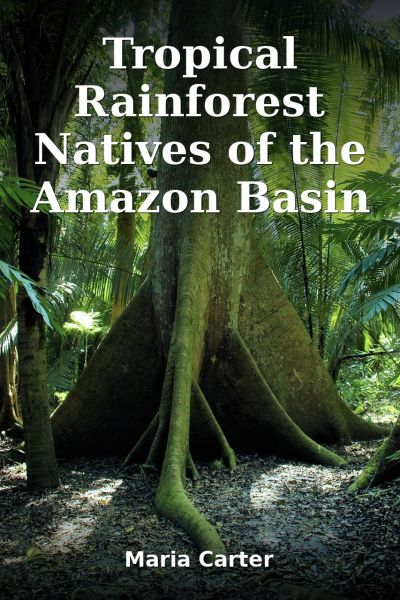
"Tropical Rainforest Natives of the Amazon Basin" provides a comprehensive exploration of the Amazon's vast botanical diversity, ecological intricacies, and the sustainable practices that support both the forest and its human inhabitants. The book is structured around three core themes: biodiversity, ecology, and sustainable uses, tracing the origins and distribution of Amazonian plant life, detailing its complex ecological processes, and examining how people interact with and manage this botanical wealth. It highlights the critical roles of Indigenous traditional ecological knowledge in sustainable resource management, emphasizing the importance of respecting customary rights and ensuring equitable benefit-sharing.
The book delves into the Amazon's physical template, describing how geography, climate, and soil types—from nutrient-poor terra firme to seasonally flooded várzea and acidic igapó—shape plant growth and distribution. It explores the evolutionary history of Amazonian flora, emphasizing how geological shifts, climate fluctuations, and river dynamics have driven speciation and maintained remarkable diversity. The structural architecture of the rainforest is meticulously detailed, from the shaded understory to the towering emergent layer, explaining how vertical stratification influences light, water, and nutrient dynamics, and supports distinct communities of plants and animals, including palms, epiphytes, lianas, and hemiepiphytes.
Chapters are dedicated to the intricate ecological relationships within the Amazon, such as specialized pollination networks and diverse seed dispersal syndromes that link plants to animals and microbes. The book also examines the forest's chemical bounty, focusing on medicinal plants and their pharmacological potential, as well as the wide array of edible fruits, nuts, and starches that form the basis of local diets and economies. Further sections cover non-timber forest products like fibers, resins, dyes, and aromatics, detailing their biological origins, harvesting methods, and cultural significance. Throughout these discussions, the book stresses the importance of understanding the unique biology of each species to ensure sustainable harvesting.
A significant portion of the book addresses human impacts and conservation challenges. It details the drivers of deforestation, including agriculture (cattle ranching and row crops), logging, and infrastructure development (roads, dams, and oil extraction), explaining how these activities interact to degrade the forest. The pervasive effects of fire, fragmentation, and edge effects are also explored, highlighting how these processes alter microclimates, biodiversity, and ecosystem resilience. The book culminates in discussions on climate change, droughts, and pathways for resilience, stressing the need for restoration ecology to repair degraded lands and the importance of equitable value chains, certification schemes (like FSC and Fair Trade), and strong policy frameworks that uphold Indigenous rights and traditional knowledge. Ultimately, the book argues that the Amazon's future depends on aligning economic activities with ecological limits and empowering local communities as stewards of this irreplaceable global treasure.
What You'll Find Inside:
- The extraordinary plant diversity of the Amazon Basin shaped by millions of years of evolution, biogeographic history, and adaptation to varied soils, hydrology, and climate regimes.
- Complex ecological architecture and processes, including canopy structure, pollination networks, seed dispersal, and plant-animal-microbe symbioses that maintain forest function.
- Traditional ecological knowledge of Indigenous communities regarding medicinal, edible, and useful plants, and their sustainable management practices.
- Sustainable harvesting principles and protocols for non-timber forest products like açaí, Brazil nuts, copaíba, and fibers, balancing ecological integrity with livelihood needs.
- Contemporary challenges including deforestation drivers, climate change impacts, and pathways for restoration, agroforestry, and building equitable value chains.
Who's It For:
This book is essential for conservationists seeking practical strategies to protect Amazonian biodiversity, ethnobotanists documenting traditional plant knowledge, and sustainable product developers aiming to bring forest-based goods to market responsibly. It also serves as a valuable resource for students of ecology and environmental science, as well as policymakers tasked with balancing conservation goals with economic development in the Amazon Basin. Anyone working at the intersection of biodiversity conservation, sustainable resource use, and Indigenous rights in tropical forests will find this book particularly relevant.
Introduction
The Amazon Basin is one of Earth’s last great strongholds of living diversity, a mosaic of waterways and forests that harbors a vast assembly of native plants. From sunlight-bathed emergent crowns to the dimly lit understory where seedlings wait for a gap to open, this rainforest is a layered world of form and function. In these pages we focus on the plants that structure this ecosystem and sustain its peoples: the canopy giants that shape microclimates, the palms that provision food and fiber, the epiphytes that quilt branches with life, and the herbs and shrubs whose quiet abundance underpins the forest from below.
This book is anchored in three threads: biodiversity, ecology, and sustainable uses. The first traces the origins and patterns of Amazonian plant diversity, exploring how climate, soils, river dynamics, and evolutionary history generate extraordinary richness across terra firme uplands, seasonally flooded várzea, and nutrient-poor igapó forests. The second investigates ecological processes—pollination networks, seed dispersal, nutrient cycling, and symbioses with animals and microbes—that keep the forest engine running. The third examines how people work with plants: the knowledge systems that guide use and stewardship, and the practical pathways that connect forest products to livelihoods while safeguarding the ecosystems that produce them.
Enjoying it? The full book includes every chapter.
Table of Contents:
- Introduction Free
- Chapter 1 The Amazon Basin: Geography, Climate, and Bioregions Free
- Chapter 2 Evolution and Biogeographic History of Amazonian Flora
- Chapter 3 Forest Architecture: Canopy, Subcanopy, and Understory Structure
- Chapter 4 Canopy Giants: Emergent Trees and Keystone Species
- Chapter 5 Palms of the Amazon: Ecology and Uses
- Chapter 6 Epiphytes, Lianas, and Hemiepiphytes
- Chapter 7 Understory Diversity: Herbs, Shrubs, and Shade Specialists
- Chapter 8 Pollination Networks and Seed Dispersal Syndromes
- Chapter 9 Soil, Nutrients, and the Flood Pulse: Terra Firme, Várzea, and Igapó
- Chapter 10 Plant–Animal–Microbe Symbioses: Mycorrhizae, Ant Gardens, and Mutualisms
- Chapter 11 Medicinal Plants and Pharmacological Potential
- Chapter 12 Edible Forests: Fruits, Nuts, and Starches
- Chapter 13 Fibers, Resins, Dyes, and Aromatics
- Chapter 14 Indigenous Ethnobotany and Traditional Ecological Knowledge
- Chapter 15 Community Stewardship Case Studies across the Basin
- Chapter 16 Non-Timber Forest Products: Açaí, Brazil Nut, Copaíba, and More
- Chapter 17 Sustainable Harvesting: Principles, Protocols, and Monitoring
- Chapter 18 Agroforestry Systems and Forest–Fallow Mosaics
- Chapter 19 Restoration Ecology: From Degraded Lands to Functional Forests
- Chapter 20 Deforestation Drivers: Agriculture, Logging, and Infrastructure
- Chapter 21 Fire, Fragmentation, and Edge Effects
- Chapter 22 Mining, Hydropower, and Oil: Extractive Frontiers
- Chapter 23 Climate Change, Droughts, and Resilience Pathways
- Chapter 24 Certification, Policy, and Rights: FSC, Fair Trade, and the Nagoya Protocol
- Chapter 25 Building Equitable Value Chains: From Forest to Market
Included when you buy the full book.
Author:
Published By:
Date Published:
May 4, 2026
Type:
Nonfiction
Language:
English
Word Count:
71,719 words
Reading Time:
5 hours 1 minutes
Sample:
Order:
Order Tropical Rainforest Natives of the Amazon Basin (Paperback) on MixCache.com:
Buy NowIncludes every chapter. Not sure yet? Read the opening free.
Print copy is made to order and ships worldwide. Includes the ebook free, ready to read instantly.
$5 account credit for all new MixCache.com accounts, usable toward any ebook purchase!*