Browse by Category
Fiction
- Action & Adventure
- African American
- Anthologies
- Children's Fiction
- Classics
- Comics & Graphic Novels
- Coming of Age
- Contemporary
- Cultural & Regional
- Drama
- Erotica
- Family Life
- Fantasy
- General
- Historical Fiction
- Horror
- Humor & Satire
- Literary Fiction
- Mystery, Thriller & Suspense
- Poetry
- Religious & Inspirational
- Romance
- Science Fiction
- Short Stories
- War & Military
- Westerns
- Women's Fiction
- Young Adult
Non-Fiction
- Antiques & Collectibles
- Arts & Photography
- Biographies & Memoirs
- Business & Money
- Children's Non-Fiction
-
Computers & Technology
- Artificial Intelligence
- Computer Science
- Cybersecurity & Cryptography
- Data Science & Analytics
- Databases & Big Data
- Game Development & Design
- General
- Hardware & DIY
- Mobile App Development
- Networking & Cloud Computing
- Operating Systems
- Programming
- Robotics
- Software
- Software Engineering
- User Experience (UX) & Design
- Web Development & Design
- Cooking, Food & Wine
- Crafts, Hobbies & Home
- Education & Teaching
- Engineering
- General
- Health, Fitness & Dieting
-
History
- African History
- African History - North Africa
- African History - Sub-Saharan Africa
- American History
- American History - 20th Century
- American History - Civil War
- American History - Colonial Period
- Ancient History
- Asian History
- Asian History - China
- Asian History - India
- Asian History - Japan
- Asian History - Southeast Asia
- European History
- European History - Ancient Greece
- European History - Ancient Rome
- European History - Medieval
- European History - Modern
- European History - Renaissance
- General
- Middle Eastern History
- Military History
- Military History - Aviation
- Military History - Naval
- Social & Cultural History
- World History
- Humor & Entertainment
- Industrial Technology
- Language Learning
- Law
- LGBTQ+ Non-Fiction
- Literary Criticism
- Medical Books
- Parenting & Relationships
- Philosophy
- Politics & Social Sciences
- Reference
- Religion & Spirituality
-
Science & Math
- Agricultural Sciences
- Astronomy & Space Science
- Behavioral Sciences
- Biological Sciences
- Botany & Plant Science
- Chemistry
- Earth Sciences
- Engineering - Chemical
- Engineering - Civil
- Engineering - Electrical
- Engineering - Mechanical
- Environment
- General
- Geology
- Mathematics
- Nature & Ecology
- Oceanography
- Paleontology
- Physics
- Statistics
- Self-Help
- Sports & Outdoors
- Study Aids
- Sustainability & Green Living
- Textbooks
- Transportation
- Travel
- True Crime
- Urban Planning & Development
- Veterinary Medicine
- Writing & Publishing
Jump to Section
MixCache.com Total Access
Unlimited reading and audiobooks for every book published by MixCache.com.
Included titles carry the MTA badge.
Learn more →
Meningococcal Disease
MTA
A History
About this book:
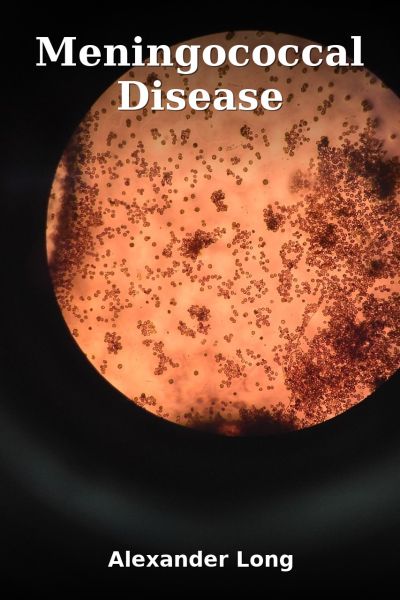
Meningococcal disease, caused by *Neisseria meningitidis*, is a fearsome illness known for its rapid onset and high mortality, particularly impacting infants, adolescents, and young adults. This book chronicles the long and often terrifying history of this disease, from vague ancient accounts of "brain fevers" to the sophisticated epidemiological understanding and medical interventions of today. It explores the shift in scientific understanding from the miasma theory to the germ theory, the pivotal discovery of the meningococcus under the microscope in the late 19th century, and the subsequent classification of different bacterial strains into serogroups.
The narrative delves into the relentless impact of the disease on civilian life, highlighting outbreaks in schools, institutions, and urban centers, and starkly portraying the devastating toll during the World Wars. It traces the evolution of medical practices, from the often-harmful 19th-century treatments to the revolutionary introduction of serum therapy, sulfonamides, and later, penicillin, chloramphenicol, and modern antibiotics. However, it also details the ongoing challenges posed by antimicrobial resistance and the emergence of new, problematic strains, underscoring the constant evolutionary arms race between humans and the bacterium.
A central theme is the revolutionary impact of vaccines, from the early polysaccharide formulations with their significant limitations, to the transformative power of conjugate vaccines in protecting infants and inducing herd immunity. The book provides a detailed account of the extraordinary effort to develop and deploy the MenAfriVac vaccine, which virtually eliminated serogroup A epidemics in the African Meningitis Belt. It also addresses the long-standing challenge of developing effective vaccines against serogroup B and the breakthroughs that led to the first protein-based MenB vaccines. Finally, it outlines the current landscape of global immunization campaigns and policies and looks towards the ambitious "Defeating Meningitis by 2030" global roadmap, a comprehensive strategy aiming to eliminate bacterial meningitis epidemics and improve the lives of survivors, representing a culmination of centuries of scientific effort and public health determination.
What You'll Find Inside:
- Explore the historical evolution of understanding and combating meningococcal disease, from ancient accounts to modern strategies.
- Learn about key scientific breakthroughs, including the discovery of the meningococcus, the development of serum therapy, and the antibiotic revolution.
- Understand the crucial role of public health initiatives, including disease reporting, outbreak control, and the impact of global conflicts on epidemiology.
- Discover the revolutionary impact of meningococcal vaccines, from early polysaccharide formulations to advanced conjugate and protein-based vaccines, and their role in global immunization campaigns.
- Gain insight into the ongoing challenges of shifting epidemiology, antimicrobial resistance, and the global roadmap towards defeating meningitis by 2030.
Who's It For:
This book is for anyone interested in the history of infectious diseases, public health, and medical science. It would be particularly valuable for medical students, public health professionals, historians of medicine, and individuals interested in the historical context of vaccination and antibiotic development. Patients and families affected by meningococcal disease may also find it informative in understanding the long journey of combating this illness.
Introduction
Meningococcal disease, caused by the bacterium Neisseria meningitidis, is a formidable adversary in the history of infectious diseases. Though relatively rare in many developed nations today, this illness is notorious for its rapid onset, unpredictable outbreaks, and high mortality rate, which can remain alarmingly significant even when modern medical care is available. Affecting individuals of all ages but particularly endangering infants, adolescents, and young adults, meningococcal disease frequently presents as either meningitis or meningococcemia, each capable of causing lifelong disability or sudden death. The legacy of those who survive is often marked by challenges such as limb loss, neurological deficits, and hearing impairment, rendering meningococcal disease not just a fleeting crisis but often a lifelong ordeal for its victims and their families.
Understanding meningococcal disease begins with appreciating its unique biology. Humans alone harbor this bacterium, commonly as harmless carriers within the nasopharynx. Paradoxically, from this silent carriage, the organism can, in a tiny fraction, launch a devastating systemic invasion. The close association with human populations—and its propensity for fatal or crippling outcomes—has made this bacteria both a subject of scientific fascination and a looming specter over communities throughout history.
Enjoying it? The full book includes every chapter.
Table of Contents:
- Introduction Free
- Chapter 1 Early Observations: Ancient Accounts of Meningitis Free
- Chapter 2 The Geneva Outbreak of 1805: First Clinical Descriptions
- Chapter 3 The 19th Century: Epidemiology and Fear
- Chapter 4 Understanding Contagion: The Shift from Miasma to Microbes
- Chapter 5 Breakthroughs in Microscopy: Discovering the Meningococcus
- Chapter 6 Naming and Classifying Meningococcal Disease
- Chapter 7 The Burden on Childhood and Adolescence
- Chapter 8 Medical Practices: 19th Century Treatments and Misconceptions
- Chapter 9 The Advent of Serum Therapy
- Chapter 10 Reportable Disease Status and Early Public Health Responses
- Chapter 11 Meningococcal Disease and the World Wars
- Chapter 12 Outbreaks in Civilian Life: Schools, Institutions, and Urban Centers
- Chapter 13 Strain Typing and Serogroup Discoveries
- Chapter 14 The Sulfonamide Revolution and Its Limitations
- Chapter 15 The Emergence of Antibiotic Resistance
- Chapter 16 Penicillin, Chloramphenicol, and Modern Antibiotics
- Chapter 17 The First Meningococcal Vaccines
- Chapter 18 Polysaccharide Vaccines: Progress and Shortcomings
- Chapter 19 Conjugate Vaccines: Transforming Prevention
- Chapter 20 The African Meningitis Belt: Epidemics and Interventions
- Chapter 21 The Challenge of Serogroup B
- Chapter 22 Global Immunization Campaigns and Policy
- Chapter 23 Shifting Epidemiology in the 21st Century
- Chapter 24 Antimicrobial Resistance and Emerging Strains
- Chapter 25 Toward Defeating Meningococcal Disease: The Road to 2030
Included when you buy the full book.
Author:
Published By:
Date Published:
July 3, 2025
Type:
Nonfiction
Language:
English
Word Count:
26,892 words
Reading Time:
1 hour 53 minutes
Sample:
Order:
Order Meningococcal Disease (Hardcover) on MixCache.com:
Buy NowIncludes every chapter. Not sure yet? Read the opening free.
Print copy is made to order and ships worldwide. Includes the ebook free, ready to read instantly.
$5 account credit for all new MixCache.com accounts, usable toward any ebook purchase!*