Browse by Category
Fiction
- Action & Adventure
- African American
- Anthologies
- Children's Fiction
- Classics
- Comics & Graphic Novels
- Coming of Age
- Contemporary
- Cultural & Regional
- Drama
- Erotica
- Family Life
- Fantasy
- General
- Historical Fiction
- Horror
- Humor & Satire
- Literary Fiction
- Mystery, Thriller & Suspense
- Poetry
- Religious & Inspirational
- Romance
- Science Fiction
- Short Stories
- War & Military
- Westerns
- Women's Fiction
- Young Adult
Non-Fiction
- Antiques & Collectibles
- Arts & Photography
- Biographies & Memoirs
- Business & Money
- Children's Non-Fiction
-
Computers & Technology
- Artificial Intelligence
- Computer Science
- Cybersecurity & Cryptography
- Data Science & Analytics
- Databases & Big Data
- Game Development & Design
- General
- Hardware & DIY
- Mobile App Development
- Networking & Cloud Computing
- Operating Systems
- Programming
- Robotics
- Software
- Software Engineering
- User Experience (UX) & Design
- Web Development & Design
- Cooking, Food & Wine
- Crafts, Hobbies & Home
- Education & Teaching
- Engineering
- General
- Health, Fitness & Dieting
-
History
- African History
- African History - North Africa
- African History - Sub-Saharan Africa
- American History
- American History - 20th Century
- American History - Civil War
- American History - Colonial Period
- Ancient History
- Asian History
- Asian History - China
- Asian History - India
- Asian History - Japan
- Asian History - Southeast Asia
- European History
- European History - Ancient Greece
- European History - Ancient Rome
- European History - Medieval
- European History - Modern
- European History - Renaissance
- General
- Middle Eastern History
- Military History
- Military History - Aviation
- Military History - Naval
- Social & Cultural History
- World History
- Humor & Entertainment
- Industrial Technology
- Language Learning
- Law
- LGBTQ+ Non-Fiction
- Literary Criticism
- Medical Books
- Parenting & Relationships
- Philosophy
- Politics & Social Sciences
- Reference
- Religion & Spirituality
-
Science & Math
- Agricultural Sciences
- Astronomy & Space Science
- Behavioral Sciences
- Biological Sciences
- Botany & Plant Science
- Chemistry
- Earth Sciences
- Engineering - Chemical
- Engineering - Civil
- Engineering - Electrical
- Engineering - Mechanical
- Environment
- General
- Geology
- Mathematics
- Nature & Ecology
- Oceanography
- Paleontology
- Physics
- Statistics
- Self-Help
- Sports & Outdoors
- Study Aids
- Sustainability & Green Living
- Textbooks
- Transportation
- Travel
- True Crime
- Urban Planning & Development
- Veterinary Medicine
- Writing & Publishing
Jump to Section
MixCache.com Total Access
Unlimited reading and audiobooks for every book published by MixCache.com.
Included titles carry the MTA badge.
Learn more →
A History of Applied Materials
MTA
The Story of an S&P 500 Company
About this book:
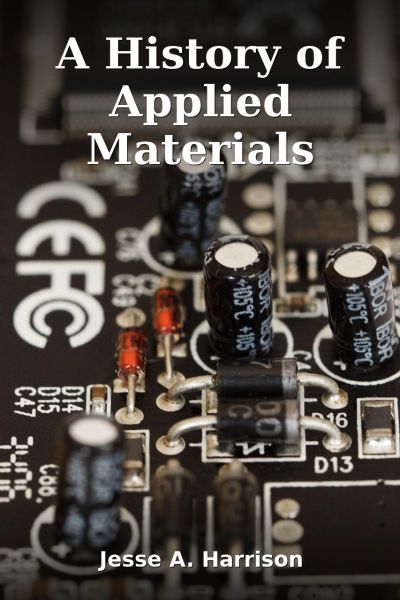
Applied Materials, founded in 1967 by Michael McNeilly in Santa Clara, California, emerged as a cornerstone of the semiconductor revolution by pioneering Chemical Vapor Deposition (CVD) equipment essential for chip manufacturing. The company rapidly evolved from a startup supplying components to a global leader, navigating the industry's cyclical nature through strategic acquisitions—expanding into Physical Vapor Deposition (PVD), etch, and planarization—and aggressive international expansion, particularly in Japan and later Asia. Key milestones included its 1972 IPO, the revolutionary Precision 5000 cluster tool in 1987, and the leadership of James Morgan (1978–1999) and subsequent CEOs who drove operational excellence and technological diversification into display manufacturing and advanced packaging. Inclusion in the S&P 500 cemented its status as a market leader defined by consistent financial returns and indispensable technological enablement.
Throughout the Digital Age, Applied Materials sustained its leadership by mastering material science frontiers, enabling critical transitions such as copper interconnects, high-k metal gates, and the shift to 300mm wafers. The company adapted to the slowing of traditional Moore's Law scaling by pivoting toward "More than Moore" strategies, becoming a primary enabler of advanced 3D packaging, heterogeneous integration, and chiplet architectures. Its deep expertise in atomic-layer deposition and etch became crucial for next-generation logic architectures like Gate-All-Around transistors and emerging memory technologies. Simultaneously, the firm integrated artificial intelligence and machine learning into its equipment and factory automation solutions, creating intelligent manufacturing platforms that improve yield and predictive maintenance for customers.
Operating at the intersection of technology and geopolitics, Applied Materials navigated intense U.S.-China trade tensions and the global push for semiconductor sovereignty, notably supporting CHIPS Act-funded fab construction worldwide. The company invested heavily in its talent pipeline and corporate responsibility initiatives, emphasizing sustainability, diversity, and STEM education to secure its workforce and social license. Under CEO Gary Dickerson, the strategy of "Differentiation through Materials Engineering" guided expansion into adjacent markets like silicon carbide power devices and early-stage quantum computing collaborations, positioning the firm for the next industrial revolution.
Ultimately, Applied Materials' enduring legacy is its invisible yet pervasive presence in modern life. Its equipment manufactures the foundational silicon and displays inside every smartphone, data center, AI accelerator, and medical device, translating atomic-scale engineering into the digital infrastructure of the global economy. From a garage startup to an S&P 500 titan, the company’s history reflects a relentless pursuit of materials innovation, strategic resilience through economic and political cycles, and a commitment to enabling the computational advances that define the contemporary world.
What You'll Find Inside:
- The complete evolution of Applied Materials from a 1967 Silicon Valley startup to a dominant S&P 500 leader in semiconductor manufacturing equipment.
- Deep dives into pioneering materials engineering breakthroughs—including CVD, PVD, etch, CMP, and atomic layer deposition—that enabled Moore's Law scaling for over five decades.
- Strategic analysis of the company's growth via major acquisitions, global expansion into Asia and Europe, and diversification into display technologies and advanced packaging.
- Insights into navigating cyclical industry downturns, geopolitical tensions (U.S.-China tech competition), and successive leadership transitions while maintaining R&D intensity.
- A forward-looking perspective on Applied Materials' critical role in enabling next-generation technologies: AI accelerators, chiplet integration, quantum computing hardware, and sustainable manufacturing.
Who's It For:
This book is ideal for semiconductor industry professionals, investors, and business strategists seeking a comprehensive case study of sustained innovation and market leadership in high-tech manufacturing. It also appeals to technology historians and students of corporate strategy interested in how a materials engineering company became an indispensable enabler of the digital economy. Readers will gain actionable insights into managing R&D pipelines, global supply chains, and strategic pivots across decades of technological disruption.
Table of Contents:
- Introduction
- Chapter 1 The Dawn of Innovation: Applied Materials' Early Years
- Chapter 2 Forging the Future: Pioneering Semiconductor Equipment
- Chapter 3 Navigating the Microchip Revolution: Growth and Expansion
- Chapter 4 From Garage to Global: Establishing a Market Presence
- Chapter 5 The IPO Journey: Becoming a Public Company
- Chapter 6 Scaling Up: Manufacturing and Operational Excellence
- Chapter 7 Strategic Acquisitions: Expanding Technology and Reach
- Chapter 8 Silicon Valley Dreams: Culture and Leadership in the Early Decades
- Chapter 9 Economic Headwinds: Surviving and Thriving Through Downturns
- Chapter 10 Global Footprint: International Expansion and Market Penetration
- Chapter 11 Innovation Engine: Research and Development Milestones
- Chapter 12 The Digital Age: Adapting to Rapid Technological Change
- Chapter 13 Material Science Frontiers: Pushing the Boundaries of Possibility
- Chapter 14 The Rise of the S&P 500: Acknowledgment of Market Leadership
- Chapter 15 Corporate Responsibility: Sustainability and Community Engagement
- Chapter 16 Leadership Transitions: Guiding the Company Through Change
- Chapter 17 Advanced Packaging: New Horizons in Semiconductor Manufacturing
- Chapter 18 Display Technologies: Diversification Beyond Silicon
- Chapter 19 AI and Machine Learning: Integrating Intelligence into Manufacturing
- Chapter 20 Geopolitical Shifts: Navigating a Complex Global Landscape
- Chapter 21 The Future of Computing: Applied Materials' Role in Next-Gen Technologies
- Chapter 22 Quantum Leaps: Preparing for the Next Industrial Revolution
- Chapter 23 The Talent Pipeline: Attracting and Retaining Top Innovators
- Chapter 24 Shareholder Value: Growth and Returns for Investors
- Chapter 25 The Enduring Legacy: Applied Materials' Impact on the Modern World
Author:
Published By:
Date Published:
November 17, 2026
Type:
Nonfiction
Language:
English
Word Count:
34,378 words
Reading Time:
2 hours 24 minutes
Sample:
Order:
Order A History of Applied Materials (Hardcover) on MixCache.com:
Buy NowPrint copy is made to order and ships worldwide. Includes the ebook free, ready to read instantly.
$5 account credit for all new MixCache.com accounts, usable toward any ebook purchase!*