Browse by Category
Fiction
- Action & Adventure
- African American
- Anthologies
- Children's Fiction
- Classics
- Comics & Graphic Novels
- Coming of Age
- Contemporary
- Cultural & Regional
- Drama
- Erotica
- Fantasy
- General
- Historical Fiction
- Horror
- Humor & Satire
- Literary Fiction
- Mystery, Thriller & Suspense
- Poetry
- Religious & Inspirational
- Romance
- Science Fiction
- Short Stories
- War & Military
- Westerns
- Women's Fiction
- Young Adult
Non-Fiction
- Antiques & Collectibles
- Arts & Photography
- Biographies & Memoirs
- Business & Money
- Children's Non-Fiction
-
Computers & Technology
- Artificial Intelligence
- Computer Science
- Cybersecurity & Cryptography
- Data Science & Analytics
- Databases & Big Data
- Game Development & Design
- General
- Hardware & DIY
- Mobile App Development
- Networking & Cloud Computing
- Operating Systems
- Programming
- Robotics
- Software
- Software Engineering
- User Experience (UX) & Design
- Web Development & Design
- Cooking, Food & Wine
- Crafts, Hobbies & Home
- Education & Teaching
- Engineering
- General
- Health, Fitness & Dieting
-
History
- African History
- African History - North Africa
- African History - Sub-Saharan Africa
- American History
- American History - 20th Century
- American History - Civil War
- American History - Colonial Period
- Ancient History
- Asian History
- Asian History - China
- Asian History - India
- Asian History - Japan
- Asian History - Southeast Asia
- European History
- European History - Ancient Greece
- European History - Ancient Rome
- European History - Medieval
- European History - Modern
- European History - Renaissance
- General
- Middle Eastern History
- Military History
- Military History - Aviation
- Military History - Naval
- Social & Cultural History
- World History
- Humor & Entertainment
- Industrial Technology
- Language Learning
- Law
- LGBTQ+ Non-Fiction
- Literary Criticism
- Medical Books
- Parenting & Relationships
- Philosophy
- Politics & Social Sciences
- Reference
- Religion & Spirituality
-
Science & Math
- Agricultural Sciences
- Astronomy & Space Science
- Behavioral Sciences
- Biological Sciences
- Botany & Plant Science
- Chemistry
- Earth Sciences
- Engineering - Chemical
- Engineering - Civil
- Engineering - Electrical
- Engineering - Mechanical
- Environment
- General
- Geology
- Mathematics
- Nature & Ecology
- Oceanography
- Paleontology
- Physics
- Statistics
- Self-Help
- Sports & Outdoors
- Study Aids
- Sustainability & Green Living
- Textbooks
- Transportation
- Travel
- True Crime
- Urban Planning & Development
- Veterinary Medicine
- Writing & Publishing
Jump to Section
MixCache.com Total Access
Unlimited reading and audiobooks for every book published by MixCache.com.
Included titles carry the MTA badge.
Learn more →
A History of Lilly (Eli)
MTA
The Story of an S&P 500 Company
About this book:

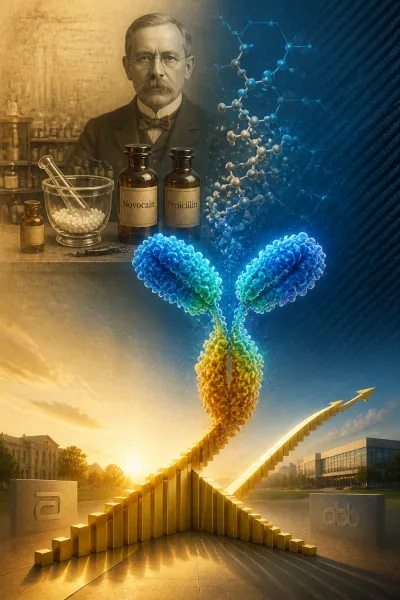
Eli Lilly and Company's history traces a remarkable journey from a small Indianapolis laboratory founded by Colonel Eli Lilly in 1876 to a global pharmaceutical leader and S&P 500 cornerstone. The early chapters establish the founder's rigid commitment to quality, scientific rigor, and ethical practices—principles that differentiated the company in an era of unregulated patent medicines. This foundation enabled the company to survive the Civil War aftermath, the Great Depression, and World War II, during which Lilly played a pivotal role in mass-producing insulin (1920s) and penicillin (1940s), transforming fatal conditions into manageable ones and proving its capacity for large-scale biomanufacturing.
The mid-to-late 20th century saw Lilly aggressively expand its therapeutic scope and global footprint. The post-war boom fueled antibiotic innovation (e.g., erythromycin), while the 1960s and 70s brought strategic diversification into neuroscience, cardiovascular health, and oncology. A defining moment arrived in the 1970s with Lilly's foresighted embrace of biotechnology, culminating in the 1982 launch of Humulin, the world's first recombinant human insulin, via a landmark partnership with Genentech. This biotech pivot set the stage for the blockbuster era of the late 1980s and 90s, driven by Prozac (fluoxetine), which revolutionized depression treatment, and Zyprexa, alongside continued diabetes innovation like Humalog. These successes financed a deepening commitment to genomics and targeted therapies in the late 1990s, positioning Lilly for the personalized medicine revolution.
Navigating the modern era required adapting to a radically shifting landscape of managed care, generic competition, pricing scrutiny, and evolving regulatory demands. Lilly responded by divesting non-core businesses, sharpening its R&D focus, and leveraging mergers and acquisitions to acquire cutting-edge capabilities in combinatorial chemistry and biologics. The company's enduring legacy rests on a culture of scientific integrity, operational excellence in manufacturing, and a consistent strategy of addressing unmet medical needs—from widespread chronic diseases to rare disorders. As the 21st century unfolds, Lilly is heavily invested in emerging frontiers: gene and cell therapies, RNA modalities, AI-driven drug discovery, and immunotherapies for cancer and Alzheimer's, striving to balance scientific audacity with global access and affordability to define its next century of impact.
What You'll Find Inside:
- The founding vision of Colonel Eli Lilly in 1876 established unprecedented standards for pharmaceutical quality, scientific rigor, and ethical business practices that became the company's enduring cultural bedrock.
- The insulin revolution of the 1920s, where Lilly partnered with University of Toronto researchers to mass-produce the first life-saving diabetes treatment, transforming a fatal diagnosis into a manageable condition and establishing Lilly as a global pharmaceutical leader.
- Pioneering the biotechnology era through the 1970s-80s collaboration with Genentech to develop Humulin (the world's first recombinant human insulin), demonstrating Lilly's ability to translate cutting-edge genetic engineering into commercial-scale biomanufacturing.
- The blockbuster era defined by Prozac (1987) and Zyprexa (1996), which revolutionized mental health treatment, generated massive commercial success, and funded further innovation across neuroscience, diabetes, oncology, and emerging modalities like gene therapy.
- A comprehensive examination of Lilly's navigation of industry-wide challenges—from the Great Depression and WWII production demands to modern debates over drug pricing, regulatory complexity, generic competition, and the strategic shift toward precision medicine, AI-driven discovery, and global health equity.
Who's It For:
This book is ideal for pharmaceutical industry professionals, business historians, and students of corporate strategy who want a detailed case study of sustained innovation and leadership over 150 years. It will also appeal to investors and general readers interested in how scientific breakthroughs—from insulin to biologics to gene therapies—translate into enduring market success and societal impact within a highly regulated, ethically complex global industry.
Table of Contents:
- Introduction: A Legacy of Innovation and Influence
- Chapter 1: The Early Years – Eli Lilly's Vision and Founding Principles
- Chapter 2: From Civil War to Pharmaceutical Pioneer – Laying the Foundation (1860s-1880s)
- Chapter 3: The Turn of the Century – Growth, Research, and Early Medicines (1890s-1910s)
- Chapter 4: The Insulin Revolution – A Landmark Discovery and its Impact (1920s)
- Chapter 5: Navigating the Great Depression and World War II – Resilience and Contribution (1930s-1940s)
- Chapter 6: Post-War Boom and the Rise of Antibiotics (1950s)
- Chapter 7: Expanding Horizons – Global Reach and New Therapeutic Areas (1960s)
- Chapter 8: The Age of Biotechnology Begins – Lilly's Foray into a New Frontier (1970s)
- Chapter 9: Prozac and the Pharmaceutical Landscape – A Blockbuster Era (1980s)
- Chapter 10: Challenges and Transformations – Adapting to a Changing Market (Early 1990s)
- Chapter 11: Genomics and Targeted Therapies – Pioneering Personalized Medicine (Late 1990s)
- Chapter 12: The S&P 500 Journey – Milestones and Market Recognition
- Chapter 13: Research and Development – The Engine of Innovation
- Chapter 14: Manufacturing and Quality – Ensuring Global Access
- Chapter 15: Global Presence – Expanding Reach and Impact
- Chapter 16: Corporate Responsibility and Philanthropy – Beyond Medicines
- Chapter 17: Leadership and Culture – Shaping the Company's Identity
- Chapter 18: Mergers, Acquisitions, and Divestitures – Strategic Evolution
- Chapter 19: The Evolving Regulatory Landscape – Navigating Approvals and Compliance
- Chapter 20: Pricing, Access, and Healthcare Debates – Societal Impact
- Chapter 21: Addressing Unmet Medical Needs – From Rare Diseases to Chronic Conditions
- Chapter 22: The Future of Pharmaceutical Research – Emerging Technologies and Therapies
- Chapter 23: Competition and Collaboration – A Dynamic Industry
- Chapter 24: Lilly's Enduring Legacy – Scientific Contribution and Human Health
- Chapter 25: The Next Century – Innovation, Challenges, and the Road Ahead
Author:
Published By:
Date Published:
November 1, 2026
Type:
Nonfiction
Language:
English
Word Count:
39,442 words
Reading Time:
2 hours 46 minutes
Sample:
Order:
Order A History of Lilly (Eli) (Hardcover) on MixCache.com:
Buy NowPrint copy is made to order and ships worldwide. Includes the ebook free, ready to read instantly.
$5 account credit for all new MixCache.com accounts, usable toward any ebook purchase!*