Browse by Category
Fiction
- Action & Adventure
- African American
- Anthologies
- Children's Fiction
- Classics
- Comics & Graphic Novels
- Coming of Age
- Contemporary
- Cultural & Regional
- Drama
- Erotica
- Fantasy
- General
- Historical Fiction
- Horror
- Humor & Satire
- Literary Fiction
- Mystery, Thriller & Suspense
- Poetry
- Religious & Inspirational
- Romance
- Science Fiction
- Short Stories
- War & Military
- Westerns
- Women's Fiction
- Young Adult
Non-Fiction
- Antiques & Collectibles
- Arts & Photography
- Biographies & Memoirs
- Business & Money
- Children's Non-Fiction
-
Computers & Technology
- Artificial Intelligence
- Computer Science
- Cybersecurity & Cryptography
- Data Science & Analytics
- Databases & Big Data
- Game Development & Design
- General
- Hardware & DIY
- Mobile App Development
- Networking & Cloud Computing
- Operating Systems
- Programming
- Robotics
- Software
- Software Engineering
- User Experience (UX) & Design
- Web Development & Design
- Cooking, Food & Wine
- Crafts, Hobbies & Home
- Education & Teaching
- Engineering
- General
- Health, Fitness & Dieting
-
History
- African History
- African History - North Africa
- African History - Sub-Saharan Africa
- American History
- American History - 20th Century
- American History - Civil War
- American History - Colonial Period
- Ancient History
- Asian History
- Asian History - China
- Asian History - India
- Asian History - Japan
- Asian History - Southeast Asia
- European History
- European History - Ancient Greece
- European History - Ancient Rome
- European History - Medieval
- European History - Modern
- European History - Renaissance
- General
- Middle Eastern History
- Military History
- Military History - Aviation
- Military History - Naval
- Social & Cultural History
- World History
- Humor & Entertainment
- Industrial Technology
- Language Learning
- Law
- LGBTQ+ Non-Fiction
- Literary Criticism
- Medical Books
- Parenting & Relationships
- Philosophy
- Politics & Social Sciences
- Reference
- Religion & Spirituality
-
Science & Math
- Agricultural Sciences
- Astronomy & Space Science
- Behavioral Sciences
- Biological Sciences
- Botany & Plant Science
- Chemistry
- Earth Sciences
- Engineering - Chemical
- Engineering - Civil
- Engineering - Electrical
- Engineering - Mechanical
- Environment
- General
- Geology
- Mathematics
- Nature & Ecology
- Oceanography
- Paleontology
- Physics
- Statistics
- Self-Help
- Sports & Outdoors
- Study Aids
- Sustainability & Green Living
- Textbooks
- Transportation
- Travel
- True Crime
- Urban Planning & Development
- Veterinary Medicine
- Writing & Publishing
Jump to Section
MixCache.com Total Access
Unlimited reading and audiobooks for every book published by MixCache.com.
Included titles carry the MTA badge.
Learn more →
A History of Norwegian Cruise Line Holdings
MTA
The Story of an S&P 500 Company
About this book:
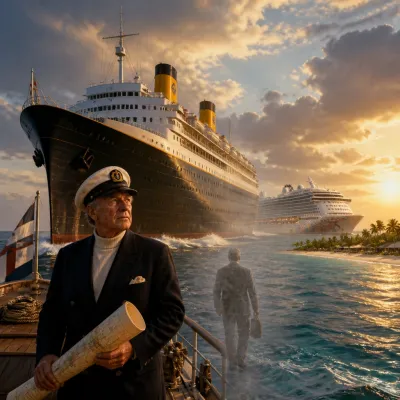
Norwegian Cruise Line Holdings (NCLH) evolved from a modest 1966 venture—Norwegian Caribbean Lines operating the single ship *Sunward* out of Miami—into a diversified, S&P 500 global cruise conglomerate. Founded by the Kloster family, the company pioneered the modern Caribbean cruise market, introducing innovations like affordable air-sea packages and the industry’s first private island destination, Great Stirrup Cay. A pivotal moment arrived with the 1979 acquisition and conversion of the legendary SS *France* into the SS *Norway*, then the world’s largest cruise ship, signaling NCL’s ambition to compete on scale and amenities. Despite early turbulence, including the departure of co-founder Ted Arison to start Carnival Cruise Lines and economic downturns, NCL established a reputation for innovation, notably through the 2000 launch of "Freestyle Cruising," which abolished fixed dining times and formal dress codes to offer passengers unprecedented flexibility.
Strategic acquisitions transformed the single-brand operator into a multi-brand powerhouse. In 2007, NCLH acquired Oceania Cruises, adding an upscale, destination-focused line renowned for culinary excellence, followed by the 2009 purchase of Regent Seven Seas Cruises, securing a dominant position in the ultra-luxury, all-inclusive segment. This portfolio diversification—spanning contemporary, upscale, and luxury markets—provided resilience against economic cycles and fueled growth. The company went public on NASDAQ in 2013 and joined the S&P 500 in 2014, validating its financial maturity and providing capital for an aggressive newbuild program. This era produced groundbreaking vessels like NCL’s Breakaway and Breakaway Plus classes featuring the innovative "Waterfront" promenade, Oceania’s *Marina* and *Riviera*, and Regent’s *Seven Seas Explorer*, hailed as the most luxurious ship ever built.
Throughout its expansion, NCLH navigated significant headwinds, including the 2008 financial crisis and the unprecedented operational shutdown caused by the COVID-19 pandemic. The pandemic response tested the company’s liquidity and operational agility, leading to the development of rigorous health protocols and accelerated digital transformation, including contactless technology and enhanced connectivity. Emerging from the crisis, NCLH reinforced its commitment to sustainability, investing in advanced wastewater treatment, exhaust gas cleaning systems, energy-efficient hull designs, and alternative fuel exploration to minimize its environmental footprint. The holdings structure proved vital, enabling centralized procurement, shared technology platforms, unified risk management, and cross-brand talent development while preserving the distinct identities of Norwegian Cruise Line, Oceania, and Regent.
Today, NCLH’s legacy is defined by its democratization of cruising through Freestyle flexibility, its elevation of culinary and destination immersion in the premium sectors, and its relentless push for technological and environmental innovation. The company’s enduring impact rests on a foundation of visionary leadership, a diverse global workforce delivering the "human element" of hospitality, and a strategic vision that balances autonomous brand management with corporate synergy. As it charts the next decade, NCLH focuses on smarter, greener ships, hyper-personalized digital guest experiences, and expansion into emerging global markets, solidifying its position as an industry architect that reshaped maritime leisure from a rigid transport model into a dynamic, choice-driven vacation industry.
What You'll Find Inside:
- The transformation of Norwegian Cruise Line from a single-ship Caribbean operator in 1966 to a diversified, multi-brand S&P 500 holdings company encompassing contemporary, upscale, and ultra-luxury segments.
- The revolutionary introduction of 'Freestyle Cruising' in the early 2000s, which disrupted industry norms by eliminating fixed dining times, formal dress codes, and rigid schedules to offer unprecedented passenger freedom and flexibility.
- Strategic acquisitions of Oceania Cruises (2007) and Regent Seven Seas Cruises (2009) that created a powerful three-brand portfolio, enabling NCLH to capture market share across all cruise segments and diversify revenue streams.
- Demonstrated resilience through major crises including the 2008 Great Recession and the COVID-19 pandemic, with adaptive strategies in health protocols, digital transformation, financial management, and fleet deployment that enabled recovery and growth.
- Continuous innovation in fleet design (from SS Norway to Breakaway/Plus classes and Regent's Explorer-class), sustainability initiatives (advanced wastewater treatment, scrubbers, LNG exploration), and digital integration (mobile apps, AI personalization, connectivity) that redefined the modern cruise experience.
Who's It For:
This book is ideal for business history enthusiasts, hospitality and tourism professionals, and investors seeking a detailed case study of corporate evolution, strategic diversification, and crisis management within a capital-intensive global industry. It will particularly benefit readers interested in the cruise sector's development, multi-brand portfolio strategy, and the journey from entrepreneurial startup to S&P 500 constituent, offering valuable lessons in innovation, brand differentiation, and operational resilience.
Table of Contents:
- Introduction
- Chapter 1: The Genesis of a Maritime Vision
- Chapter 2: Pioneering the Caribbean - The Early Years of NCL
- Chapter 3: Innovation at Sea - The Advent of Modern Cruising
- Chapter 4: Navigating Turbulent Waters - Challenges and Triumphs
- Chapter 5: Expansion and Fleet Development in the Late 20th Century
- Chapter 6: A New Millennium, A New Horizon - Growth and Rebranding
- Chapter 7: The Dawn of Freestyle Cruising - A Revolution in Hospitality
- Chapter 8: Strategic Acquisitions - Expanding the NCLH Family
- Chapter 9: Going Public - The Journey to the Stock Exchange
- Chapter 10: The Prestige of the S&P 500 - A Benchmark of Success
- Chapter 11: Global Reach - Expanding into New Markets
- Chapter 12: Building the Modern Fleet - A Focus on Innovation and Design
- Chapter 13: Sustainability and Environmental Stewardship at Sea
- Chapter 14: Navigating Economic Headwinds and Industry Shifts
- Chapter 15: The Human Element - Leadership, Crew, and Passenger Experience
- Chapter 16: Marketing and Branding in a Competitive Landscape
- Chapter 17: The Digital Transformation of the Cruise Experience
- Chapter 18: Crisis and Resilience - Adapting to Unforeseen Challenges
- Chapter 19: Charting the Future - Vision for the Next Decade
- Chapter 20: The Norwegian Cruise Line Brand - Evolution and Identity
- Chapter 21: Oceania Cruises - Luxury and Destination-Focused Experiences
- Chapter 22: Regent Seven Seas Cruises - The Pinnacle of All-Inclusive Luxury
- Chapter 23: The Holdings Company - Synergy and Strategic Management
- Chapter 24: Corporate Social Responsibility and Community Engagement
- Chapter 25: A Legacy on the High Seas - The Enduring Impact of NCLH
Author:
Published By:
Date Published:
August 17, 2026
Type:
Nonfiction
Language:
English
Word Count:
40,383 words
Reading Time:
2 hours 50 minutes
Sample:
Order:
Order A History of Norwegian Cruise Line Holdings (Hardcover) on MixCache.com:
Buy NowPrint copy is made to order and ships worldwide. Includes the ebook free, ready to read instantly.
$5 account credit for all new MixCache.com accounts, usable toward any ebook purchase!*