Browse by Category
Fiction
- Action & Adventure
- African American
- Anthologies
- Children's Fiction
- Classics
- Comics & Graphic Novels
- Coming of Age
- Contemporary
- Cultural & Regional
- Drama
- Erotica
- Fantasy
- General
- Historical Fiction
- Horror
- Humor & Satire
- Literary Fiction
- Mystery, Thriller & Suspense
- Poetry
- Religious & Inspirational
- Romance
- Science Fiction
- Short Stories
- War & Military
- Westerns
- Women's Fiction
- Young Adult
Non-Fiction
- Antiques & Collectibles
- Arts & Photography
- Biographies & Memoirs
- Business & Money
- Children's Non-Fiction
-
Computers & Technology
- Artificial Intelligence
- Computer Science
- Cybersecurity & Cryptography
- Data Science & Analytics
- Databases & Big Data
- Game Development & Design
- General
- Hardware & DIY
- Mobile App Development
- Networking & Cloud Computing
- Operating Systems
- Programming
- Robotics
- Software
- Software Engineering
- User Experience (UX) & Design
- Web Development & Design
- Cooking, Food & Wine
- Crafts, Hobbies & Home
- Education & Teaching
- Engineering
- General
- Health, Fitness & Dieting
-
History
- African History
- African History - North Africa
- African History - Sub-Saharan Africa
- American History
- American History - 20th Century
- American History - Civil War
- American History - Colonial Period
- Ancient History
- Asian History
- Asian History - China
- Asian History - India
- Asian History - Japan
- Asian History - Southeast Asia
- European History
- European History - Ancient Greece
- European History - Ancient Rome
- European History - Medieval
- European History - Modern
- European History - Renaissance
- General
- Middle Eastern History
- Military History
- Military History - Aviation
- Military History - Naval
- Social & Cultural History
- World History
- Humor & Entertainment
- Industrial Technology
- Language Learning
- Law
- LGBTQ+ Non-Fiction
- Literary Criticism
- Medical Books
- Parenting & Relationships
- Philosophy
- Politics & Social Sciences
- Reference
- Religion & Spirituality
-
Science & Math
- Agricultural Sciences
- Astronomy & Space Science
- Behavioral Sciences
- Biological Sciences
- Botany & Plant Science
- Chemistry
- Earth Sciences
- Engineering - Chemical
- Engineering - Civil
- Engineering - Electrical
- Engineering - Mechanical
- Environment
- General
- Geology
- Mathematics
- Nature & Ecology
- Oceanography
- Paleontology
- Physics
- Statistics
- Self-Help
- Sports & Outdoors
- Study Aids
- Sustainability & Green Living
- Textbooks
- Transportation
- Travel
- True Crime
- Urban Planning & Development
- Veterinary Medicine
- Writing & Publishing
Jump to Section

Want unlimited access to all books published by MixCache.com (plus their audiobooks)? Try MixCache.com Total Access. Look for the MTA badge on book covers to identify included titles.
Access to infinite ebooks: Don't see the book you want? Suggest it and we'll create it (free!) for you from scratch with our powerful AI book writer. Then read it with MTA - besides profiting from any sales it makes!
Poland's Resilient Spirit
MTA
Survival Resistance and Renewal Across Centuries
About this book:
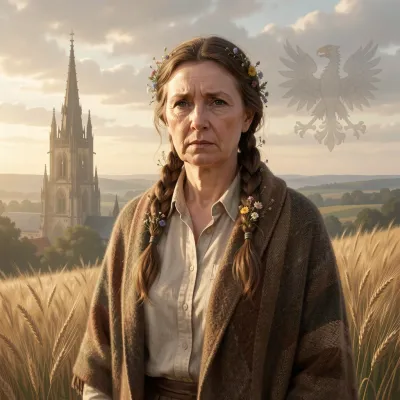
Poland’s story begins with the Piast dynasty, whose early rulers—Mieszko I’s baptism in 966 and Bolesław the Brave’s coronation—laid the Christian and territorial foundations of a nascent state. After a period of fragmentation, Władysław I the Elbow‑high reunited the lands, and his son Casimir III the Great ushered in an era of legal codification, university founding, and economic growth. The Jagiellonian era, launched by the Union of Krewo (1385) and solidified at Lublin (1569), created a vast, multi‑ethnic Commonwealth noted for religious tolerance, cultural flourishing (Copernicus, Renaissance Kraków), and the noble‑driven *Nihil novi* system. This golden age waned in the mid‑17th century during “The Deluge,” when Swedish, Russian, and Cossack invasions devastated the country; the heroic defense of Jasna Góra sparked a national revival, yet the Commonwealth emerged weakened, setting the stage for its eventual dissolution.
The partitions of Poland (1772, 1793, 1795) erased the state from the map, but Enlightenment‑inspired reform efforts—culminating in the Constitution of May 3 1791—were crushed by reactionary nobles and foreign intervention. Tadeusz Kościuszko’s 1794 uprising, though defeated at Praga, inspired future resistance. The 19th century saw the November (1830) and January (1863) uprisings, both brutally suppressed, prompting a Great Emigration of poets, intellectuals, and politicians who kept Polish language and aspirations alive abroad. In the early 20th century, competing visions of Józef Piłsudski (pro‑Austrian) and Roman Dmowski (pro‑Russian) shaped Poland’s World War I strategy; the collapse of the partitioning empires allowed Piłsudski to proclaim independence in 1918, defend it in the Polish‑Soviet War (“Miracle on the Vistula”), and secure borders through the Greater Poland and Silesian uprisings. The Second Republic wrestled with minority tensions, economic strain, and Piłsudski’s authoritarian Sanacja regime before succumbing to German‑Soviet aggression in 1939.
World II brought a dual invasion, brutal Nazi and Soviet occupations, the Holocaust that annihilated Poland’s 3.3 million Jews, and the tragic Warsaw Uprising of 1944, abandoned by Stalin and reduced to ruins. The Yalta Conference (1945) conceded Soviet control, establishing a communist regime backed by the Red Army; the ensuing “Iron Curtain” era featured Stalinist repression, Catholic resistance under Cardinal Wyszyński, and periodic dissent—Poznań 1956, the Polish October under Gomułka, and the rise of the independent trade union Solidarity in 1980. Martial law (1981) crushed Solidarity, but moral support from Pope John Paul II and underground activity kept the spirit of freedom alive. The Round Table Talks (1989) negotiated a peaceful transition, leading to the first non‑communist government, Lech Wałęsa’s presidency, and the final Soviet withdrawal by 1993.
Since then, Poland has pursued Euro‑Atlantic integration, joining NATO in 1999 and the EU in 2004, experiencing rapid economic growth, infrastructure modernization, and a vibrant civil society. While confronting the legacies of communism and historical memory, Poland has become a steadfast NATO eastern flank supporter, a leading EU voice, and a humanitarian hub during crises such as the 2022 Ukraine invasion. The nation’s enduring resilience—forged through centuries of partition, uprising, occupation, and repression—continues to define its identity as a sovereign, democratic, and integral member of a united Europe.
What You'll Find Inside:
- How Poland's national identity endured through centuries of partitions, occupations, and attempts at erasure, from the Piast Dynasty to the 21st century.
- The pivotal role of uprisings and resistance movements—including Kościuszko, November, January, Solidarity, and the Warsaw Uprising—in sustaining the fight for freedom.
- How cultural preservation through language, literature, and traditions (exemplified by the Great Emigration) kept Polish identity alive during periods when the state was absent from the map.
- The peaceful transition from communist rule to democracy through the Round Table Talks and Solidarity's triumph, showcasing non-violent resistance as a path to freedom.
- Poland's renewal in the 21st century as a sovereign nation integrated into NATO and the European Union, fulfilling centuries of struggle for self-determination.
Who's It For:
This book is ideal for history enthusiasts, students of European history, and anyone interested in stories of national resilience and cultural survival. It will particularly benefit readers seeking to understand how a nation can maintain its identity through centuries of occupation and oppression, drawing inspiration from Poland's persistent struggle for freedom. The work also appeals to those studying non-violent resistance movements and democratic transitions, as exemplified by Poland's Solidarity movement and peaceful overthrow of communism.
Author:
Published By:
Date Published:
August 10, 2026
Type:
Nonfiction
Language:
English
Word Count:
48,116 words
Reading Time:
3 hours 22 minutes
Sample:
Order:
Order Poland's Resilient Spirit (Hardcover) on MixCache.com:
Buy NowPrint copy is made to order and ships worldwide. Includes the ebook free, ready to read instantly.
$5 account credit for all new MixCache.com accounts, usable toward any ebook purchase!*