
Browse by Category
Fiction
- Action & Adventure
- African American
- Anthologies
- Children's Fiction
- Classics
- Comics & Graphic Novels
- Coming of Age
- Contemporary
- Cultural & Regional
- Drama
- Erotica
- Fantasy
- General
- Historical Fiction
- Horror
- Humor & Satire
- Literary Fiction
- Mystery, Thriller & Suspense
- Poetry
- Religious & Inspirational
- Romance
- Science Fiction
- Short Stories
- War & Military
- Westerns
- Women's Fiction
- Young Adult
Non-Fiction
- Antiques & Collectibles
- Arts & Photography
- Biographies & Memoirs
- Business & Money
- Children's Non-Fiction
-
Computers & Technology
- Artificial Intelligence
- Computer Science
- Cybersecurity & Cryptography
- Data Science & Analytics
- Databases & Big Data
- Game Development & Design
- General
- Hardware & DIY
- Mobile App Development
- Networking & Cloud Computing
- Operating Systems
- Programming
- Robotics
- Software
- Software Engineering
- User Experience (UX) & Design
- Web Development & Design
- Cooking, Food & Wine
- Crafts, Hobbies & Home
- Education & Teaching
- Engineering
- General
- Health, Fitness & Dieting
-
History
- African History
- African History - North Africa
- African History - Sub-Saharan Africa
- American History
- American History - 20th Century
- American History - Civil War
- American History - Colonial Period
- Ancient History
- Asian History
- Asian History - China
- Asian History - India
- Asian History - Japan
- Asian History - Southeast Asia
- European History
- European History - Ancient Greece
- European History - Ancient Rome
- European History - Medieval
- European History - Modern
- European History - Renaissance
- General
- Middle Eastern History
- Military History
- Military History - Aviation
- Military History - Naval
- Social & Cultural History
- World History
- Humor & Entertainment
- Industrial Technology
- Language Learning
- Law
- LGBTQ+ Non-Fiction
- Literary Criticism
- Medical Books
- Parenting & Relationships
- Philosophy
- Politics & Social Sciences
- Reference
- Religion & Spirituality
-
Science & Math
- Agricultural Sciences
- Astronomy & Space Science
- Behavioral Sciences
- Biological Sciences
- Botany & Plant Science
- Chemistry
- Earth Sciences
- Engineering - Chemical
- Engineering - Civil
- Engineering - Electrical
- Engineering - Mechanical
- Environment
- General
- Geology
- Mathematics
- Nature & Ecology
- Oceanography
- Paleontology
- Physics
- Statistics
- Self-Help
- Sports & Outdoors
- Study Aids
- Sustainability & Green Living
- Textbooks
- Transportation
- Travel
- True Crime
- Urban Planning & Development
- Veterinary Medicine
- Writing & Publishing
Jump to Section
MixCache.com Total Access
Unlimited reading and audiobooks for every book published by MixCache.com.
Included titles carry the MTA badge.
Learn more →
Cape Verde's Diaspora Dream: Islands of Migration and Cultural Synthesis
MTA
A Nation Forged by Ocean and Overseas Connections
About this book:
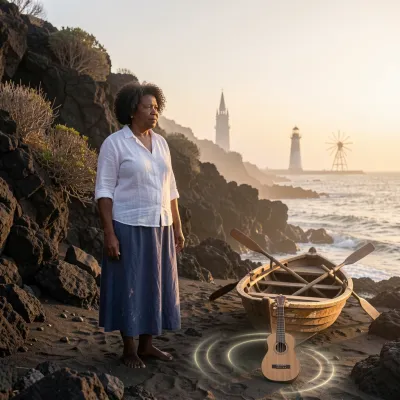
Cape Verde's story begins with its volcanic birth in the mid‑Atlantic and its transformation into a Portuguese colony that became a crucial hub in the transatlantic slave trade. Forced migration of Africans, cultural mixing with European settlers, and the emergence of a distinctive Kriolu language forged a Creole society on islands marked by arid conditions and recurrent droughts. These environmental hardships, combined with limited economic opportunity, turned emigration into a defining survival strategy, first through whaling contracts to New England, later through coerced labor in São Tomé and Príncipe, and eventually via voluntary settlement in Portugal, the Netherlands, the United States, and beyond.
Across the globe, Cape Verdean diaspora communities built enduring enclaves that preserved Kriolu, morna music, culinary traditions like cachupa, and Catholic faith while adapting to new societies. Remittances sent home became the archipelago’s economic lifeline, funding food, education, housing, and later productive investments in tourism, real estate, and small enterprises. Simultaneously, the diaspora fueled political awakening, supporting anti‑colonial movements that culminated in peaceful independence in 1975, and thereafter helped shape a stable, multi‑party democracy that leveraged its Atlantic position for diplomatic bridge‑building among Africa, Europe, and the Americas.
In the 21st century, digital connectivity and easier travel have deepened transnationalism, enabling continuous flows of people, capital, ideas, and culture between the islands and their global family. Younger generations navigate hybrid identities, invest in renewable energy and technology, and advocate for climate resilience, while the nation balances dependence on diaspora inflows with efforts to diversify its economy and sustain Kriolu as a unifying symbol. Cape Verde’s identity remains a dynamic synthesis of oceanic migration, cultural resilience, and the enduring dream of home that binds its scattered people into a single, globally connected nation.
What You'll Find Inside:
- The book explores how Cape Verde's identity was forged through centuries of migration, drought, and cultural synthesis between African, European, and American influences.
- It details the vital role of the Cape Verdean diaspora in sustaining the homeland through remittances, investments, and cultural preservation.
- The text examines how Kriolu language, morna music, and culinary traditions serve as unifying forces connecting islanders with their global family.
- It analyzes the challenges of assimilation faced by Cape Verdeans abroad while maintaining cultural identity across generations.
- The book discusses Cape Verde's diplomatic role as a bridge between continents and its future as a transnational nation shaped by its global diaspora.
Who's It For:
This book is ideal for students and scholars of diaspora studies, African history, and post-colonial development, as well as Cape Verdeans in the diaspora seeking to understand their heritage. It will also appeal to general readers interested in migration patterns, cultural identity formation, and how small island nations leverage global connections for sustainable development. Academics researching transnationalism, cultural synthesis, and the economic impact of remittances will find valuable insights throughout the text.
Table of Contents:
- Introduction
- Chapter 1 The Archipelago's Genesis: Volcanic Birth and Portuguese Arrival
- Chapter 2 A Crucible of Cultures: Early Encounters and Creole Beginnings
- Chapter 3 The Atlantic Crossroads: Cape Verde's Role in Maritime History
- Chapter 4 From Slavery to "Free Labor": Shifting Demographics and Forced Migrations
- Chapter 5 The Scourge of Drought: A Catalyst for Emigration
- Chapter 6 Morna, Mazurka, and More: The Evolution of Cape Verdean Music
- Chapter 7 Literature of Longing: Voices from the Islands and Beyond
- Chapter 8 Beyond Borders: Establishing Communities in New Lands
- Chapter 9 The Remittance Economy: Lifeline to the Homeland
- Chapter 10 Sustaining Identity: Cultural Practices in the Diaspora
- Chapter 11 Navigating Two Worlds: The Challenges of Assimilation and Integration
- Chapter 12 Political Awakening: Resistance and the Road to Independence
- Chapter 13 Building a Nation: Post-Colonial Development and Diplomacy
- Chapter 14 Bridging Continents: Cape Verde's Diplomatic Role
- Chapter 15 The Language of Connection: Kriolu as a Unifying Force
- Chapter 16 Gastronomy of the Diaspora: A Taste of Home Abroad
- Chapter 17 Religious Expressions: Faith and Community in Exile
- Chapter 18 Artistic Expressions: Visual Arts and the Diaspora
- Chapter 19 Education and Opportunity: Investing in Future Generations
- Chapter 20 Second and Third Generations: Maintaining the Link
- Chapter 21 Return to the Roots: Nostalgia, Investment, and Repatriation
- Chapter 22 The Global Cape Verdean: Transnationalism in the 21st Century
- Chapter 23 Challenges and Triumphs: The Diaspora's Enduring Impact
- Chapter 24 Islands of Innovation: Entrepreneurship and Development from Afar
- Chapter 25 The Dream Continues: Cape Verde's Future Forged by its Global Family
Author:
Published By:
Date Published:
July 21, 2026
Type:
Nonfiction
Language:
English
Word Count:
41,117 words
Reading Time:
2 hours 53 minutes
Sample:
Order:
Order Cape Verde's Diaspora Dream: Islands of Migration and Cultural Synthesis (Hardcover) on MixCache.com:
Buy NowPrint copy is made to order and ships worldwide. Includes the ebook free, ready to read instantly.
$5 account credit for all new MixCache.com accounts, usable toward any ebook purchase!*


