Browse by Category
Fiction
- Action & Adventure
- African American
- Anthologies
- Children's Fiction
- Classics
- Comics & Graphic Novels
- Coming of Age
- Contemporary
- Cultural & Regional
- Drama
- Erotica
- Fantasy
- General
- Historical Fiction
- Horror
- Humor & Satire
- Literary Fiction
- Mystery, Thriller & Suspense
- Poetry
- Religious & Inspirational
- Romance
- Science Fiction
- Short Stories
- War & Military
- Westerns
- Women's Fiction
- Young Adult
Non-Fiction
- Antiques & Collectibles
- Arts & Photography
- Biographies & Memoirs
- Business & Money
- Children's Non-Fiction
-
Computers & Technology
- Artificial Intelligence
- Computer Science
- Cybersecurity & Cryptography
- Data Science & Analytics
- Databases & Big Data
- Game Development & Design
- General
- Hardware & DIY
- Mobile App Development
- Networking & Cloud Computing
- Operating Systems
- Programming
- Robotics
- Software
- Software Engineering
- User Experience (UX) & Design
- Web Development & Design
- Cooking, Food & Wine
- Crafts, Hobbies & Home
- Education & Teaching
- Engineering
- General
- Health, Fitness & Dieting
-
History
- African History
- African History - North Africa
- African History - Sub-Saharan Africa
- American History
- American History - 20th Century
- American History - Civil War
- American History - Colonial Period
- Ancient History
- Asian History
- Asian History - China
- Asian History - India
- Asian History - Japan
- Asian History - Southeast Asia
- European History
- European History - Ancient Greece
- European History - Ancient Rome
- European History - Medieval
- European History - Modern
- European History - Renaissance
- General
- Middle Eastern History
- Military History
- Military History - Aviation
- Military History - Naval
- Social & Cultural History
- World History
- Humor & Entertainment
- Industrial Technology
- Language Learning
- Law
- LGBTQ+ Non-Fiction
- Literary Criticism
- Medical Books
- Parenting & Relationships
- Philosophy
- Politics & Social Sciences
- Reference
- Religion & Spirituality
-
Science & Math
- Agricultural Sciences
- Astronomy & Space Science
- Behavioral Sciences
- Biological Sciences
- Botany & Plant Science
- Chemistry
- Earth Sciences
- Engineering - Chemical
- Engineering - Civil
- Engineering - Electrical
- Engineering - Mechanical
- Environment
- General
- Geology
- Mathematics
- Nature & Ecology
- Oceanography
- Paleontology
- Physics
- Statistics
- Self-Help
- Sports & Outdoors
- Study Aids
- Sustainability & Green Living
- Textbooks
- Transportation
- Travel
- True Crime
- Urban Planning & Development
- Veterinary Medicine
- Writing & Publishing
Jump to Section
MixCache.com Total Access
Unlimited reading and audiobooks for every book published by MixCache.com.
Included titles carry the MTA badge.
Learn more →
Southern Fault Lines: Political Economy of Reform in Greece, Spain and Italy
MTA
A comparative study of fiscal politics, labor reform and social cohesion in Europe’s southern democracies
About this book:
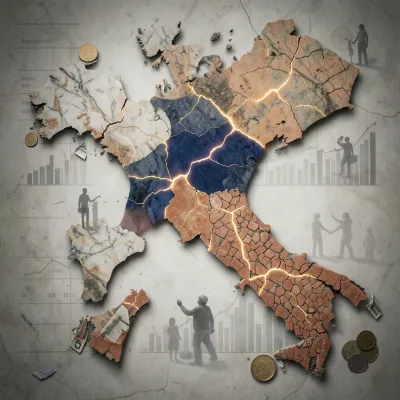
*Southern Fault Lines* provides a comprehensive comparative analysis of the political economy of reform in Greece, Spain, and Italy following the 2008 global financial crisis and the subsequent Eurozone upheaval. The book argues that reform trajectories in these nations were not merely technocratic responses to market pressures but were complex political settlements shaped by deep-seated institutional legacies, external pressures from the "Troika," and domestic power struggles. By examining diverse sectors—including fiscal policy, labor markets, pensions, and healthcare—the authors illustrate how each country navigated the tension between austerity and social cohesion, revealing patterned divergences in how these Mediterranean democracies balanced European mandates with national legitimacy.
The core of the study focuses on the structural "fault lines" that were exposed and exacerbated by the crisis. The authors dissect the challenges of labor market dualism, where a divide between protected "insiders" and precarious "outsiders" fueled youth unemployment and "brain drain." They also explore the strain on the "social contract" as aging societies were forced to overhaul insolvent pension systems and healthcare infrastructures. The book highlights how the politics of fiscal consolidation and tax reform often sparked social unrest, leading to significant electoral realignments and the rise of populist movements that challenged the pro-European technocratic consensus.
Moving beyond a narrative of decline, the final chapters investigate paths toward recovery and resilience. The book analyzes the role of the state in driving industrial policy and the green transition, particularly through the lens of the EU’s Recovery and Resilience Facility. It also shifts focus to the sub-national level, documenting how municipal and regional innovations served as "laboratories of change" when national governments were paralyzed. Ultimately, the book offers a nuanced perspective on the limits of external conditionality and the essential role of domestic political buy-in, concluding that the most successful and enduring reforms are those that align economic efficiency with tangible social protections and democratic accountability.
What You'll Find Inside:
- Comparative analysis of how Greece, Spain, and Italy's distinct institutional legacies in taxation, wage-setting, pensions, and social protection shaped their unique crisis responses and reform trajectories after the Eurozone crisis.
- Examination of the politics of fiscal consolidation, including how austerity measures were implemented, their distributional impacts across different social groups, and why some reforms endured while others triggered backlash and policy reversals.
- Analysis of labor market dualism and reforms, focusing on the insider-outsider divide, youth unemployment dynamics, and the impact of collective bargaining decentralization on wage-setting and employment protection.
- Investigation of external constraints from the Troika and EU institutions, showing how conditionality interacted with domestic politics to produce divergent reform outcomes in Athens, Madrid, and Rome.
- Exploration of the three pillars of politically viable reform: credible fiscal anchors, opportunity-enhancing labor policies, and tangible social protections that determine whether reforms create lasting prosperity with social cohesion.
Who's It For:
This book is essential reading for policymakers and government officials working on economic reform, fiscal policy, and social protection in Europe and beyond, offering practical lessons on reform sequencing and balancing fiscal credibility with social solidarity. It will also be valuable to scholars and researchers in political economy, comparative politics, and European studies seeking theoretically informed, empirically grounded analyses of varieties of capitalism, coalition formation, and the politics of redistribution under constraint. Graduate students in economics, political science, and public policy will find it a comprehensive resource for understanding the interplay between external constraints, domestic politics, and social outcomes in times of crisis.
Table of Contents:
- Introduction
- Chapter 1 Southern Fault Lines: A Comparative Framework
- Chapter 2 Legacies Before the Storm: Institutions and Political Economy, 1980–2007
- Chapter 3 The Great Recession and Eurozone Crisis: Shocks and Spillovers
- Chapter 4 Brussels, Frankfurt, and the Troika: External Constraints on Reform
- Chapter 5 The Politics of Fiscal Consolidation: Austerity, Rules, and Reversals
- Chapter 6 Tax States Under Strain: Compliance, Evasion, and Equity
- Chapter 7 Pensions and Aging Societies: Reforming the Social Contract
- Chapter 8 Labor Market Dualism: Insiders, Outsiders, and Youth
- Chapter 9 Collective Bargaining and Wage-Setting: Centralization vs. Decentralization
- Chapter 10 Minimum Wages and Low-Pay Work: Paths to Inclusion
- Chapter 11 Active Labor Market Policies: Training, Mobility, and Matching
- Chapter 12 Privatization and Public Enterprises: Efficiency and Legitimacy
- Chapter 13 Banking Crises and Non‑Performing Loans: Credit, SMEs, and Recovery
- Chapter 14 Regional Inequality and Development: North–South, Islands, and Interiors
- Chapter 15 Social Protection and Poverty: Safety Nets Under Austerity
- Chapter 16 Health Systems and Resilience: Lessons from Crisis and Pandemic
- Chapter 17 Education, Skills, and Human Capital: From Brain Drain to Brain Gain
- Chapter 18 Migration, Youth Exits, and Return: Demography Meets Policy
- Chapter 19 Gender, Care, and Work: Closing the Southern Gap
- Chapter 20 Electoral Realignments and Party System Change: Populism, Moderation, and Europe
- Chapter 21 Media, Trust, and Narratives of Reform: Framing the Possible
- Chapter 22 Industrial Policy and the Green Transition: From Recovery Plans to Results
- Chapter 23 Tourism, Services, and Productivity: Diversifying Southern Economies
- Chapter 24 Governance, Corruption, and State Capacity: Implementing Reforms That Stick
- Chapter 25 Municipal and Regional Innovations: Local Laboratories of Change
Author:
Published By:
Date Published:
April 30, 2026
Type:
Nonfiction
Language:
English
Word Count:
53,134 words
Reading Time:
3 hours 43 minutes
Sample:
Order:
Order Southern Fault Lines: Political Economy of Reform in Greece, Spain and Italy (Hardcover) on MixCache.com:
Buy NowPrint copy is made to order and ships worldwide. Includes the ebook free, ready to read instantly.
$5 account credit for all new MixCache.com accounts, usable toward any ebook purchase!*