Browse by Category
Fiction
- Action & Adventure
- African American
- Anthologies
- Children's Fiction
- Classics
- Comics & Graphic Novels
- Coming of Age
- Contemporary
- Cultural & Regional
- Drama
- Erotica
- Family Life
- Fantasy
- General
- Historical Fiction
- Horror
- Humor & Satire
- Literary Fiction
- Mystery, Thriller & Suspense
- Poetry
- Religious & Inspirational
- Romance
- Science Fiction
- Short Stories
- War & Military
- Westerns
- Women's Fiction
- Young Adult
Non-Fiction
- Antiques & Collectibles
- Arts & Photography
- Biographies & Memoirs
- Business & Money
- Children's Non-Fiction
-
Computers & Technology
- Artificial Intelligence
- Computer Science
- Cybersecurity & Cryptography
- Data Science & Analytics
- Databases & Big Data
- Game Development & Design
- General
- Hardware & DIY
- Mobile App Development
- Networking & Cloud Computing
- Operating Systems
- Programming
- Robotics
- Software
- Software Engineering
- User Experience (UX) & Design
- Web Development & Design
- Cooking, Food & Wine
- Crafts, Hobbies & Home
- Education & Teaching
- Engineering
- General
- Health, Fitness & Dieting
-
History
- African History
- African History - North Africa
- African History - Sub-Saharan Africa
- American History
- American History - 20th Century
- American History - Civil War
- American History - Colonial Period
- Ancient History
- Asian History
- Asian History - China
- Asian History - India
- Asian History - Japan
- Asian History - Southeast Asia
- European History
- European History - Ancient Greece
- European History - Ancient Rome
- European History - Medieval
- European History - Modern
- European History - Renaissance
- General
- Middle Eastern History
- Military History
- Military History - Aviation
- Military History - Naval
- Social & Cultural History
- World History
- Humor & Entertainment
- Industrial Technology
- Language Learning
- Law
- LGBTQ+ Non-Fiction
- Literary Criticism
- Medical Books
- Parenting & Relationships
- Philosophy
- Politics & Social Sciences
- Reference
- Religion & Spirituality
-
Science & Math
- Agricultural Sciences
- Astronomy & Space Science
- Behavioral Sciences
- Biological Sciences
- Botany & Plant Science
- Chemistry
- Earth Sciences
- Engineering - Chemical
- Engineering - Civil
- Engineering - Electrical
- Engineering - Mechanical
- Environment
- General
- Geology
- Mathematics
- Nature & Ecology
- Oceanography
- Paleontology
- Physics
- Statistics
- Self-Help
- Sports & Outdoors
- Study Aids
- Sustainability & Green Living
- Textbooks
- Transportation
- Travel
- True Crime
- Urban Planning & Development
- Veterinary Medicine
- Writing & Publishing
Jump to Section
MixCache.com Total Access
Unlimited reading and audiobooks for every book published by MixCache.com.
Included titles carry the MTA badge.
Learn more →
Infrastructure Imperative: Roads, Energy, and Connectivity
MTA
Project Planning, Financing, and Environmental Trade-offs in Central America
About this book:
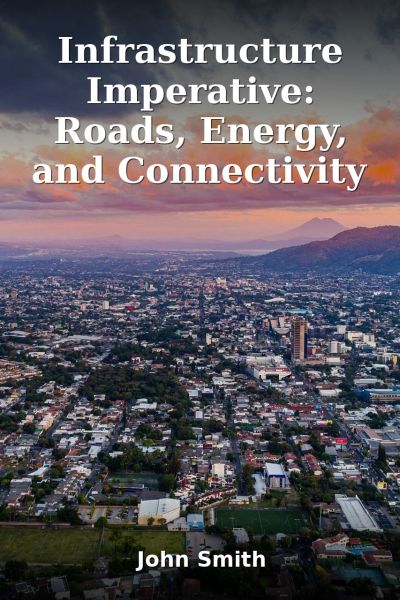
*Infrastructure Imperative* provides a comprehensive framework for planning, financing, and managing large-scale projects in Central America. The book argues that the region’s economic growth and climate resilience depend on an integrated approach to three interlocking pillars: roads, energy, and digital connectivity. By viewing these systems as a portfolio rather than in isolation, decision-makers can capture co-benefits—such as laying fiber optic ducts during road construction or using renewable energy to power data centers—while avoiding stranded assets and addressing the fiscal constraints common across the isthmus.
The text details the lifecycle of infrastructure development, moving from the creation of bankable project pipelines and rigorous demand forecasting to the complexities of project finance. It emphasizes the necessity of public-private partnerships (PPPs) that utilize disciplined risk allocation, assigning specific risks to the parties best equipped to manage them. To attract international capital, the book highlights the evolving role of Multilateral Development Banks (MDBs) and the rise of sustainable finance instruments, such as green bonds and sustainability-linked loans, which align investment with environmental and social outcomes.
A central theme is the management of environmental and social trade-offs in one of the world’s most biodiverse and culturally diverse regions. The book advocates for the "mitigation hierarchy"—avoid, minimize, restore, and offset—and stresses that social license is a prerequisite for success. This is achieved through genuine community engagement and the strict application of Free, Prior, and Informed Consent (FPIC) for indigenous populations. Furthermore, the text integrates climate risk into every stage of planning, promoting nature-based solutions and resilient engineering to safeguard assets against the region’s increasing frequency of extreme weather events.
The final chapters offer a roadmap for action centered on strategic prioritization and transparent governance. By institutionalizing integrity in procurement and utilizing data-driven monitoring and ESG metrics, Central American nations can build public trust and ensure long-term value for money. Ultimately, the book asserts that successful infrastructure is not merely a matter of engineering, but a disciplined exercise in coordination, transparent decision-making, and the alignment of financial returns with broad-based social and environmental well-being.
What You'll Find Inside:
- Integrated planning framework demonstrating how roads, energy, and digital connectivity systems interact to create co-benefits (e.g., fiber ducts in road construction) and avoid stranded assets when developed as a coordinated portfolio.
- Comprehensive guidance on environmental and social impact assessments, including baseline studies, mitigation hierarchies, FPIC processes, and benefit-sharing mechanisms tailored to Central America's diverse communities and ecosystems.
- Detailed examination of financing structures—from PPP models and project finance to guarantees, insurance, hedging, and blended finance mechanisms—suited to the region's risk profile and capital constraints.
- Strategies for incorporating climate resilience and nature-based solutions into infrastructure design to address Central America's vulnerability to extreme weather, droughts, and long-term climate shifts.
- Governance essentials for successful implementation: transparent procurement, anti-corruption measures, institutional capacity building, and performance monitoring to ensure value for money and public trust.
Who's It For:
This book is essential for infrastructure planners, policymakers, and government officials in Central America who need to navigate complex trade-offs in roads, energy, and digital connectivity projects. It also serves project financiers, investors, and development professionals seeking to understand bankable structures, risk allocation mechanisms, and sustainable investment opportunities in the region. Engineers, environmental and social specialists, and procurement officers will find practical methodologies for integrated planning, impact assessment, and resilient design. Ultimately, anyone involved in infrastructure development—from concept to operations—will benefit from its interdisciplinary approach to building sustainable, climate-resilient systems.
Introduction
Central America stands at a decisive moment. The region’s aspirations for inclusive growth and climate resilience hinge on how it builds and connects its roads, powers its economies, and extends reliable digital networks to citizens and firms. Yet every kilometer of roadway, every megawatt added to the grid, and every strand of fiber optic cable carries trade-offs that must be surfaced, debated, and managed. This book offers a practical guide to navigating those choices—anchored in industry practice, grounded in evidence, and attentive to the social and environmental contexts that define long-term success.
Our approach is explicitly interdisciplinary and stakeholder-aware. Planners need methodologies to prioritize projects under fiscal constraints; investors seek bankable structures with clear risk allocation; and civil society demands credible environmental and social safeguards with meaningful participation. Bringing these perspectives together, we present frameworks to evaluate project impacts, governance quality, and delivery capacity—from early screening through operations. Throughout, we emphasize that strong institutions and transparent decision-making are not luxuries; they are preconditions for value for money and durable public trust.
The book is organized around three pillars—roads, energy, and connectivity—because these systems often move in lockstep.
Enjoying it? The full book includes every chapter.
Table of Contents:
- Introduction Free
- Chapter 1 Mapping the Region: Central America’s Infrastructure Landscape Free
- Chapter 2 Roads That Bind: Corridors, Secondary Networks, and Rural Access
- Chapter 3 Powering Growth: Electricity Demand, Markets, and SIEPAC Integration
- Chapter 4 Renewable Frontiers: Hydro, Geothermal, Wind, and Solar Portfolios
- Chapter 5 Digital Connectivity: Fiber Backbones, Data Centers, and Last-Mile Access
- Chapter 6 Ports, Airports, and Logistics Hubs: Gateways to Trade
- Chapter 7 Project Pipeline Development: From Idea to Bankable Concept
- Chapter 8 Demand Forecasting and Economic Appraisal: CBA and Beyond
- Chapter 9 Environmental and Social Baselines: Data, Methods, and Uncertainty
- Chapter 10 ESIA in Practice: Impact Pathways, Mitigation Hierarchies, and Offsets
- Chapter 11 Community Engagement and FPIC: Building Social License
- Chapter 12 Land, Labor, and Livelihoods: Resettlement and Benefit-Sharing
- Chapter 13 Biodiversity and Water: Safeguards for Sensitive Landscapes
- Chapter 14 Climate Risk, Resilience, and Nature-Based Solutions
- Chapter 15 PPP Models and Risk Allocation: Contracts That Endure
- Chapter 16 Project Finance Structures: Equity, Debt, and Blended Capital
- Chapter 17 Guarantees, Insurance, and Hedging: Managing Revenue and Macro Risks
- Chapter 18 Procurement and Governance: Transparency, Integrity, and Value for Money
- Chapter 19 Legal and Regulatory Frameworks: Permits, Tariffs, and Arbitration
- Chapter 20 Construction to Operations: Delivery Models and Performance Management
- Chapter 21 Monitoring, Reporting, and ESG Metrics: What to Measure and Why
- Chapter 22 The Role of MDBs and DFIs: IDB, World Bank, CABEI, and DFC
- Chapter 23 Private Capital Pathways: Green Bonds, Sustainability-Linked Loans, and Funds
- Chapter 24 Country Profiles and Case Studies: Lessons Across the Isthmus
- Chapter 25 Roadmap to Action: Prioritization, Sequencing, and Co-Benefits
Included when you buy the full book.
Author:
Published By:
Date Published:
January 17, 2026
Type:
Nonfiction
Language:
English
Word Count:
70,265 words
Reading Time:
4 hours 55 minutes
Sample:
Order:
Order Infrastructure Imperative: Roads, Energy, and Connectivity (Hardcover) on MixCache.com:
Buy NowIncludes every chapter. Not sure yet? Read the opening free.
Print copy is made to order and ships worldwide. Includes the ebook free, ready to read instantly.
$5 account credit for all new MixCache.com accounts, usable toward any ebook purchase!*




 Includes Audiobook