
Browse by Category
Fiction
- Action & Adventure
- African American
- Anthologies
- Children's Fiction
- Classics
- Comics & Graphic Novels
- Coming of Age
- Contemporary
- Cultural & Regional
- Drama
- Erotica
- Fantasy
- General
- Historical Fiction
- Horror
- Humor & Satire
- Literary Fiction
- Mystery, Thriller & Suspense
- Poetry
- Religious & Inspirational
- Romance
- Science Fiction
- Short Stories
- War & Military
- Westerns
- Women's Fiction
- Young Adult
Non-Fiction
- Antiques & Collectibles
- Arts & Photography
- Biographies & Memoirs
- Business & Money
- Children's Non-Fiction
-
Computers & Technology
- Artificial Intelligence
- Computer Science
- Cybersecurity & Cryptography
- Data Science & Analytics
- Databases & Big Data
- Game Development & Design
- General
- Hardware & DIY
- Mobile App Development
- Networking & Cloud Computing
- Operating Systems
- Programming
- Robotics
- Software
- Software Engineering
- User Experience (UX) & Design
- Web Development & Design
- Cooking, Food & Wine
- Crafts, Hobbies & Home
- Education & Teaching
- Engineering
- General
- Health, Fitness & Dieting
-
History
- African History
- African History - North Africa
- African History - Sub-Saharan Africa
- American History
- American History - 20th Century
- American History - Civil War
- American History - Colonial Period
- Ancient History
- Asian History
- Asian History - China
- Asian History - India
- Asian History - Japan
- Asian History - Southeast Asia
- European History
- European History - Ancient Greece
- European History - Ancient Rome
- European History - Medieval
- European History - Modern
- European History - Renaissance
- General
- Middle Eastern History
- Military History
- Military History - Aviation
- Military History - Naval
- Social & Cultural History
- World History
- Humor & Entertainment
- Industrial Technology
- Language Learning
- Law
- LGBTQ+ Non-Fiction
- Literary Criticism
- Medical Books
- Parenting & Relationships
- Philosophy
- Politics & Social Sciences
- Reference
- Religion & Spirituality
-
Science & Math
- Agricultural Sciences
- Astronomy & Space Science
- Behavioral Sciences
- Biological Sciences
- Botany & Plant Science
- Chemistry
- Earth Sciences
- Engineering - Chemical
- Engineering - Civil
- Engineering - Electrical
- Engineering - Mechanical
- Environment
- General
- Geology
- Mathematics
- Nature & Ecology
- Oceanography
- Paleontology
- Physics
- Statistics
- Self-Help
- Sports & Outdoors
- Study Aids
- Sustainability & Green Living
- Textbooks
- Transportation
- Travel
- True Crime
- Urban Planning & Development
- Veterinary Medicine
- Writing & Publishing
Jump to Section

Want unlimited access to all books published by MixCache.com (plus their audiobooks)? Try MixCache.com Total Access. Look for the MTA badge on book covers to identify included titles.
Access to infinite ebooks: Don't see the book you want? Suggest it and we'll create it (free!) for you from scratch with our powerful AI book writer. Then read it with MTA - besides profiting from any sales it makes!
Famine and the Colonial State
Relief and Neglect in British India, French Algeria, Dutch Java, and Portuguese Mozambique, 1850–1900
About this book:
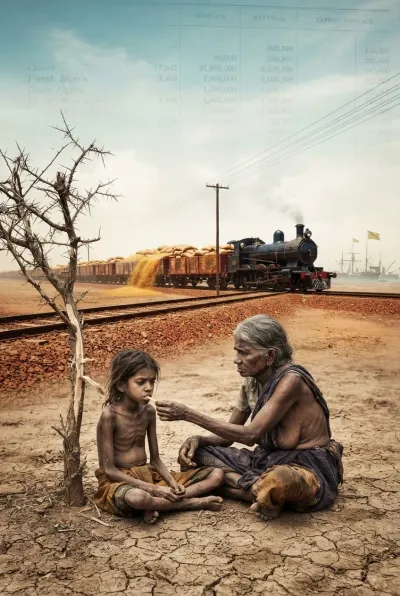 Between 1850 and 1900, as telegraphs and steamships knitted the globe into a single marketplace, tens of millions starved to death in the very territories fueling that prosperity. *Famine and the Colonial State* exposes a devastating truth: these catastrophes were not natural misfortunes but political choices. Through a groundbreaking comparative analysis of British India, French Algeria, Dutch Java, and Portuguese Mozambique, this book reveals how colonial administrations—driven by fiscal orthodoxy, racialized Malthusianism, and the imperatives of global capital—systematically stripped rural societies of their ecological resilience, then abandoned them to die when drought arrived. Granaries overflowed on wharves while villagers ate bark; trains hauled grain past skeletal beggars toward export ports; treasuries recorded surpluses while relief camps became death traps of cholera and forced labor.
Drawing on colonial archives and indigenous testimony alike, the study traces the machinery of extraction across four distinct empires, showing how different administrative cultures converged on identical priorities: fixed cash taxes that forced peasants into volatile markets, railway networks designed to drain interior grain, legal codes that weaponized debt and privatized the commons, and relief doctrines calibrated to punish rather than preserve. From the Orissa Famine of 1866 to the Great Famine of 1876–78, from Algerian settler dispossession to Javanese cultivation quotas and Mozambican concessionary terror, the pattern holds: colonial states calculated the price of human life in fractions of a penny and found it cheaper to secure warehouses than to feed the people who filled them.
Urgent, meticulously researched, and morally unflinching, *Famine and the Colonial State* rewrites the history of nineteenth-century globalization from the ground up. It demonstrates that the "Third World" was not born of backwardness but forged in the crucible of imperial political economy—where administrative denial met ecological crisis, and the logic of the balance sheet determined who lived and who died. Essential reading for anyone seeking to understand the deep roots of global inequality and the catastrophic human cost of market fundamentalism unchecked by accountability.
Author:
Published By:
Type:
Nonfiction
Sample:
Order:
Click to order this paperback:
Buy Now