
Browse by Category
Fiction
- Action & Adventure
- African American
- Anthologies
- Children's Fiction
- Classics
- Comics & Graphic Novels
- Coming of Age
- Contemporary
- Cultural & Regional
- Drama
- Erotica
- Fantasy
- General
- Historical Fiction
- Horror
- Humor & Satire
- Literary Fiction
- Mystery, Thriller & Suspense
- Poetry
- Religious & Inspirational
- Romance
- Science Fiction
- Short Stories
- War & Military
- Westerns
- Women's Fiction
- Young Adult
Non-Fiction
- Antiques & Collectibles
- Arts & Photography
- Biographies & Memoirs
- Business & Money
- Children's Non-Fiction
-
Computers & Technology
- Artificial Intelligence
- Computer Science
- Cybersecurity & Cryptography
- Data Science & Analytics
- Databases & Big Data
- Game Development & Design
- General
- Hardware & DIY
- Mobile App Development
- Networking & Cloud Computing
- Operating Systems
- Programming
- Robotics
- Software
- Software Engineering
- User Experience (UX) & Design
- Web Development & Design
- Cooking, Food & Wine
- Crafts, Hobbies & Home
- Education & Teaching
- Engineering
- General
- Health, Fitness & Dieting
-
History
- African History
- African History - North Africa
- African History - Sub-Saharan Africa
- American History
- American History - 20th Century
- American History - Civil War
- American History - Colonial Period
- Ancient History
- Asian History
- Asian History - China
- Asian History - India
- Asian History - Japan
- Asian History - Southeast Asia
- European History
- European History - Ancient Greece
- European History - Ancient Rome
- European History - Medieval
- European History - Modern
- European History - Renaissance
- General
- Middle Eastern History
- Military History
- Military History - Aviation
- Military History - Naval
- Social & Cultural History
- World History
- Humor & Entertainment
- Industrial Technology
- Language Learning
- Law
- LGBTQ+ Non-Fiction
- Literary Criticism
- Medical Books
- Parenting & Relationships
- Philosophy
- Politics & Social Sciences
- Reference
- Religion & Spirituality
-
Science & Math
- Agricultural Sciences
- Astronomy & Space Science
- Behavioral Sciences
- Biological Sciences
- Botany & Plant Science
- Chemistry
- Earth Sciences
- Engineering - Chemical
- Engineering - Civil
- Engineering - Electrical
- Engineering - Mechanical
- Environment
- General
- Geology
- Mathematics
- Nature & Ecology
- Oceanography
- Paleontology
- Physics
- Statistics
- Self-Help
- Sports & Outdoors
- Study Aids
- Sustainability & Green Living
- Textbooks
- Transportation
- Travel
- True Crime
- Urban Planning & Development
- Veterinary Medicine
- Writing & Publishing
Jump to Section
MixCache.com Total Access
Unlimited reading and audiobooks for every book published by MixCache.com.
Included titles carry the MTA badge.
Learn more →
The Strange Career of the Affective Fallacy
How a New Critical Dogma Shaped Literary Theory
About this book:
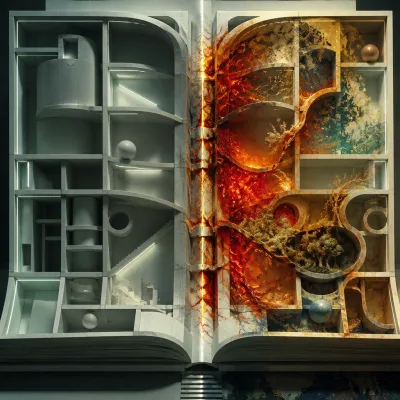 For decades, the academy treated emotion as a contaminant in literary study—a "fallacy" to be quarantined so criticism could claim the rigor of science. *The Strange Career of the Affective Fallacy* tells the gripping story of how that ban was built, enforced, and ultimately shattered. Beginning with Wimsatt and Beardsley’s 1949 manifesto, this book traces the high-stakes battle between detached formalism and the irrepressible human need to be moved by art, revealing how the effort to purge feeling from reading shaped the very identity of modern literary theory.
From the Cold War classroom to the frontiers of cognitive poetics, the narrative sweeps across the major uprisings that brought the reader back to the center of the text: the Reader-Response revolution, the feminist and postcolonial critiques that exposed "objectivity" as a mask for power, the psychoanalytic turn that uncovered the unconscious desires driving interpretation, and the contemporary "Affective Turn" that locates meaning in bodily sensation itself. Each chapter reads like an intellectual thriller, pitting the architects of cool detachment against the insurgents who insisted that literature’s power lies precisely in its capacity to wound, console, and transform.
Today, as algorithmic "distant reading" and digital humanities offer sleek new versions of technocratic objectivity, the war between the artifact and the affect has never been more urgent. Written with scholarly authority and passionate conviction, this is the definitive history of criticism’s longest-running argument—and a vital manifesto for a future where formal rigor and emotional truth are no longer enemies, but partners in the act of reading.
Table of Contents:
- Introduction
- Chapter 1 The Heresy of Feeling: The Genesis of the Fallacy
- Chapter 2 Wimsatt, Beardsley, and the Architecture of Modern Criticism
- Chapter 3 The Shadow of I. A. Richards: Practical Criticism and Psychological Poetics
- Chapter 4 Policing the Objective Text: New Criticism’s War on Impressionism
- Chapter 5 The Autonomy of the Artifact: Words on the Page vs. Tears in the Reader
- Chapter 6 Early Dissent: The Resistant Romantics and the Defense of Sympathy
- Chapter 7 Formalism Goes to College: Pedagogical Enforcement of the Dogma
- Chapter 8 The Cold War Classroom: Detachment, Rigor, and Scientific Objectivity
- Chapter 9 The Structuralist Shift: Codes, Systems, and the Absent Subject
- Chapter 10 The Reader Strikes Back: Hans Robert Jauss and the Reception Aesthetic
- Chapter 11 Wolfgang Iser and the Virtual Fabric of Literary Experience
- Chapter 12 Stanley Fish and the Dangerous Return of the Affective Response
- Chapter 13 The Deconstructive Rupture: The Instability of Objectivity
- Chapter 14 The Body in the Text: Feminist Theory Breaks the Silence
- Chapter 15 Psychoanalytic Incursions: Transference, Trauma, and Textual Desire
- Chapter 16 Cultural Studies and the Politics of Empathetic Identification
- Chapter 17 The Postcolonial Reader: Grief, Resistance, and Testimonial Literature
- Chapter 18 Cognitive Poetics: Re-Engineering Emotion in the Human Mind
- Chapter 19 The Affective Turn: Sensation and Bodily Knowledge Beyond Form
- Chapter 20 Rita Felski and the Limits of Critique: Rediscovering Literary Attachment
- Chapter 21 The Ethics of Empathy in Twenty-First-Century Hermeneutics
- Chapter 22 Digital Reading, Distant Reading, and the New Technocratic Objectivity
- Chapter 23 The Ghost of Wimsatt and Beardsley: Why the Dogma Endures
- Chapter 24 The Dialectics of Feeling: Reconciling Formal Rigor and Emotional Truth
- Chapter 25 Beyond the Fallacy: The Future of Affect in Literary Theory
Author:
Published By:
Type:
Nonfiction
Date Published:
September 4, 2026
Sample:
Order:
Click to order this paperback:
Buy Now