
Browse by Category
Fiction
- Action & Adventure
- African American
- Anthologies
- Children's Fiction
- Classics
- Comics & Graphic Novels
- Coming of Age
- Contemporary
- Cultural & Regional
- Drama
- Erotica
- Family Life
- Fantasy
- General
- Historical Fiction
- Horror
- Humor & Satire
- Literary Fiction
- Mystery, Thriller & Suspense
- Poetry
- Religious & Inspirational
- Romance
- Science Fiction
- Short Stories
- War & Military
- Westerns
- Women's Fiction
- Young Adult
Non-Fiction
- Antiques & Collectibles
- Arts & Photography
- Biographies & Memoirs
- Business & Money
- Children's Non-Fiction
-
Computers & Technology
- Artificial Intelligence
- Computer Science
- Cybersecurity & Cryptography
- Data Science & Analytics
- Databases & Big Data
- Game Development & Design
- General
- Hardware & DIY
- Mobile App Development
- Networking & Cloud Computing
- Operating Systems
- Programming
- Robotics
- Software
- Software Engineering
- User Experience (UX) & Design
- Web Development & Design
- Cooking, Food & Wine
- Crafts, Hobbies & Home
- Education & Teaching
- Engineering
- General
- Health, Fitness & Dieting
-
History
- African History
- African History - North Africa
- African History - Sub-Saharan Africa
- American History
- American History - 20th Century
- American History - Civil War
- American History - Colonial Period
- Ancient History
- Asian History
- Asian History - China
- Asian History - India
- Asian History - Japan
- Asian History - Southeast Asia
- European History
- European History - Ancient Greece
- European History - Ancient Rome
- European History - Medieval
- European History - Modern
- European History - Renaissance
- General
- Middle Eastern History
- Military History
- Military History - Aviation
- Military History - Naval
- Social & Cultural History
- World History
- Humor & Entertainment
- Industrial Technology
- Language Learning
- Law
- LGBTQ+ Non-Fiction
- Literary Criticism
- Medical Books
- Parenting & Relationships
- Philosophy
- Politics & Social Sciences
- Reference
- Religion & Spirituality
-
Science & Math
- Agricultural Sciences
- Astronomy & Space Science
- Behavioral Sciences
- Biological Sciences
- Botany & Plant Science
- Chemistry
- Earth Sciences
- Engineering - Chemical
- Engineering - Civil
- Engineering - Electrical
- Engineering - Mechanical
- Environment
- General
- Geology
- Mathematics
- Nature & Ecology
- Oceanography
- Paleontology
- Physics
- Statistics
- Self-Help
- Sports & Outdoors
- Study Aids
- Sustainability & Green Living
- Textbooks
- Transportation
- Travel
- True Crime
- Urban Planning & Development
- Veterinary Medicine
- Writing & Publishing
Jump to Section
MixCache.com Total Access
Unlimited reading and audiobooks for every book published by MixCache.com.
Included titles carry the MTA badge.
Learn more →A History of Mari El
About this book:
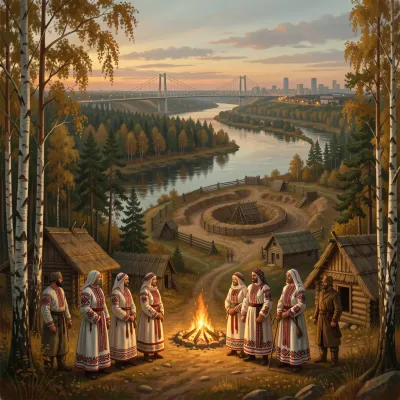 Discover the hidden saga of the Mari people—an ancient Finno‑Ugric community whose language, myths, and resilient spirit have survived millennia of empire, revolution, and globalization. *A History of Mari El* takes you from the stone‑tool hunters of the Volga‑Ural forests to the vibrant republic of today, revealing how geography, genetics, and oral tradition forged a culture that remains strikingly alive amidst the tides of Russian history.
Through vivid anecdotes, striking illustrations, and accessible scholarship, this book weaves together political milestones—Mongol incursions, Tsarist rule, Soviet autonomy—with the everyday lives of Mari farmers, artisans, and festival‑goers. You’ll walk beside them in sacred groves, hear the echo of pagan chants blended with Orthodox bells, and feel the pulse of a nation striving to preserve its identity in a rapidly changing world.
Whether you’re a student of regional history, an anthropologist fascinated by Finno‑Ugric peoples, or simply a curious reader eager to explore Russia’s rich cultural mosaic, *A History of Mari El* offers a compelling, intimate portrait of a people whose story is essential to understanding the broader Eurasian past. Dive in and uncover the enduring legacy of Mari El—where tradition meets transformation, and every page invites you to see history through a new lens.
Introduction
Mari El, a modest republic nestled in the Volga‑Ural region, occupies a distinctive niche in the tapestry of Russian and Eurasian history. Though its name may be unfamiliar to many outside scholarly circles, the Mari people have preserved a language, belief system, and way of life that stretch back millennia, offering a window onto the interplay between indigenous Finno‑Ugric cultures and the sweeping forces of empire, revolution, and modernity that have shaped the broader Russian world. This book sets out to trace that long and nuanced journey, from the earliest archaeological traces of Mari settlement to the contemporary struggles and aspirations of the Mari El Republic in the twenty‑first century.
The narrative is organized chronologically but guided by thematic threads that recur across epochs: the resilience of Mari identity in the face of external pressures, the adaptability of its spiritual traditions—from ancient pagan rites to Orthodox Christianity and Soviet secularism—and the economic transformations that have alternately integrated and isolated the region. By foregrounding these continuities, the work avoids a mere catalogue of dates and rulers, instead inviting readers to see how geography, language, and communal memory have continually renegotiated the place of the Mari within larger political structures.
Enjoying it? The full book includes every chapter.
Table of Contents:
- Introduction Free
- Chapter 1 The Ancient Roots of the Mari People Free
- Chapter 2 Early Settlements and Cultural Foundations
- Chapter 3 The Rise of Mari Principalities
- Chapter 4 Integration into the Grand Duchy of Moscow
- Chapter 5 Life Under the Tsarist Regime
- Chapter 6 The Mari and the Mongol Invasions
- Chapter 7 Cultural Traditions and Pagan Practices
- Chapter 8 Christianization and Religious Syncretism
- Chapter 9 The Mari in the Russian Empire
- Chapter 10 Economic and Social Changes in the 18th Century
- Chapter 11 The Napoleonic Wars and Local Impact
- Chapter 12 The Decline of Traditional Structures
- Chapter 13 The Mari and the Revolutionary Period
- Chapter 14 Sovietization and the Creation of the Mari Autonomous Oblast
- Chapter 15 Industrialization and Collectivization
- Chapter 16 World War II and Wartime Experiences
- Chapter 17 The Mari During Stalin’s Repressions
- Chapter 18 Post-War Reconstruction and Demographics
- Chapter 19 The Khrushchev Era and Regional Policies
- Chapter 20 Cultural Revival in the Late Soviet Period
- Chapter 21 The Transition to the Mari El Republic
- Chapter 22 Challenges of Independence and Autonomy
- Chapter 23 Economic Development in the 1990s
- Chapter 24 Contemporary Issues and Identity
- Chapter 25 Mari El in the 21st Century: Prospects and Preservation
Included when you buy the full book.
Author:
Published By:
Type:
Nonfiction
Date Published:
June 17, 2026
Sample:
Order:
Click to order this hardcover:
Buy NowIncludes every chapter. Not sure yet? Read the opening free.