
Browse by Category
Fiction
- Action & Adventure
- African American
- Anthologies
- Children's Fiction
- Classics
- Comics & Graphic Novels
- Coming of Age
- Contemporary
- Cultural & Regional
- Drama
- Erotica
- Family Life
- Fantasy
- General
- Historical Fiction
- Horror
- Humor & Satire
- Literary Fiction
- Mystery, Thriller & Suspense
- Poetry
- Religious & Inspirational
- Romance
- Science Fiction
- Short Stories
- War & Military
- Westerns
- Women's Fiction
- Young Adult
Non-Fiction
- Antiques & Collectibles
- Arts & Photography
- Biographies & Memoirs
- Business & Money
- Children's Non-Fiction
-
Computers & Technology
- Artificial Intelligence
- Computer Science
- Cybersecurity & Cryptography
- Data Science & Analytics
- Databases & Big Data
- Game Development & Design
- General
- Hardware & DIY
- Mobile App Development
- Networking & Cloud Computing
- Operating Systems
- Programming
- Robotics
- Software
- Software Engineering
- User Experience (UX) & Design
- Web Development & Design
- Cooking, Food & Wine
- Crafts, Hobbies & Home
- Education & Teaching
- Engineering
- General
- Health, Fitness & Dieting
-
History
- African History
- African History - North Africa
- African History - Sub-Saharan Africa
- American History
- American History - 20th Century
- American History - Civil War
- American History - Colonial Period
- Ancient History
- Asian History
- Asian History - China
- Asian History - India
- Asian History - Japan
- Asian History - Southeast Asia
- European History
- European History - Ancient Greece
- European History - Ancient Rome
- European History - Medieval
- European History - Modern
- European History - Renaissance
- General
- Middle Eastern History
- Military History
- Military History - Aviation
- Military History - Naval
- Social & Cultural History
- World History
- Humor & Entertainment
- Industrial Technology
- Language Learning
- Law
- LGBTQ+ Non-Fiction
- Literary Criticism
- Medical Books
- Parenting & Relationships
- Philosophy
- Politics & Social Sciences
- Reference
- Religion & Spirituality
-
Science & Math
- Agricultural Sciences
- Astronomy & Space Science
- Behavioral Sciences
- Biological Sciences
- Botany & Plant Science
- Chemistry
- Earth Sciences
- Engineering - Chemical
- Engineering - Civil
- Engineering - Electrical
- Engineering - Mechanical
- Environment
- General
- Geology
- Mathematics
- Nature & Ecology
- Oceanography
- Paleontology
- Physics
- Statistics
- Self-Help
- Sports & Outdoors
- Study Aids
- Sustainability & Green Living
- Textbooks
- Transportation
- Travel
- True Crime
- Urban Planning & Development
- Veterinary Medicine
- Writing & Publishing
Jump to Section
MixCache.com Total Access
Unlimited reading and audiobooks for every book published by MixCache.com.
Included titles carry the MTA badge.
Learn more →
Famine and the Colonial State
Relief and Neglect in British India, French Algeria, Dutch Java, and Portuguese Mozambique, 1850–1900
About this book:
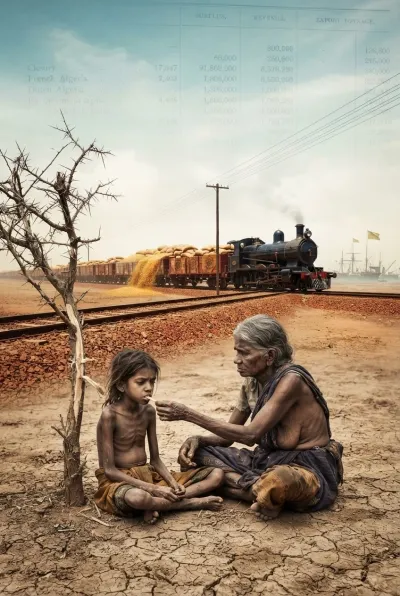 Between 1850 and 1900, as telegraphs and steamships knitted the globe into a single marketplace, tens of millions starved to death in the very territories fueling that prosperity. *Famine and the Colonial State* exposes a devastating truth: these catastrophes were not natural misfortunes but political choices. Through a groundbreaking comparative analysis of British India, French Algeria, Dutch Java, and Portuguese Mozambique, this book reveals how colonial administrations—driven by fiscal orthodoxy, racialized Malthusianism, and the imperatives of global capital—systematically stripped rural societies of their ecological resilience, then abandoned them to die when drought arrived. Granaries overflowed on wharves while villagers ate bark; trains hauled grain past skeletal beggars toward export ports; treasuries recorded surpluses while relief camps became death traps of cholera and forced labor.
Drawing on colonial archives and indigenous testimony alike, the study traces the machinery of extraction across four distinct empires, showing how different administrative cultures converged on identical priorities: fixed cash taxes that forced peasants into volatile markets, railway networks designed to drain interior grain, legal codes that weaponized debt and privatized the commons, and relief doctrines calibrated to punish rather than preserve. From the Orissa Famine of 1866 to the Great Famine of 1876–78, from Algerian settler dispossession to Javanese cultivation quotas and Mozambican concessionary terror, the pattern holds: colonial states calculated the price of human life in fractions of a penny and found it cheaper to secure warehouses than to feed the people who filled them.
Urgent, meticulously researched, and morally unflinching, *Famine and the Colonial State* rewrites the history of nineteenth-century globalization from the ground up. It demonstrates that the "Third World" was not born of backwardness but forged in the crucible of imperial political economy—where administrative denial met ecological crisis, and the logic of the balance sheet determined who lived and who died. Essential reading for anyone seeking to understand the deep roots of global inequality and the catastrophic human cost of market fundamentalism unchecked by accountability.
Table of Contents:
- Introduction
- Chapter 1 The Political Economy of Imperial Hunger
- Chapter 2 British India and the Doctrine of Laissez-Faire
- Chapter 3 French Algeria: Settler Colonialism and Land Expropriation
- Chapter 4 Dutch Java: The Cultivation System and Rural Vulnerability
- Chapter 5 Portuguese Mozambique: Concessionary Companies and Forced Labor
- Chapter 6 Tax Extraction and the Erosion of Subsistence Economies
- Chapter 7 Cash Crops, Export Markets, and Local Entitlement Failures
- Chapter 8 Railroads, Infrastructure, and the Commodification of Grain
- Chapter 9 Constructing Scarcity: Colonial Statistics and Administrative Denial
- Chapter 10 Ecological Disruption and the Climate Crisis of the Late Nineteenth Century
- Chapter 11 The Orissa Famine of 1866 and the Limits of Bureaucratic Intervention
- Chapter 12 The Great Algerian Famine of 1866–1868: Pacification and Scarcity
- Chapter 13 Subsistence Crises in Java: Drought, Disease, and Coercion
- Chapter 14 The Mozambique Crises: Locusts, Drought, and Imperial Inaction
- Chapter 15 The Great Famine of 1876–1878 in India and Malthusian Policy
- Chapter 16 Relief Camps and the Test of Less Eligibility
- Chapter 17 Food Aid as Discipline: Rations, Workhouses, and Public Works
- Chapter 18 Militarized Responses and the Securitization of Famine Relief
- Chapter 19 Epidemics in the Wake of Hunger: Cholera, Smallpox, and Plague
- Chapter 20 Imperial Finance, Budgets, and the Price of Human Life
- Chapter 21 Peasant Resistance, Grain Riots, and Rural Rebellions
- Chapter 22 Indigenous Testimony and Local Famine Memory
- Chapter 23 The Press, International Scrutiny, and Imperial Apologetics
- Chapter 24 Demographic Collapse and the Long-Term Economics of Neglect
- Chapter 25 The Comparative Legacy of Colonial Famine Policy
Author:
Published By:
Type:
Nonfiction
Date Published:
September 25, 2026
Sample:
Order:
Click to order this hardcover:
Buy Now