Browse by Category
Fiction
- Action & Adventure
- African American
- Anthologies
- Children's Fiction
- Classics
- Comics & Graphic Novels
- Coming of Age
- Contemporary
- Cultural & Regional
- Drama
- Erotica
- Fantasy
- General
- Historical Fiction
- Horror
- Humor & Satire
- Literary Fiction
- Mystery, Thriller & Suspense
- Poetry
- Religious & Inspirational
- Romance
- Science Fiction
- Short Stories
- War & Military
- Westerns
- Women's Fiction
- Young Adult
Non-Fiction
- Antiques & Collectibles
- Arts & Photography
- Biographies & Memoirs
- Business & Money
- Children's Non-Fiction
-
Computers & Technology
- Artificial Intelligence
- Computer Science
- Cybersecurity & Cryptography
- Data Science & Analytics
- Databases & Big Data
- Game Development & Design
- General
- Hardware & DIY
- Mobile App Development
- Networking & Cloud Computing
- Operating Systems
- Programming
- Robotics
- Software
- Software Engineering
- User Experience (UX) & Design
- Web Development & Design
- Cooking, Food & Wine
- Crafts, Hobbies & Home
- Education & Teaching
- Engineering
- General
- Health, Fitness & Dieting
-
History
- African History
- African History - North Africa
- African History - Sub-Saharan Africa
- American History
- American History - 20th Century
- American History - Civil War
- American History - Colonial Period
- Ancient History
- Asian History
- Asian History - China
- Asian History - India
- Asian History - Japan
- Asian History - Southeast Asia
- European History
- European History - Ancient Greece
- European History - Ancient Rome
- European History - Medieval
- European History - Modern
- European History - Renaissance
- General
- Middle Eastern History
- Military History
- Military History - Aviation
- Military History - Naval
- Social & Cultural History
- World History
- Humor & Entertainment
- Industrial Technology
- Language Learning
- Law
- LGBTQ+ Non-Fiction
- Literary Criticism
- Medical Books
- Parenting & Relationships
- Philosophy
- Politics & Social Sciences
- Reference
- Religion & Spirituality
-
Science & Math
- Agricultural Sciences
- Astronomy & Space Science
- Behavioral Sciences
- Biological Sciences
- Botany & Plant Science
- Chemistry
- Earth Sciences
- Engineering - Chemical
- Engineering - Civil
- Engineering - Electrical
- Engineering - Mechanical
- Environment
- General
- Geology
- Mathematics
- Nature & Ecology
- Oceanography
- Paleontology
- Physics
- Statistics
- Self-Help
- Sports & Outdoors
- Study Aids
- Sustainability & Green Living
- Textbooks
- Transportation
- Travel
- True Crime
- Urban Planning & Development
- Veterinary Medicine
- Writing & Publishing
Jump to Section
MixCache.com Total Access
Unlimited reading and audiobooks for every book published by MixCache.com.
Included titles carry the MTA badge.
Learn more →
Education In Azerbaijan
MTA
A Comprehensive Overview from Early Childhood to Higher Education
About this book:
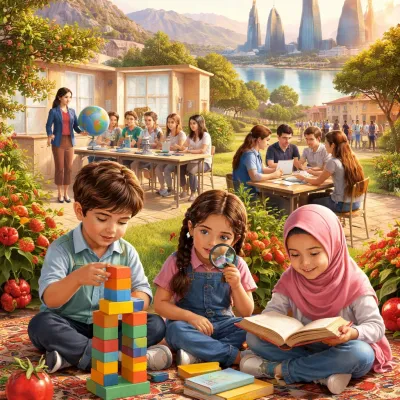
Education in Azerbaijan has evolved from ancient scholarly traditions through Soviet-era standardization to post-independence reforms aimed at modernization and international integration. The system is centrally governed by the Ministry of Science and Education, structured sequentially from early childhood education (nurseries and kindergartens) through compulsory general education (primary, incomplete secondary, and complete secondary stages), vocational education and training (VET), and higher education (universities, academies, and institutes following the Bologna Process bachelor's-master's-doctorate framework). Historical foundations reveal a progression from Zoroastrian and Islamic madrasahs to Soviet secularization and post-independence efforts to restore Azerbaijani language instruction, adopt the Latin alphabet, and align curricula with national identity while engaging globally.
Core educational stages emphasize holistic development: early childhood focuses on play-based social and cognitive growth; primary education establishes literacy, numeracy, and foundational subjects; general secondary education broadens into sciences, humanities, and languages with increasing specialization; VET provides practical skills for skilled professions through industry-linked training; and higher education delivers academic and research-oriented degrees, increasingly offering English-medium programs and pursuing international accreditation. Cross-cutting elements include ongoing curriculum reform toward competency-based learning, significant investments in teacher pre-service training and continuous professional development, expanding technology integration (digital infrastructure, e-learning, ICT in pedagogy), and growing emphasis on inclusive education for students with special needs through mainstream integration and individualized support plans.
Despite progress, challenges persist including urban-rural disparities in resources and teacher quality, the need to further shift from rote memorization to critical thinking and problem-solving, aligning education with evolving labor market demands, sustaining funding for modernization, and ensuring equitable access. Future strategies prioritize digital transformation (AI, VR/AR, adaptive learning), enhancing teacher quality and motivation, deepening international cooperation (Erasmus+, joint degrees, research clusters), expanding lifelong learning and adult education, fostering innovation and entrepreneurship in higher education, strengthening public-private partnerships, integrating "green skills" and sustainability, and maintaining cultural heritage while preparing globally competent citizens through data-informed, continuous improvement of the system.
What You'll Find Inside:
- The historical evolution of Azerbaijani education from ancient Islamic scholarly traditions and madrasahs through Soviet-era standardization to post-independence reforms focused on national identity, language revitalization, and global integration.
- A complete overview of the educational structure spanning early childhood nurseries/kindergartens through primary, secondary, vocational, and higher education stages, detailing governance by the Ministry of Science and Education and legislative frameworks.
- Vocational Education and Training (VET) as a critical pathway connecting education to labor market demands through industry-aligned programs, work-based learning, and efforts to enhance prestige and responsiveness to economic needs.
- Azerbaijan's active participation in international educational frameworks like the Bologna Process, fostering student and faculty mobility through programs such as Erasmus+, and aligning degree structures and quality assurance with global standards.
- Ongoing initiatives addressing systemic challenges including inclusive education for students with special needs, technology integration in classrooms, bridging urban-rural educational disparities, and balancing cultural preservation with modern skill development.
Who's It For:
This book is essential for educators, administrators, and policymakers directly involved in Azerbaijan's education system who need comprehensive insights into its structure, challenges, and reforms. It also serves researchers and students in comparative education, international development, or Azerbaijani studies seeking detailed historical and contemporary analysis. Additionally, professionals in international organizations or NGOs working on education projects in Azerbaijan will find valuable context for their initiatives. Anyone with a professional or academic interest in understanding how a post-Soviet nation is modernizing its education system while preserving cultural heritage will benefit from this thorough overview.
Table of Contents:
- Introduction
- Chapter 1: Historical Foundations of Azerbaijani Education
- Chapter 2: The Azerbaijani Educational System: Structure and Governance
- Chapter 3: Early Childhood Education: Nurseries and Kindergartens
- Chapter 4: Primary Education: The Foundation Years
- Chapter 5: General Secondary Education: Stages and Curriculum
- Chapter 6: Vocational Education and Training (VET): Pathways to Skilled Professions
- Chapter 7: Higher Education Institutions: Universities, Academies, and Institutes
- Chapter 8: Admission and Enrollment in Higher Education
- Chapter 9: Curriculum Development and Educational Standards
- Chapter 10: Teacher Education and Professional Development
- Chapter 11: Educational Funding and Budget Allocation
- Chapter 12: Educational Reforms and Policy Changes
- Chapter 13: Inclusive Education: Addressing Special Needs
- Chapter 14: The Role of Technology in Azerbaijani Education
- Chapter 15: International Cooperation and Educational Exchange Programs
- Chapter 16: Language of Instruction and Multilingualism in Education
- Chapter 17: Assessment and Evaluation in the Education System
- Chapter 18: Challenges and Opportunities in Azerbaijani Education
- Chapter 19: Education in Rural vs. Urban Areas
- Chapter 20: The Impact of Culture and Society on Education
- Chapter 21: Private Education in Azerbaijan
- Chapter 22: Adult Education and Lifelong Learning Initiatives
- Chapter 23: Research and Innovation in Higher Education
- Chapter 24: Student Support Services and Extracurricular Activities
- Chapter 25: Future Perspectives and Development Strategies for Azerbaijani Education
Author:
Published By:
Date Published:
June 19, 2026
Type:
Nonfiction
Language:
English
Word Count:
49,625 words
Reading Time:
3 hours 29 minutes
Sample:
Order:
Order Education In Azerbaijan (Hardcover) on MixCache.com:
Buy NowPrint copy is made to order and ships worldwide. Includes the ebook free, ready to read instantly.
$5 account credit for all new MixCache.com accounts, usable toward any ebook purchase!*