
Browse by Category
Fiction
- Action & Adventure
- African American
- Anthologies
- Children's Fiction
- Classics
- Comics & Graphic Novels
- Coming of Age
- Contemporary
- Cultural & Regional
- Drama
- Erotica
- Fantasy
- General
- Historical Fiction
- Horror
- Humor & Satire
- Literary Fiction
- Mystery, Thriller & Suspense
- Poetry
- Religious & Inspirational
- Romance
- Science Fiction
- Short Stories
- War & Military
- Westerns
- Women's Fiction
- Young Adult
Non-Fiction
- Antiques & Collectibles
- Arts & Photography
- Biographies & Memoirs
- Business & Money
- Children's Non-Fiction
-
Computers & Technology
- Artificial Intelligence
- Computer Science
- Cybersecurity & Cryptography
- Data Science & Analytics
- Databases & Big Data
- Game Development & Design
- General
- Hardware & DIY
- Mobile App Development
- Networking & Cloud Computing
- Operating Systems
- Programming
- Robotics
- Software
- Software Engineering
- User Experience (UX) & Design
- Web Development & Design
- Cooking, Food & Wine
- Crafts, Hobbies & Home
- Education & Teaching
- Engineering
- General
- Health, Fitness & Dieting
-
History
- African History
- African History - North Africa
- African History - Sub-Saharan Africa
- American History
- American History - 20th Century
- American History - Civil War
- American History - Colonial Period
- Ancient History
- Asian History
- Asian History - China
- Asian History - India
- Asian History - Japan
- Asian History - Southeast Asia
- European History
- European History - Ancient Greece
- European History - Ancient Rome
- European History - Medieval
- European History - Modern
- European History - Renaissance
- General
- Middle Eastern History
- Military History
- Military History - Aviation
- Military History - Naval
- Social & Cultural History
- World History
- Humor & Entertainment
- Industrial Technology
- Language Learning
- Law
- LGBTQ+ Non-Fiction
- Literary Criticism
- Medical Books
- Parenting & Relationships
- Philosophy
- Politics & Social Sciences
- Reference
- Religion & Spirituality
-
Science & Math
- Agricultural Sciences
- Astronomy & Space Science
- Behavioral Sciences
- Biological Sciences
- Botany & Plant Science
- Chemistry
- Earth Sciences
- Engineering - Chemical
- Engineering - Civil
- Engineering - Electrical
- Engineering - Mechanical
- Environment
- General
- Geology
- Mathematics
- Nature & Ecology
- Oceanography
- Paleontology
- Physics
- Statistics
- Self-Help
- Sports & Outdoors
- Study Aids
- Sustainability & Green Living
- Textbooks
- Transportation
- Travel
- True Crime
- Urban Planning & Development
- Veterinary Medicine
- Writing & Publishing
Jump to Section

Want unlimited access to all books published by MixCache.com (plus their audiobooks)? Try MixCache.com Total Access. Look for the MTA badge on book covers to identify included titles.
Access to infinite ebooks: Don't see the book you want? Suggest it and we'll create it (free!) for you from scratch with our powerful AI book writer. Then read it with MTA - besides profiting from any sales it makes!
Education In Angola
MTA
A Comprehensive Overview from Early Childhood to Higher Education
About this book:
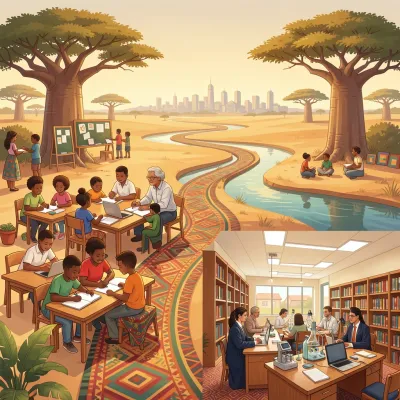
Education in Angola has been profoundly shaped by its historical trajectory, beginning with indigenous informal knowledge systems, followed by a colonial-era educational structure designed to serve Portuguese interests and create a discriminatory dual system that severely limited access for the majority indigenous population. The protracted civil war after independence in 1975 devastated educational infrastructure, displaced populations, and interrupted learning for an entire generation, exacerbating existing inequalities and creating a significant human capital deficit. Post-2002 peace marked the start of intensive reconstruction efforts, with the government prioritizing education as central to national recovery, reconciliation, and long-term development, aiming to build an equitable system from the ashes of conflict and colonial neglect.
The Angolan education system is structured into pre-school, primary, secondary (divided into general and technical-professional streams), technical and vocational education and training (TVET), and higher education levels, with Portuguese as the official language of instruction throughout. Despite significant post-conflict progress in expanding access—particularly at the primary level—persistent challenges include uneven urban-rural resource distribution, overcrowded classrooms, shortages of qualified teachers and learning materials, infrastructure deficits (especially water, sanitation, and electricity), high dropout and repetition rates, gender disparities that widen in secondary education, limited provision for students with special needs, and the ongoing impact of language barriers for children whose mother tongue is not Portuguese. Funding remains heavily reliant on volatile oil revenues, creating instability, while efforts to improve quality are hampered by inadequate teacher training, curriculum implementation gaps, and insufficient alignment between education outputs and labor market demands.
Ongoing reform efforts focus on strengthening foundational learning through mother-tongue instruction in early grades transitioning to Portuguese, expanding quality early childhood education, professionalizing the teaching force via improved training and deployment incentives, enhancing infrastructure and basic amenities, reforming assessment to integrate formative and summative practices, increasing TVET relevance through industry collaboration, promoting inclusive education for students with special needs, addressing gender disparities through targeted support and safe school environments, leveraging technology strategically to bridge divides, and improving governance through decentralization, transparency, and anti-corruption measures. The future outlook emphasizes sustainable financing diversification, deeper integration of Education for Sustainable Development, active measures to counter brain drain by creating attractive domestic opportunities, continued expansion of access with a focus on quality and equity, and the vision of an education system that serves as a robust engine for national prosperity, innovation, and inclusive development for all Angolans.
What You'll Find Inside:
- A comprehensive history of Angolan education, from indigenous learning traditions through colonial rule, civil conflict, and post-2002 reconstruction.
- A clear overview of Angola’s education structure, including early childhood, primary, secondary, TVET, higher education, and non-formal learning.
- Key analysis of persistent challenges such as rural access, gender disparities, inclusive education, language policy, teacher training, and funding.
- Insights into governance, technology integration, assessment practices, private sector involvement, and international educational aid.
- Forward-looking policy recommendations focused on equity, quality, sustainable development, workforce readiness, and long-term reform.
Who's It For:
This book is best suited for policymakers, education researchers, development professionals, and international partners working on Angolan or African education reform. It will also be valuable for educators, university students, NGO staff, and anyone seeking a detailed understanding of how Angola’s education system has evolved and what challenges it faces today.
Author:
Published By:
Date Published:
June 17, 2026
Type:
Nonfiction
Language:
English
Word Count:
45,495 words
Reading Time:
3 hours 11 minutes
Sample:
MixCache.com Total Access
Get unlimited access to this book + all books published by MixCache.com for $11.99/month
Subscribe to MTAOr purchase this book individually below
Order:
Buy the Education In Angola ebook on MixCache.com:
Buy Now
Full ebook will be available immediately
- read online or download as a PDF file.
$5 account credit for all new MixCache.com accounts, usable toward any ebook purchase!*



Ratings & Reviews
Ask Questions About This Book
Have a question about the content? Ask our AI assistant!
Start by asking a question about "Education In Angola"
Example: "Does this book mention William Shakespeare?"
Thinking...