Browse by Category
Fiction
- Action & Adventure
- African American
- Anthologies
- Children's Fiction
- Classics
- Comics & Graphic Novels
- Coming of Age
- Contemporary
- Cultural & Regional
- Drama
- Erotica
- Fantasy
- General
- Historical Fiction
- Horror
- Humor & Satire
- Literary Fiction
- Mystery, Thriller & Suspense
- Poetry
- Religious & Inspirational
- Romance
- Science Fiction
- Short Stories
- War & Military
- Westerns
- Women's Fiction
- Young Adult
Non-Fiction
- Antiques & Collectibles
- Arts & Photography
- Biographies & Memoirs
- Business & Money
- Children's Non-Fiction
-
Computers & Technology
- Artificial Intelligence
- Computer Science
- Cybersecurity & Cryptography
- Data Science & Analytics
- Databases & Big Data
- Game Development & Design
- General
- Hardware & DIY
- Mobile App Development
- Networking & Cloud Computing
- Operating Systems
- Programming
- Robotics
- Software
- Software Engineering
- User Experience (UX) & Design
- Web Development & Design
- Cooking, Food & Wine
- Crafts, Hobbies & Home
- Education & Teaching
- Engineering
- General
- Health, Fitness & Dieting
-
History
- African History
- African History - North Africa
- African History - Sub-Saharan Africa
- American History
- American History - 20th Century
- American History - Civil War
- American History - Colonial Period
- Ancient History
- Asian History
- Asian History - China
- Asian History - India
- Asian History - Japan
- Asian History - Southeast Asia
- European History
- European History - Ancient Greece
- European History - Ancient Rome
- European History - Medieval
- European History - Modern
- European History - Renaissance
- General
- Middle Eastern History
- Military History
- Military History - Aviation
- Military History - Naval
- Social & Cultural History
- World History
- Humor & Entertainment
- Industrial Technology
- Language Learning
- Law
- LGBTQ+ Non-Fiction
- Literary Criticism
- Medical Books
- Parenting & Relationships
- Philosophy
- Politics & Social Sciences
- Reference
- Religion & Spirituality
-
Science & Math
- Agricultural Sciences
- Astronomy & Space Science
- Behavioral Sciences
- Biological Sciences
- Botany & Plant Science
- Chemistry
- Earth Sciences
- Engineering - Chemical
- Engineering - Civil
- Engineering - Electrical
- Engineering - Mechanical
- Environment
- General
- Geology
- Mathematics
- Nature & Ecology
- Oceanography
- Paleontology
- Physics
- Statistics
- Self-Help
- Sports & Outdoors
- Study Aids
- Sustainability & Green Living
- Textbooks
- Transportation
- Travel
- True Crime
- Urban Planning & Development
- Veterinary Medicine
- Writing & Publishing
Jump to Section

Want unlimited access to all books published by MixCache.com (plus their audiobooks)? Try MixCache.com Total Access. Look for the MTA badge on book covers to identify included titles.
Access to infinite ebooks: Don't see the book you want? Suggest it and we'll create it (free!) for you from scratch with our powerful AI book writer. Then read it with MTA - besides profiting from any sales it makes!
Alpine Rescue Field Guide: Search and Rescue Techniques for Mountain Professionals
MTA
Operational procedures, rescue rigging, and incident command for SAR teams
About this book:

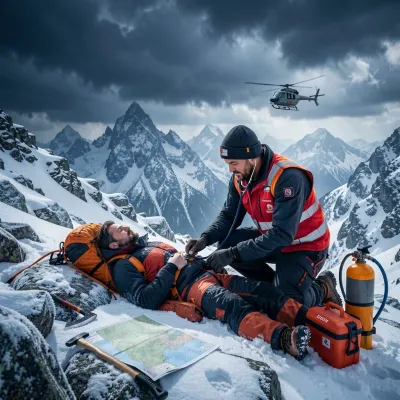
The Alpine Rescue Field Guide provides a comprehensive, step‑by‑step reference for mountain search and rescue professionals, integrating risk management, operational tactics, and technical skills into a unified framework. Early chapters establish how to define mission profiles, assess weather, snow, and terrain, and apply search theory to allocate resources effectively in complex alpine environments. The guide then details team organization and leadership, emphasizing span of control, briefings, situational awareness, and crew resource management, before introducing the Incident Command System (ICS) as the backbone for multi‑agency coordination, covering command, operations, planning, logistics, safety, and documentation.
Technical proficiency is built progressively: communications systems (radios, repeaters, satellite links, data tools) ensure reliable contact; navigation blends GPS, digital mapping, and paper backups; rockfall response covers mitigation, protective zones, and active management; avalanche rescue spans companion techniques to organized probe lines, strategic shoveling, and dog teams; snowpack testing and decision frameworks (Compression Test, Extended Column Test, Rutschblock, Avaluator, Swiss Stop‑or‑Go) turn field observations into go/no‑go choices. Glacier travel and crevasse rescue focus on roped travel, fall arrest, mechanical advantage systems, and patient extraction, while bivouac and overnight operations address shelter construction, patient warming, logistics, and fatigue management. Patient assessment prioritizes the ABCDE survey, hypothermia staging, and trauma care in cold, with packaging and litter handling emphasizing immobilization, thermal protection, and controlled movement over steep and mixed terrain.
Rigging fundamentals anchor the rescue effort: anchors follow SRENE principles, essential knots are mastered, and main/belay (twin‑tension) systems provide 100 % redundancy. Mechanical advantage (Z‑drag, C‑haul, 6:1, etc.) enables hauling and lowering, with progress capture devices and edge protection critical for safety. Advanced techniques include edge transitions, highlines, guiding lines, belays, counterbalance, artificial high directionals (gin poles, A‑frames, tripods), and helicopter interface (LZ selection, longline, hoist). Mobility tools—skis, crampons, ice axes—allow rapid, safe travel across snow, ice, and mixed terrain, and night/winter/severe‑weather chapters adapt all skills to darkness, cold, and extreme conditions. Human factors, CRM, and structured decision‑making (DECIDE, STAR, pre‑mortems) mitigate fatigue, stress, and bias, while checklists, SOPs, and field documentation institutionalize learning and accountability. Finally, case studies and after‑action reviews illustrate how terrain, weather, human factors, and logistics interact, turning real incidents into actionable lessons for continuous improvement. Together, these sections equip SAR teams to plan, execute, and adapt alpine rescues with disciplined, team‑centered operations that maximize victim survival and rescuer safety.
What You'll Find Inside:
- Comprehensive coverage of technical rescue techniques including rigging, mechanical advantage systems, highlines, and edge transitions for complex alpine extractions.
- In-depth guidance on avalanche rescue, snowpack assessment, and operational decision-making frameworks to manage risk in unstable terrain.
- Detailed protocols for helicopter operations, longline and hoist procedures, and landing zone management in remote mountain environments.
- Thorough exploration of patient care in extreme conditions, focusing on hypothermia management, trauma packaging, and litter handling on steep and mixed terrain.
- Integration of human factors, crew resource management, and structured decision-making to enhance team performance and safety under stress.
Who's It For:
This book is designed for search and rescue professionals, mountain guides, and technical rescue teams operating in alpine environments. It is particularly valuable for those involved in complex mountain rescues requiring advanced rigging, medical care, and multi-agency coordination. Experienced practitioners seeking to standardize procedures, improve team dynamics, and enhance operational safety will find this guide indispensable.
Author:
Published By:
Date Published:
June 15, 2026
Type:
Nonfiction
Language:
English
Word Count:
61,421 words
Reading Time:
4 hours 18 minutes
Sample:
Order:
Order Alpine Rescue Field Guide: Search and Rescue Techniques for Mountain Professionals (Hardcover) on MixCache.com:
Buy NowPrint copy is made to order and ships worldwide. Includes the ebook free, ready to read instantly.
$5 account credit for all new MixCache.com accounts, usable toward any ebook purchase!*