
Browse by Category
Fiction
- Action & Adventure
- African American
- Anthologies
- Children's Fiction
- Classics
- Comics & Graphic Novels
- Coming of Age
- Contemporary
- Cultural & Regional
- Drama
- Erotica
- Fantasy
- General
- Historical Fiction
- Horror
- Humor & Satire
- Literary Fiction
- Mystery, Thriller & Suspense
- Poetry
- Religious & Inspirational
- Romance
- Science Fiction
- Short Stories
- War & Military
- Westerns
- Women's Fiction
- Young Adult
Non-Fiction
- Antiques & Collectibles
- Arts & Photography
- Biographies & Memoirs
- Business & Money
- Children's Non-Fiction
-
Computers & Technology
- Artificial Intelligence
- Computer Science
- Cybersecurity & Cryptography
- Data Science & Analytics
- Databases & Big Data
- Game Development & Design
- General
- Hardware & DIY
- Mobile App Development
- Networking & Cloud Computing
- Operating Systems
- Programming
- Robotics
- Software
- Software Engineering
- User Experience (UX) & Design
- Web Development & Design
- Cooking, Food & Wine
- Crafts, Hobbies & Home
- Education & Teaching
- Engineering
- General
- Health, Fitness & Dieting
-
History
- African History
- African History - North Africa
- African History - Sub-Saharan Africa
- American History
- American History - 20th Century
- American History - Civil War
- American History - Colonial Period
- Ancient History
- Asian History
- Asian History - China
- Asian History - India
- Asian History - Japan
- Asian History - Southeast Asia
- European History
- European History - Ancient Greece
- European History - Ancient Rome
- European History - Medieval
- European History - Modern
- European History - Renaissance
- General
- Middle Eastern History
- Military History
- Military History - Aviation
- Military History - Naval
- Social & Cultural History
- World History
- Humor & Entertainment
- Industrial Technology
- Language Learning
- Law
- LGBTQ+ Non-Fiction
- Literary Criticism
- Medical Books
- Parenting & Relationships
- Philosophy
- Politics & Social Sciences
- Reference
- Religion & Spirituality
-
Science & Math
- Agricultural Sciences
- Astronomy & Space Science
- Behavioral Sciences
- Biological Sciences
- Botany & Plant Science
- Chemistry
- Earth Sciences
- Engineering - Chemical
- Engineering - Civil
- Engineering - Electrical
- Engineering - Mechanical
- Environment
- General
- Geology
- Mathematics
- Nature & Ecology
- Oceanography
- Paleontology
- Physics
- Statistics
- Self-Help
- Sports & Outdoors
- Study Aids
- Sustainability & Green Living
- Textbooks
- Transportation
- Travel
- True Crime
- Urban Planning & Development
- Veterinary Medicine
- Writing & Publishing
Jump to Section

Want unlimited access to all books published by MixCache.com (plus their audiobooks)? Try MixCache.com Total Access. Look for the MTA badge on book covers to identify included titles.
Access to infinite ebooks: Don't see the book you want? Suggest it and we'll create it (free!) for you from scratch with our powerful AI book writer. Then read it with MTA - besides profiting from any sales it makes!
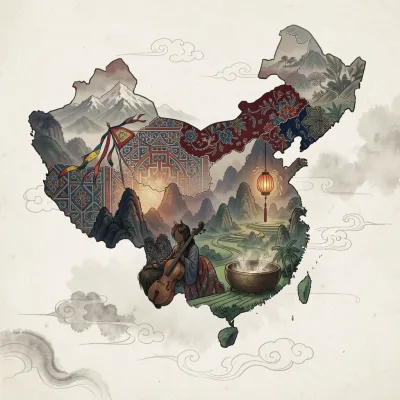
Maps, Gazetteers, and Bureaucracy: Administrative Histories of China's Provinces
MTA
Local records, mapping practices, and provincial administration — one province per chapter
About this book:

This book explores how China’s provinces were not static administrative units but were actively constructed and maintained through bureaucratic practices centered on maps, gazetteers, and local records. Each chapter examines a different province, illustrating how spatial and documentary knowledge shaped governance, adapted to local conditions, and evolved over time.
The study emphasizes two key themes: first, that maps and gazetteers were tools of power, mediating labor, taxation, and jurisdictional relationships; and second, that bureaucratic formats were adaptable technologies, shifting across dynasties and reforms. Provincial archives preserved diverse sources—cadastral surveys, hydraulic files, litigation records—that revealed how administrators translated environmental and social complexities into governable categories. The comparative structure highlights regional variations: coastal provinces like Shandong and Fujian developed maritime-focused records, while inland areas like Henan and Sichuan grappled with river management and ethnic frontier governance. Inner Asian regions like Gansu and Qinghai relied on relay stations, military banners, and monastery ties to manage mobility and multiethnic populations.
The methodology treats maps as arguments and gazetteers as curated datasets, triangulating between texts, tables, and spatial documents to reconstruct administrative practices. Case studies trace continuities and ruptures from late imperial times through the Republican era and early People’s Republic, showing how inherited templates and local negotiations shaped governance. Methodological challenges, such as copyist drift and retrospective standardization, are acknowledged, offering practical guidance for researchers. The book ultimately demonstrates that bureaucratic knowledge did more than describe China’s provinces—it actively made them, embedding state power in the everyday mechanics of mapping, recording, and categorizing.
What You'll Find Inside:
- Provincial administration in China was fundamentally shaped by documentary practices—maps, gazetteers, cadastral records, and bureaucratic files—that actively produced and stabilized provinces rather than merely reflecting existing territorial realities.
- Each province developed unique administrative solutions based on its geography, economy, and ethnic composition, from the 'fish-scale' land registers of the Yangtze delta to the Tusi incorporation records of the southwestern frontier.
- Hydraulic management and water control were central to governance across multiple provinces, with detailed dike records, hydraulic memorials, and river surveys forming critical infrastructure for both disaster prevention and tax collection.
- The transition from imperial to modern administration involved significant continuity in bureaucratic formats and practices, as revolutionary regimes consistently repurposed inherited documentary systems—including Qing-era cadasters and Japanese colonial surveys—for new political objectives.
- Frontier provinces required innovative approaches to governing multiethnic populations, including specialized registers for indigenous communities, monastery and banner records in Tibetan and Mongol regions, and hybrid administrative arrangements that negotiated between imperial standardization and local autonomy.
Who's It For:
This book is essential reading for scholars and graduate students in Chinese history, historical geography, and archival studies, as well as researchers interested in comparative bureaucracy and state formation. It will particularly benefit historians working with primary sources who need methodological guidance on interpreting gazetteers, cadastral maps, and administrative documents across different Chinese provinces. Policy researchers and analysts studying the historical roots of contemporary Chinese governance structures will also find valuable insights in this work.
Author:
Published By:
Date Published:
June 14, 2026
Type:
Nonfiction
Language:
English
Word Count:
63,855 words
Reading Time:
4 hours 28 minutes
Sample:
MixCache.com Total Access
Get unlimited access to this book + all books published by MixCache.com for $11.99/month
Subscribe to MTAOr purchase this book individually below
Order:
Buy the Maps, Gazetteers, and Bureaucracy: Administrative Histories of China's Provinces ebook on MixCache.com:
Buy Now
Full ebook will be available immediately
- read online or download as a PDF file.
$5 account credit for all new MixCache.com accounts, usable toward any ebook purchase!*



Ratings & Reviews
Ask Questions About This Book
Have a question about the content? Ask our AI assistant!
Start by asking a question about "Maps, Gazetteers, and Bureaucracy: Administrative Histories of China's Provinces"
Example: "Does this book mention William Shakespeare?"
Thinking...