Browse by Category
Fiction
- Action & Adventure
- African American
- Anthologies
- Children's Fiction
- Classics
- Comics & Graphic Novels
- Coming of Age
- Contemporary
- Cultural & Regional
- Drama
- Erotica
- Fantasy
- General
- Historical Fiction
- Horror
- Humor & Satire
- Literary Fiction
- Mystery, Thriller & Suspense
- Poetry
- Religious & Inspirational
- Romance
- Science Fiction
- Short Stories
- War & Military
- Westerns
- Women's Fiction
- Young Adult
Non-Fiction
- Antiques & Collectibles
- Arts & Photography
- Biographies & Memoirs
- Business & Money
- Children's Non-Fiction
-
Computers & Technology
- Artificial Intelligence
- Computer Science
- Cybersecurity & Cryptography
- Data Science & Analytics
- Databases & Big Data
- Game Development & Design
- General
- Hardware & DIY
- Mobile App Development
- Networking & Cloud Computing
- Operating Systems
- Programming
- Robotics
- Software
- Software Engineering
- User Experience (UX) & Design
- Web Development & Design
- Cooking, Food & Wine
- Crafts, Hobbies & Home
- Education & Teaching
- Engineering
- General
- Health, Fitness & Dieting
-
History
- African History
- African History - North Africa
- African History - Sub-Saharan Africa
- American History
- American History - 20th Century
- American History - Civil War
- American History - Colonial Period
- Ancient History
- Asian History
- Asian History - China
- Asian History - India
- Asian History - Japan
- Asian History - Southeast Asia
- European History
- European History - Ancient Greece
- European History - Ancient Rome
- European History - Medieval
- European History - Modern
- European History - Renaissance
- General
- Middle Eastern History
- Military History
- Military History - Aviation
- Military History - Naval
- Social & Cultural History
- World History
- Humor & Entertainment
- Industrial Technology
- Language Learning
- Law
- LGBTQ+ Non-Fiction
- Literary Criticism
- Medical Books
- Parenting & Relationships
- Philosophy
- Politics & Social Sciences
- Reference
- Religion & Spirituality
-
Science & Math
- Agricultural Sciences
- Astronomy & Space Science
- Behavioral Sciences
- Biological Sciences
- Botany & Plant Science
- Chemistry
- Earth Sciences
- Engineering - Chemical
- Engineering - Civil
- Engineering - Electrical
- Engineering - Mechanical
- Environment
- General
- Geology
- Mathematics
- Nature & Ecology
- Oceanography
- Paleontology
- Physics
- Statistics
- Self-Help
- Sports & Outdoors
- Study Aids
- Sustainability & Green Living
- Textbooks
- Transportation
- Travel
- True Crime
- Urban Planning & Development
- Veterinary Medicine
- Writing & Publishing
Jump to Section

Want unlimited access to all books published by MixCache.com (plus their audiobooks)? Try MixCache.com Total Access. Look for the MTA badge on book covers to identify included titles.
Access to infinite ebooks: Don't see the book you want? Suggest it and we'll create it (free!) for you from scratch with our powerful AI book writer. Then read it with MTA - besides profiting from any sales it makes!
Urbanizing Provinces: Cities and Provincial Change in China
MTA
City growth, governance, and provincial urban networks — one province per chapter
About this book:
**Summary**
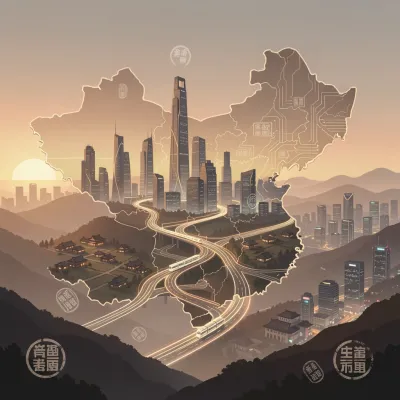
China’s urban transformation is increasingly driven by provincial strategies rather than individual megacities alone, as explored in *Urbanizing Provinces*, which examines how governance, economic restructuring, and regional networks shape distinct urban trajectories. Each chapter analyzes a province’s unique approach to city growth, emphasizing sectoral specializations—such as Anhui’s innovation arcs, Guangdong’s Pearl River Delta megacity-region, and Guizhou’s big-data pivot—while highlighting how provincial policies mediate between central mandates and local realities. The book underscores the role of infrastructure (e.g., high-speed rail, ports), land finance, and the evolving balance between state-owned and private enterprises in fostering polycentric urban systems, from corridor cities in Gansu to border gateways in Guangxi and Xinjiang. Environmental sustainability, housing, and migration dynamics, including the flexibility of the hukou system, are recurring themes that illustrate how provinces navigate social and ecological challenges amid rapid urban expansion.
Central to the narrative is the interplay of provincial governance and national strategies, such as the Belt and Road Initiative and the Greater Bay Area framework, which reconfigure urban networks and economic roles. For example, Hebei’s Xiong’an New Area exemplifies strategic relocation of non-capital functions, while Hainan’s Free Trade Port reflects policy experimentation for global integration. Provinces like Shandong and Zhejiang showcase advanced manufacturing and digital innovation as drivers of urban growth, whereas resource-dependent regions like Shanxi and Heilongjiang confront the challenges of industrial transition and talent retention. The book highlights how cities, from historic capitals like Nanjing to emerging hubs like Dunhuang, adapt to shifting economic paradigms while leveraging cultural and natural assets for sustainable development.
Environmental considerations and social equity are critical factors in provincial urbanization, as seen in Qinghai’s renewable energy emphasis, Fujian’s cross-strait trade balancing, and Yunnan’s mountain urbanism. The text explores how provinces manage the tension between economic growth and ecological limits, often through targeted policies like Hunan’s "two-oriented society" or Jiangxi’s corridor development. Meanwhile, ethnic diversity in Xinjiang and Inner Mongolia shapes plural urban identities, requiring governance models that integrate cultural preservation with economic modernization. The book also addresses migration and labor dynamics, illustrating how provinces like Henan and Hubei seek to attract and retain talent while accommodating rural-to-urban flows and international trade corridors.
Ultimately, *Urbanizing Provinces* argues that China’s next urban phase hinges on provincial capabilities to integrate megacity dynamism with inclusive, low-carbon growth, transforming uneven development into resilient systems. The chapters collectively offer a comparative guide to how provincial pathways—from corridor urbanization in Gansu to digital urbanism in Zhejiang—are defining the nation’s future urban landscape. By emphasizing regional networks, sectoral upgrades, and governance flexibility, the book presents a nuanced view of urbanization as a multifaceted process deeply rooted in local contexts yet aligned with national strategic goals.
What You'll Find Inside:
- Provincial governance is the critical intermediary in China's urbanization, translating national reforms into distinct local trajectories through infrastructure investment, industrial policy, and land management.
- China's urban future depends on integrating megacity dynamism with the everyday urbanization of smaller cities and county-level growth to create resilient regional systems.
- Economic diversification and industrial upgrading are common themes across provinces, with transitions from heavy industry, resource extraction, or agriculture toward high-tech, digital, and green energy sectors.
- Housing affordability, hukou (household registration) reform, and inclusive social policies are central challenges that determine whether urban growth benefits all residents or amplifies disparities.
- Environmental sustainability and ecological protection are increasingly shaping urban development, with provinces leveraging renewable energy potential and green industries as new engines of growth.
Who's It For:
This book is essential reading for urban planners, policymakers, and scholars of Chinese development who seek a comparative understanding of how provincial governance shapes city growth across China's diverse regions. It will particularly benefit researchers in urban studies, geography, political economy, and sociology interested in migration, housing, and regional inequality. Additionally, professionals in economic development, logistics, and environmental policy will find valuable insights into sectoral transitions and green growth strategies across China's provinces.
Author:
Published By:
Date Published:
June 12, 2026
Type:
Nonfiction
Language:
English
Word Count:
55,042 words
Reading Time:
3 hours 51 minutes
Sample:
Order:
Order Urbanizing Provinces: Cities and Provincial Change in China (Hardcover) on MixCache.com:
Buy NowPrint copy is made to order and ships worldwide. Includes the ebook free, ready to read instantly.
$5 account credit for all new MixCache.com accounts, usable toward any ebook purchase!*