
Browse by Category
Fiction
- Action & Adventure
- African American
- Anthologies
- Children's Fiction
- Classics
- Comics & Graphic Novels
- Coming of Age
- Contemporary
- Cultural & Regional
- Drama
- Erotica
- Fantasy
- General
- Historical Fiction
- Horror
- Humor & Satire
- Literary Fiction
- Mystery, Thriller & Suspense
- Poetry
- Religious & Inspirational
- Romance
- Science Fiction
- Short Stories
- War & Military
- Westerns
- Women's Fiction
- Young Adult
Non-Fiction
- Antiques & Collectibles
- Arts & Photography
- Biographies & Memoirs
- Business & Money
- Children's Non-Fiction
-
Computers & Technology
- Artificial Intelligence
- Computer Science
- Cybersecurity & Cryptography
- Data Science & Analytics
- Databases & Big Data
- Game Development & Design
- General
- Hardware & DIY
- Mobile App Development
- Networking & Cloud Computing
- Operating Systems
- Programming
- Robotics
- Software
- Software Engineering
- User Experience (UX) & Design
- Web Development & Design
- Cooking, Food & Wine
- Crafts, Hobbies & Home
- Education & Teaching
- Engineering
- General
- Health, Fitness & Dieting
-
History
- African History
- African History - North Africa
- African History - Sub-Saharan Africa
- American History
- American History - 20th Century
- American History - Civil War
- American History - Colonial Period
- Ancient History
- Asian History
- Asian History - China
- Asian History - India
- Asian History - Japan
- Asian History - Southeast Asia
- European History
- European History - Ancient Greece
- European History - Ancient Rome
- European History - Medieval
- European History - Modern
- European History - Renaissance
- General
- Middle Eastern History
- Military History
- Military History - Aviation
- Military History - Naval
- Social & Cultural History
- World History
- Humor & Entertainment
- Industrial Technology
- Language Learning
- Law
- LGBTQ+ Non-Fiction
- Literary Criticism
- Medical Books
- Parenting & Relationships
- Philosophy
- Politics & Social Sciences
- Reference
- Religion & Spirituality
-
Science & Math
- Agricultural Sciences
- Astronomy & Space Science
- Behavioral Sciences
- Biological Sciences
- Botany & Plant Science
- Chemistry
- Earth Sciences
- Engineering - Chemical
- Engineering - Civil
- Engineering - Electrical
- Engineering - Mechanical
- Environment
- General
- Geology
- Mathematics
- Nature & Ecology
- Oceanography
- Paleontology
- Physics
- Statistics
- Self-Help
- Sports & Outdoors
- Study Aids
- Sustainability & Green Living
- Textbooks
- Transportation
- Travel
- True Crime
- Urban Planning & Development
- Veterinary Medicine
- Writing & Publishing
Jump to Section

Want unlimited access to all books published by MixCache.com (plus their audiobooks)? Try MixCache.com Total Access. Look for the MTA badge on book covers to identify included titles.
Access to infinite ebooks: Don't see the book you want? Suggest it and we'll create it (free!) for you from scratch with our powerful AI book writer. Then read it with MTA - besides profiting from any sales it makes!
Language, Dialect and Script: Linguistic Histories of China’s Provinces
MTA
Dialect evolution, script reforms, and linguistic identity — one province per chapter
About this book:
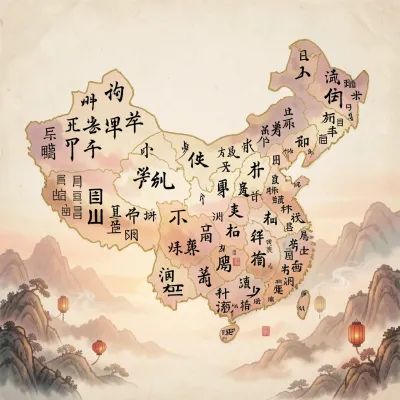
The book *Language, Dialect and Script: Linguistic Histories of China’s Provinces* explores the dynamic interplay of dialectal diversity, script evolution, and cultural identity across 25 provincial regions, presenting China’s linguistic landscape as a mosaic shaped by geography, migration, commerce, and political change. Each chapter analyzes a province’s unique linguistic ecology, highlighting how speakers navigated contact zones between Sinitic varieties (Mandarin, Wu, Min, Hakka, etc.) and minority languages (Tibetic, Mongolic, Turkic, Hmong–Mien, Austroasiatic), while also tracing how script reforms, education policies, and global integration have reshaped local speech. The provincial lens reveals how linguistic identities—from Guangdong’s Cantonese commerce to Fujian’s Min maritime networks—reflect broader patterns of interaction, adaptation, and resistance to homogenization.
Historically, provinces like Henan and Shaanxi served as cradles for Mandarin, while regions such as Sichuan and Yunnan became crossroads for multilingualism, birthing transitional varieties and hybrid dialects. Minority-majority provinces like Qinghai and Gansu exhibit *sprachbund* phenomena, where prolonged contact between languages from different families (e.g., Tibetic, Mongolic, and Sinitic) fostered shared grammatical features and code-switching practices. The book emphasizes how trade routes, religious institutions (like Tibetan Buddhist monasteries), and clan schools sustained linguistic traditions, while external forces—from Qing expansionism to 20th-century standardization campaigns—imposed new hierarchies of prestige and literacy. Script reforms, from traditional characters to simplified and missionary-developed systems like the Manchu or Nüshu (women’s script), further illustrate how written forms mediated cultural and political change.
Modern challenges—such as urbanization, digital communication, and the dominance of Standard Mandarin—are shown to erode but not erase regional distinctions. Grassroots initiatives, including online platforms, bilingual education, and cultural revival projects (e.g., for Hakka in Fujian or Tujia in Hubei), underscore ongoing efforts to preserve linguistic heritage. The book also critiques the tension between state-driven linguistic unity and local identity, noting how policies often marginalize minority languages despite constitutional protections. Ultimately, the authors argue that China’s linguistic diversity is a resource to be understood rather than a problem to be solved, advocating for a nuanced appreciation of how regional histories illuminate broader national transformations. Through detailed case studies, the work demonstrates that dialects, scripts, and identities are not relics of the past but living systems that continuously evolve amid shifting socioeconomic and political landscapes.
What You'll Find Inside:
- The book uses a provincial lens to explore China's linguistic diversity as dynamic ecologies shaped by history, commerce, migration, and statecraft—not as static varieties but evolving systems in constant negotiation.
- It examines how scripts and literacy practices evolved through interactions like missionary romanizations, clan schools, merchant networks, and 20th-century reforms (e.g., 1956 Character Simplification), revealing tensions between local speech and written standards.
- Economic forces—from Silk Road trade to Pearl River Delta commerce and modern migration—consistently reshape linguistic landscapes, creating urban koines, hybrid dialects, and new avenues for language preservation or erosion.
- A core theme is the ongoing negotiation between local linguistic identity (e.g., Cantonese pride, Wu tonal complexity, Jin archaic features) and national standardization efforts, showing how communities adapt intelligibility, prestige, and resistance.
- Linguistic diversity is framed as a cultural resource to be understood and cultivated, not a problem to solve, with evidence from minority language revival efforts, digital activism, and grassroots preservation across provinces.
Who's It For:
This book is ideal for undergraduate and graduate students in Chinese linguistics, sociolinguistics, Asian studies, or history who seek an accessible yet rigorous exploration of China's linguistic diversity. It will also benefit educators, language policymakers, and professionals working in minority language preservation or bilingual education, offering concrete provincial case studies that illuminate broader themes of language standardization, identity, and evolution. General readers with a deep interest in China's cultural heritage, migration patterns, or the interplay between language and society will find the provincial approach engaging and informative.
Author:
Published By:
Date Published:
June 12, 2026
Type:
Nonfiction
Language:
English
Word Count:
47,551 words
Reading Time:
3 hours 20 minutes
Sample:
Order:
Order Language, Dialect and Script: Linguistic Histories of China’s Provinces (Paperback) on MixCache.com:
Buy NowPrint copy is made to order and ships worldwide. Includes the ebook free, ready to read instantly.
$5 account credit for all new MixCache.com accounts, usable toward any ebook purchase!*


