Browse by Category
Fiction
- Action & Adventure
- African American
- Anthologies
- Children's Fiction
- Classics
- Comics & Graphic Novels
- Coming of Age
- Contemporary
- Cultural & Regional
- Drama
- Erotica
- Fantasy
- General
- Historical Fiction
- Horror
- Humor & Satire
- Literary Fiction
- Mystery, Thriller & Suspense
- Poetry
- Religious & Inspirational
- Romance
- Science Fiction
- Short Stories
- War & Military
- Westerns
- Women's Fiction
- Young Adult
Non-Fiction
- Antiques & Collectibles
- Arts & Photography
- Biographies & Memoirs
- Business & Money
- Children's Non-Fiction
-
Computers & Technology
- Artificial Intelligence
- Computer Science
- Cybersecurity & Cryptography
- Data Science & Analytics
- Databases & Big Data
- Game Development & Design
- General
- Hardware & DIY
- Mobile App Development
- Networking & Cloud Computing
- Operating Systems
- Programming
- Robotics
- Software
- Software Engineering
- User Experience (UX) & Design
- Web Development & Design
- Cooking, Food & Wine
- Crafts, Hobbies & Home
- Education & Teaching
- Engineering
- General
- Health, Fitness & Dieting
-
History
- African History
- African History - North Africa
- African History - Sub-Saharan Africa
- American History
- American History - 20th Century
- American History - Civil War
- American History - Colonial Period
- Ancient History
- Asian History
- Asian History - China
- Asian History - India
- Asian History - Japan
- Asian History - Southeast Asia
- European History
- European History - Ancient Greece
- European History - Ancient Rome
- European History - Medieval
- European History - Modern
- European History - Renaissance
- General
- Middle Eastern History
- Military History
- Military History - Aviation
- Military History - Naval
- Social & Cultural History
- World History
- Humor & Entertainment
- Industrial Technology
- Language Learning
- Law
- LGBTQ+ Non-Fiction
- Literary Criticism
- Medical Books
- Parenting & Relationships
- Philosophy
- Politics & Social Sciences
- Reference
- Religion & Spirituality
-
Science & Math
- Agricultural Sciences
- Astronomy & Space Science
- Behavioral Sciences
- Biological Sciences
- Botany & Plant Science
- Chemistry
- Earth Sciences
- Engineering - Chemical
- Engineering - Civil
- Engineering - Electrical
- Engineering - Mechanical
- Environment
- General
- Geology
- Mathematics
- Nature & Ecology
- Oceanography
- Paleontology
- Physics
- Statistics
- Self-Help
- Sports & Outdoors
- Study Aids
- Sustainability & Green Living
- Textbooks
- Transportation
- Travel
- True Crime
- Urban Planning & Development
- Veterinary Medicine
- Writing & Publishing
Jump to Section

Want unlimited access to all books published by MixCache.com (plus their audiobooks)? Try MixCache.com Total Access. Look for the MTA badge on book covers to identify included titles.
Access to infinite ebooks: Don't see the book you want? Suggest it and we'll create it (free!) for you from scratch with our powerful AI book writer. Then read it with MTA - besides profiting from any sales it makes!
Nordic Modern: Helsinki’s Architecture, Nationhood, and Design Identity
MTA
How architecture and design shaped Finland’s capital and national image
About this book:
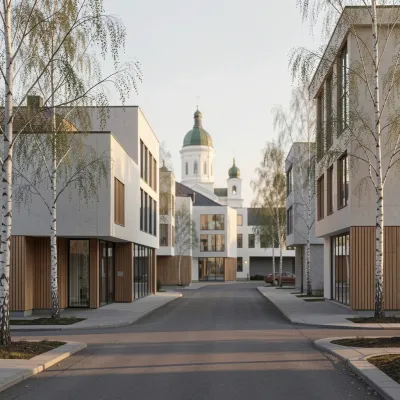
Nordic Modern: Helsinki's Architecture, Nationhood, and Design Identity explores how Helsinki's built environment has served as a primary medium for Finland's national self-definition from the nineteenth to the twenty-first century. The book traces the city's architectural evolution from its imperial origins under Russian rule, when C. L. Engel imposed a neoclassical Ottoman-capital-on-a-hill aesthetic—epitomized by Senate Square and the Helsinki Cathedral—to the National Romantic movement of the late nineteenth and early twentieth centuries, when architects drew upon Finnish folklore and landscapes to assert cultural independence. This historical layering established a tension between imported styles and indigenous adaptation that would define Helsinki's architectural identity.
The twentieth century brought transformative shifts: Finnish independence in 1917 demanded new forms of national representation; functionalism of the 1930s reimagined architecture as an instrument of social progress, earning Helsinki the moniker "White City of the North"; and the 1952 Olympics showcased the city's modern, efficient, and humane character to the world. Alvar Aalto emerged as the century's defining figure, reframing modernism as empathetic and materially sensitive rather than dogmatically austere. His Helsinki landmarks—Rautatalo, the House of Culture, and Finlandia Hall—alongside his furniture and urban planning proposals, established a "romantic functionalism" that became synonymous with Nordic design globally.
The latter chapters examine Helsinki's postindustrial reinvention through culture-led regeneration, welfare-state urbanism, and contemporary innovations. Projects like the Kiasma Museum of Contemporary Art, the Finnish National Opera House, and Oodi Central Library demonstrate how architecture continues to foster democratic engagement and public belonging. The book also addresses current challenges: integrating diverse communities, balancing preservation with progress, embracing digital urbanism, and promoting sustainable wooden construction. Throughout, Helsinki's design ecosystem—from Arabia ceramics to Marimekko textiles to World Design Capital 2012—functions as both cultural policy and national branding, linking everyday life to international reputation.
Methodologically, the book integrates architectural history, urban morphology, policy analysis, and design studies to argue that Helsinki's significance lies not merely in iconic buildings but in its sustained commitment to human-centered, environmentally responsible, and socially equitable urbanism. As the city navigates demographic change, technological experimentation, and climate imperatives, its architectural culture remains a barometer of national values—an evolving pact between people, place, and design that continues to exert global soft power.
What You'll Find Inside:
- Exploration of how architecture and design shaped Helsinki's transformation from an imperial capital to a modern Nordic metropolis, focusing on neoclassical foundations by C.L. Engel.
- Analysis of National Romanticism and the role of the Kalevala in defining Finnish architectural identity through buildings like the Finnish National Museum and Hvitträsk.
- Examination of how Helsinki staged itself for the world during the 1952 Olympics, showcasing functionalist architecture and establishing a global image of efficiency and modernity.
- Investigation of Alvar Aalto's contributions to Helsinki's design identity through projects like Finlandia Hall and Rautatalo, emphasizing humane modernism and material innovation.
- Discussion of 21st-century developments including postindustrial waterfront regeneration, digital urbanism, and the promotion of wooden architecture as part of Helsinki's evolving Nordic modernist legacy.
Who's It For:
This book is ideal for architecture students, cultural historians, and design professionals interested in understanding how urban environments reflect and shape national identity. It also benefits urban planners, policymakers, and anyone curious about Helsinki's role as a global model for sustainable, human-centered, and culturally resonant city design.
Author:
Published By:
Date Published:
June 12, 2026
Type:
Nonfiction
Language:
English
Word Count:
47,632 words
Reading Time:
3 hours 20 minutes
Sample:
Order:
Order Nordic Modern: Helsinki’s Architecture, Nationhood, and Design Identity (Paperback) on MixCache.com:
Buy NowPrint copy is made to order and ships worldwide. Includes the ebook free, ready to read instantly.
$5 account credit for all new MixCache.com accounts, usable toward any ebook purchase!*