
Browse by Category
Fiction
- Action & Adventure
- African American
- Anthologies
- Children's Fiction
- Classics
- Comics & Graphic Novels
- Coming of Age
- Contemporary
- Cultural & Regional
- Drama
- Erotica
- Fantasy
- General
- Historical Fiction
- Horror
- Humor & Satire
- Literary Fiction
- Mystery, Thriller & Suspense
- Poetry
- Religious & Inspirational
- Romance
- Science Fiction
- Short Stories
- War & Military
- Westerns
- Women's Fiction
- Young Adult
Non-Fiction
- Antiques & Collectibles
- Arts & Photography
- Biographies & Memoirs
- Business & Money
- Children's Non-Fiction
-
Computers & Technology
- Artificial Intelligence
- Computer Science
- Cybersecurity & Cryptography
- Data Science & Analytics
- Databases & Big Data
- Game Development & Design
- General
- Hardware & DIY
- Mobile App Development
- Networking & Cloud Computing
- Operating Systems
- Programming
- Robotics
- Software
- Software Engineering
- User Experience (UX) & Design
- Web Development & Design
- Cooking, Food & Wine
- Crafts, Hobbies & Home
- Education & Teaching
- Engineering
- General
- Health, Fitness & Dieting
-
History
- African History
- African History - North Africa
- African History - Sub-Saharan Africa
- American History
- American History - 20th Century
- American History - Civil War
- American History - Colonial Period
- Ancient History
- Asian History
- Asian History - China
- Asian History - India
- Asian History - Japan
- Asian History - Southeast Asia
- European History
- European History - Ancient Greece
- European History - Ancient Rome
- European History - Medieval
- European History - Modern
- European History - Renaissance
- General
- Middle Eastern History
- Military History
- Military History - Aviation
- Military History - Naval
- Social & Cultural History
- World History
- Humor & Entertainment
- Industrial Technology
- Language Learning
- Law
- LGBTQ+ Non-Fiction
- Literary Criticism
- Medical Books
- Parenting & Relationships
- Philosophy
- Politics & Social Sciences
- Reference
- Religion & Spirituality
-
Science & Math
- Agricultural Sciences
- Astronomy & Space Science
- Behavioral Sciences
- Biological Sciences
- Botany & Plant Science
- Chemistry
- Earth Sciences
- Engineering - Chemical
- Engineering - Civil
- Engineering - Electrical
- Engineering - Mechanical
- Environment
- General
- Geology
- Mathematics
- Nature & Ecology
- Oceanography
- Paleontology
- Physics
- Statistics
- Self-Help
- Sports & Outdoors
- Study Aids
- Sustainability & Green Living
- Textbooks
- Transportation
- Travel
- True Crime
- Urban Planning & Development
- Veterinary Medicine
- Writing & Publishing
Jump to Section

Want unlimited access to all books published by MixCache.com (plus their audiobooks)? Try MixCache.com Total Access. Look for the MTA badge on book covers to identify included titles.
Access to infinite ebooks: Don't see the book you want? Suggest it and we'll create it (free!) for you from scratch with our powerful AI book writer. Then read it with MTA - besides profiting from any sales it makes!
Rhythms and Revolutions: Music, Art, and Cultural Expression in Modern African History
MTA
Soundscapes, Visual Arts, and Cultural Politics from 1800 to Today
About this book:
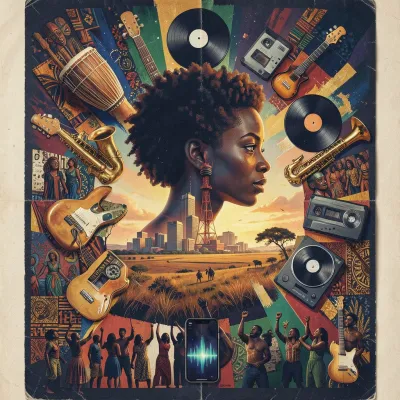
*Rhythms and Revolutions* provides a comprehensive cultural history of Africa from 1800 to the present, exploring how music, visual arts, and performance have shaped and reflected the continent's political and social transformations. The book begins by examining the sensory landscapes of pre-colonial sovereignty, where court music and ritual arts functioned as essential tools of statecraft and trade. It then traces the disruptive yet generative impact of missionary influence and early colonial encounters, which introduced new instruments, technologies like photography, and choral traditions that Africans quickly adapted to forge a unique visual and sonic modernity.
As the narrative moves into the twentieth century, it focuses on the rise of urban soundscapes in ports, mines, and migrant neighborhoods. The book highlights how the introduction of gramophones and radio created "colonial circuits of culture" that allowed for the rapid exchange of ideas across the Black Atlantic. The interwar years are depicted as a vibrant era of public amusement, where dance halls, theaters, and cinemas became contested spaces for negotiating identity under empire. This period set the stage for the anti-colonial movement, where posters, caricature, and festivals were weaponized to imagine and demand national independence.
The post-independence era is characterized by the use of culture in nation-building, with the state often attempting to regulate expression through censorship and cultural policy. The text details the emergence of iconic genres such as Highlife, Congolese Rumba, Afrobeat, and Mbaqanga, showing how musicians like Fela Kuti and Miriam Makeba integrated pleasure with protest. Simultaneously, the book examines the formalization of African art through influential schools in Nsukka, Khartoum, and Addis Ababa, where artists blended indigenous aesthetics with modernist techniques to challenge Western artistic hegemony.
In its final sections, the book addresses the contemporary digital revolution and the global ascendancy of Afrobeats. It explores how home studios, social media, and streaming platforms have democratized production while creating new challenges regarding copyright and algorithmic control. By linking historical court rituals to modern biennales and viral dance challenges, the book argues that Africa’s cultural history is a dynamic, ongoing dialogue. Ultimately, it positions African artists not merely as observers of history, but as decisive authors of a global modernity defined by resilience, innovation, and a refusal to be silenced.
What You'll Find Inside:
- How music, visual arts, and performance have both reflected and reshaped political power from precolonial courts to digital platforms across African history
- Culture as infrastructural systems: how censorship, cultural policy, and institutions structured creative expression while artists transformed constraints into resistance and innovation
- Africa's cultural histories as global networks: tracing Black Atlantic, Indian Ocean, and Saharan exchanges that shaped local scenes through transoceanic dialogues
- Gender, youth, and place as central lenses: examining how women challenged patriarchal norms, youth scenes redefined respectability, and religious movements reoriented aesthetics
- Globalization as negotiated process: showing African artists and audiences as active creators in cultural flows rather than passive recipients of external influences
Who's It For:
This book is ideal for undergraduate and graduate students in African studies, cultural history, ethnomusicology, and postcolonial studies, as well as general readers interested in understanding how African cultural production has interacted with political change from the 19th century to the digital age. Scholars will appreciate its synthesis of archival research, oral histories, and interdisciplinary methodology, while accessibility makes it valuable for anyone curious about music, visual arts, and performance as lenses for comprehending modern African history and its global connections.
Author:
Published By:
Date Published:
May 6, 2026
Type:
Nonfiction
Language:
English
Word Count:
68,329 words
Reading Time:
4 hours 47 minutes
Sample:
Order:
Order Rhythms and Revolutions: Music, Art, and Cultural Expression in Modern African History (Hardcover) on MixCache.com:
Buy NowPrint copy is made to order and ships worldwide. Includes the ebook free, ready to read instantly.
$5 account credit for all new MixCache.com accounts, usable toward any ebook purchase!*


