
Browse by Category
Fiction
- Action & Adventure
- African American
- Anthologies
- Children's Fiction
- Classics
- Comics & Graphic Novels
- Coming of Age
- Contemporary
- Cultural & Regional
- Drama
- Erotica
- Fantasy
- General
- Historical Fiction
- Horror
- Humor & Satire
- Literary Fiction
- Mystery, Thriller & Suspense
- Poetry
- Religious & Inspirational
- Romance
- Science Fiction
- Short Stories
- War & Military
- Westerns
- Women's Fiction
- Young Adult
Non-Fiction
- Antiques & Collectibles
- Arts & Photography
- Biographies & Memoirs
- Business & Money
- Children's Non-Fiction
-
Computers & Technology
- Artificial Intelligence
- Computer Science
- Cybersecurity & Cryptography
- Data Science & Analytics
- Databases & Big Data
- Game Development & Design
- General
- Hardware & DIY
- Mobile App Development
- Networking & Cloud Computing
- Operating Systems
- Programming
- Robotics
- Software
- Software Engineering
- User Experience (UX) & Design
- Web Development & Design
- Cooking, Food & Wine
- Crafts, Hobbies & Home
- Education & Teaching
- Engineering
- General
- Health, Fitness & Dieting
-
History
- African History
- African History - North Africa
- African History - Sub-Saharan Africa
- American History
- American History - 20th Century
- American History - Civil War
- American History - Colonial Period
- Ancient History
- Asian History
- Asian History - China
- Asian History - India
- Asian History - Japan
- Asian History - Southeast Asia
- European History
- European History - Ancient Greece
- European History - Ancient Rome
- European History - Medieval
- European History - Modern
- European History - Renaissance
- General
- Middle Eastern History
- Military History
- Military History - Aviation
- Military History - Naval
- Social & Cultural History
- World History
- Humor & Entertainment
- Industrial Technology
- Language Learning
- Law
- LGBTQ+ Non-Fiction
- Literary Criticism
- Medical Books
- Parenting & Relationships
- Philosophy
- Politics & Social Sciences
- Reference
- Religion & Spirituality
-
Science & Math
- Agricultural Sciences
- Astronomy & Space Science
- Behavioral Sciences
- Biological Sciences
- Botany & Plant Science
- Chemistry
- Earth Sciences
- Engineering - Chemical
- Engineering - Civil
- Engineering - Electrical
- Engineering - Mechanical
- Environment
- General
- Geology
- Mathematics
- Nature & Ecology
- Oceanography
- Paleontology
- Physics
- Statistics
- Self-Help
- Sports & Outdoors
- Study Aids
- Sustainability & Green Living
- Textbooks
- Transportation
- Travel
- True Crime
- Urban Planning & Development
- Veterinary Medicine
- Writing & Publishing
Jump to Section

Want unlimited access to all books published by MixCache.com (plus their audiobooks)? Try MixCache.com Total Access. Look for the MTA badge on book covers to identify included titles.
Access to infinite ebooks: Don't see the book you want? Suggest it and we'll create it (free!) for you from scratch with our powerful AI book writer. Then read it with MTA - besides profiting from any sales it makes!
Religions and State Authority: Shiism, Clergy, and Governance in Iran
MTA
Examines the theological foundations of the Islamic Republic and the role of the clergy in governance
About this book:
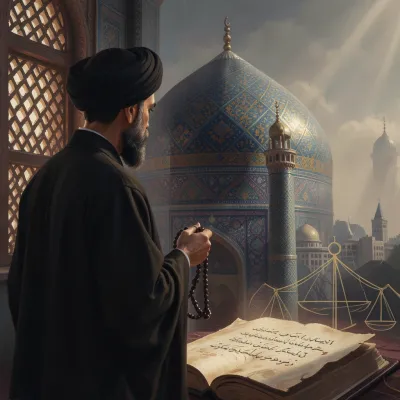
*Religions and State Authority: Shiism, Clergy, and Governance in Iran* examines the theological and institutional evolution of the Islamic Republic, tracing the transition of Twelver Shiism from a tradition of political quietism to a framework for modern statecraft. The book argues that the Iranian state is not a static theocracy but a dynamic hybrid system that seeks to reconcile divine sovereignty with popular participation and administrative necessity. Central to this architecture is the doctrine of *velayat-e faqih* (guardianship of the jurist), which transformed the clergy from moral custodians into sovereign rulers, institutionalized through the powerful office of the Supreme Leader and oversight bodies like the Guardian Council and the Assembly of Experts.
The text details how religious authority is operationalized across various sectors, including a judiciary rooted in Islamic criminal law, a "sermonic state" facilitated by national Friday prayer networks, and a "political economy of piety" managed by massive charitable foundations (*bonyads*). It highlights the symbiotic yet tense relationship between the state and the traditional clerical seminaries (*hawza*) of Qom and Najaf, noting how the state utilizes religious legitimacy to mobilize the IRGC and Basij as ideological vanguards. These institutions collectively ensure that sharia remains the primary filter for legislation, education, and social morality, while allowing for pragmatic flexibility through the principle of *maslahat* (public interest).
Finally, the book explores the internal doctrinal debates between Reformists, Pragmatists, and Principlists, illustrating how clerical authority is constantly contested and redefined from within. As the state navigates generational shifts, economic pressures, and technological change, it maintains a managed pluralism that allows for incremental adaptation without abandoning its foundational religious claims. The summary concludes that the future of clerical authority in Iran depends on its continued ability to balance the rigidity of sacred law with the fluid demands of a modern, globalized society, remaining a resilient but perpetually renegotiated experiment in religious governance.
What You'll Find Inside:
- The book explains how the doctrine of velayat-e faqih (guardianship of the jurist) evolved from classical Shiite debates about authority during the Imam's occultation to become the constitutional foundation of Iran's Islamic Republic.
- It details how Iran's governance system balances divine sovereignty with popular participation through institutions like the Guardian Council (which vets legislation for sharia compliance) and the Assembly of Experts (which selects and supervises the Supreme Leader).
- The work examines the clerical establishment's internal dynamics, including the marjaʿiyya network of senior jurists, the hawza seminaries of Qom and Najaf, and the ongoing debates between reformist, pragmatist, and principlist factions.
- It analyzes how clerical authority extends beyond formal institutions into everyday life through bonyads (religious endowments), IRGC/Basij security forces, Friday prayer networks, and state-controlled media and education systems.
- The book explores Iran's transnational Shiite influence and how the Islamic Republic uses religious authority to shape regional policy while managing tensions between ideological principle and pragmatic governance.
Who's It For:
This book is intended for scholars, students, and professionals interested in Middle Eastern politics, Islamic studies, comparative government, and religion-state relations. It will particularly benefit those seeking to understand Iran's unique political system where Twelver Shiism has been institutionalized as the basis of governance. Researchers focusing on constitutional design, judicial systems, or the role of religious authority in modern states will find valuable insights into how Iran balances theological principles with practical statecraft. The book also serves policymakers and analysts working on Iran-related issues who need a deep understanding of the country's internal power structures, doctrinal debates, and institutional mechanisms.
Author:
Published By:
Date Published:
April 30, 2026
Type:
Nonfiction
Language:
English
Word Count:
69,795 words
Reading Time:
4 hours 53 minutes
Sample:
MixCache.com Total Access
Get unlimited access to this book + all books published by MixCache.com for $11.99/month
Subscribe to MTAOr purchase this book individually below
Order:
Buy the Religions and State Authority: Shiism, Clergy, and Governance in Iran ebook on MixCache.com:
Buy Now
Full ebook will be available immediately
- read online or download as a PDF file.
$5 account credit for all new MixCache.com accounts, usable toward any ebook purchase!*






Ratings & Reviews
Ask Questions About This Book
Have a question about the content? Ask our AI assistant!
Start by asking a question about "Religions and State Authority: Shiism, Clergy, and Governance in Iran"
Example: "Does this book mention William Shakespeare?"
Thinking...