Browse by Category
Fiction
- Action & Adventure
- African American
- Anthologies
- Children's Fiction
- Classics
- Comics & Graphic Novels
- Coming of Age
- Contemporary
- Cultural & Regional
- Drama
- Erotica
- Fantasy
- General
- Historical Fiction
- Horror
- Humor & Satire
- Literary Fiction
- Mystery, Thriller & Suspense
- Poetry
- Religious & Inspirational
- Romance
- Science Fiction
- Short Stories
- War & Military
- Westerns
- Women's Fiction
- Young Adult
Non-Fiction
- Antiques & Collectibles
- Arts & Photography
- Biographies & Memoirs
- Business & Money
- Children's Non-Fiction
-
Computers & Technology
- Artificial Intelligence
- Computer Science
- Cybersecurity & Cryptography
- Data Science & Analytics
- Databases & Big Data
- Game Development & Design
- General
- Hardware & DIY
- Mobile App Development
- Networking & Cloud Computing
- Operating Systems
- Programming
- Robotics
- Software
- Software Engineering
- User Experience (UX) & Design
- Web Development & Design
- Cooking, Food & Wine
- Crafts, Hobbies & Home
- Education & Teaching
- Engineering
- General
- Health, Fitness & Dieting
-
History
- African History
- African History - North Africa
- African History - Sub-Saharan Africa
- American History
- American History - 20th Century
- American History - Civil War
- American History - Colonial Period
- Ancient History
- Asian History
- Asian History - China
- Asian History - India
- Asian History - Japan
- Asian History - Southeast Asia
- European History
- European History - Ancient Greece
- European History - Ancient Rome
- European History - Medieval
- European History - Modern
- European History - Renaissance
- General
- Middle Eastern History
- Military History
- Military History - Aviation
- Military History - Naval
- Social & Cultural History
- World History
- Humor & Entertainment
- Industrial Technology
- Language Learning
- Law
- LGBTQ+ Non-Fiction
- Literary Criticism
- Medical Books
- Parenting & Relationships
- Philosophy
- Politics & Social Sciences
- Reference
- Religion & Spirituality
-
Science & Math
- Agricultural Sciences
- Astronomy & Space Science
- Behavioral Sciences
- Biological Sciences
- Botany & Plant Science
- Chemistry
- Earth Sciences
- Engineering - Chemical
- Engineering - Civil
- Engineering - Electrical
- Engineering - Mechanical
- Environment
- General
- Geology
- Mathematics
- Nature & Ecology
- Oceanography
- Paleontology
- Physics
- Statistics
- Self-Help
- Sports & Outdoors
- Study Aids
- Sustainability & Green Living
- Textbooks
- Transportation
- Travel
- True Crime
- Urban Planning & Development
- Veterinary Medicine
- Writing & Publishing
Jump to Section

Want unlimited access to all books published by MixCache.com (plus their audiobooks)? Try MixCache.com Total Access. Look for the MTA badge on book covers to identify included titles.
Access to infinite ebooks: Don't see the book you want? Suggest it and we'll create it (free!) for you from scratch with our powerful AI book writer. Then read it with MTA - besides profiting from any sales it makes!
Following the Money: Corruption, Transparency and Anti-Corruption Reforms in Europe
MTA
A practical manual on diagnosing corruption risks and implementing transparency measures across public institutions
About this book:
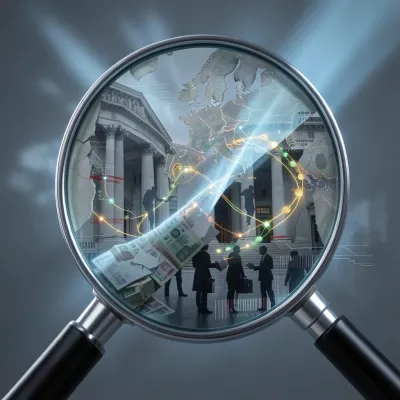
*Following the Money: Corruption, Transparency and Anti-Corruption Reforms in Europe* is a comprehensive manual designed for practitioners to move beyond theoretical anti-corruption concepts and toward the implementation of measurable, data-driven reforms. The book emphasizes that corruption in Europe often hides within opaque ownership structures and complex procurement systems, suggesting that the most effective way to combat wrongdoing is to "follow the money" through integrated digital oversight. It provides a strategic framework built on three pillars: meaningful transparency (such as beneficial ownership registers), functional integrity systems (including whistleblower protections), and accountability mechanisms that utilize forensic analytics to detect fraud and collusion.
The text provides a detailed roadmap for diagnosing and mitigating risks across high-stakes sectors, including public procurement, healthcare, infrastructure, and state-owned enterprises. By leveraging the Open Contracting Data Standard (OCDS) and cross-referencing asset declarations with company registries, the book demonstrates how practitioners can identify "red flags" like bid-rigging or conflicts of interest. It argues that the digital age offers unprecedented opportunities for oversight through civic-tech tools, dashboards, and crowdsourcing, which democratize the auditing process by allowing journalists and civil society to participate in monitoring public expenditure.
Beyond technical solutions, the manual addresses the complex institutional and human challenges of reform. It explores the nuances of international obligations under UNCAC, GRECO, and EU law, while highlighting the "implementation gap" that exists when strong laws are not backed by political will or administrative capacity. The final chapters focus on change management, stressing that for reforms to "stick," they must be institutionalized through continuous training, professionalized civil service, and robust monitoring and evaluation (M&E) frameworks. Ultimately, the book asserts that anti-corruption is a continuous cycle of diagnosis and iteration aimed at making corruption costlier and more difficult to hide.
What You'll Find Inside:
- Practical frameworks for diagnosing corruption risks across key sectors including public procurement, healthcare, infrastructure, and local government
- Step-by-step guidance on designing and implementing transparency systems such as asset declarations, beneficial ownership registers, and open contracting data standards
- How to build effective integrity systems through whistleblower protection mechanisms, conflict of interest management, and lobbying transparency
- Implementing accountability mechanisms including cross-border investigations, sanctions frameworks, and impact evaluation methodologies
- Real-world implementation roadmaps covering change management, training, monitoring & evaluation, and adapting reforms to local contexts
Who's It For:
This book is designed for anti-corruption practitioners, government officials, and reformers working within European institutions who need actionable tools rather than theoretical frameworks. It will particularly benefit those responsible for implementing transparency measures, designing integrity systems, or overseeing anti-corruption strategies at national, regional, or local levels. Civil society organizations, journalists, and international donors supporting governance reforms in Europe will also find practical guidance for monitoring and advocating for effective anti-corruption measures.
Author:
Published By:
Date Published:
April 30, 2026
Type:
Nonfiction
Language:
English
Word Count:
50,329 words
Reading Time:
3 hours 31 minutes
Sample:
Order:
Order Following the Money: Corruption, Transparency and Anti-Corruption Reforms in Europe (Paperback) on MixCache.com:
Buy NowPrint copy is made to order and ships worldwide. Includes the ebook free, ready to read instantly.
$5 account credit for all new MixCache.com accounts, usable toward any ebook purchase!*