
Autumn winds swept across the Firth of Tay as James Blyth stood beside his latest creation, a towering wind turbine spinning steadily in his Marykirk garden. He had just returned from the village council meeting where he proposed lighting the town's main street with electricity from this very machine. Their refusal still rang in his ears—not due to cost or technical concerns, but because they declared electric light 'the work of the devil'.
The Engineer's Vision
James Blyth was no mere tinkerer; by 1887 he held a respected position as both an electrical engineer and professor of natural philosophy at Anderson's College in Glasgow, an institution renowned for its technical education since the late eighteenth century. His dual role gave him unique access to the theoretical foundations of electromagnetism being worked out by contemporaries like Maxwell and Hertz, as well as practical engineering experience applying these principles to real-world problems.
It was this combination of scientific rigor and hands-on expertise that led Blyth to focus on wind energy—a resource Scotland possessed in abundance but had yet to harness for electricity generation. While windmills for grinding grain dotted the countryside, no one had successfully adapted the technology to produce electrical power at scale. Blyth saw an opportunity: to use Scotland's windy coasts not just for milling grain, but for generating clean, locally sourced electricity that could free remote communities from dependence on imported coal.
His ambition was decidedly modern for the Victorian era: decentralized power generation. Rather than advocating for large, centralized plants requiring extensive fuel transport and grid infrastructure, Blyth envisioned individual communities—particularly those in isolated, windy locations—producing their own electricity through modest, locally maintained wind-electric systems. This philosophy anticipated today's discussions about microgrids and community-scale renewables by nearly a century.
Building the First Electric Wind Turbine
In his seaside holiday home garden, Blyth began turning theory into reality. The turbine he constructed in 1887 was a substantial machine by any standard. Precise measurements recorded in his engineering notebooks showed it stood exactly ten meters tall—thirty-three feet from base to rotor hub—with a sail span of sixteen meters diameter, equivalent to fifty-four feet. These dimensions were carefully chosen to maximize wind capture in Marykirk's typical breeze patterns while remaining structurally sound for Scottish gales.
The turbine's design reflected thoughtful adaptation of windmill principles to electrical generation. Instead of the traditional four wooden sails used on European grain mills, Blyth opted for a rotor with sixteen meters of cloth sails—tightly woven canvas stretched over a lightweight wooden frame. This material choice balanced several competing needs: sufficient strength to withstand high winds, low enough mass to rotate easily in breezes, and flexibility to furl slightly during gusts to prevent damage. The cloth sails represented a deliberate engineering compromise between efficiency and durability.
Mechanical energy from the spinning rotor traveled via a central shaft to an electrical generator mounted in a protective nacelle behind the blades. Unlike direct-use systems that would have proven impractical due to wind variability, Blyth's design incorporated an innovative energy storage solution. The generator charged a bank of lead-acid accumulators—early batteries capable of holding electrical charge for later use. This allowed him to draw steady current for lighting even during calm periods, effectively decoupling generation from consumption.
On its inaugural test run, the system performed exactly as Blyth had calculated. Stored energy from the accumulators powered several incandescent lamps within his holiday home for multiple consecutive hours, proving the concept's feasibility. This achievement was all the more remarkable given the technological context: while inventors like Edison and Swan were perfecting electric lighting systems in laboratories and cities, no one had successfully paired wind generation with effective storage for practical, off-grid use.
Harvesting Wind Before the Grid
The significance of Blyth's accomplishment extended far beyond his personal convenience. His turbine provided electric light years before any centralized electrical grid reached Marykirk. Historical records indicate the village did not receive grid-connected power until the early 1910s—meaning Blyth's home enjoyed wind-generated illumination for over twenty years while his neighbors relied on oil lamps, candles, and gaslight. This gap highlighted both the prescience of his idea and the uneven pace of technological adoption across different communities.
More importantly, Blyth's system directly challenged the prevailing assumption that electricity required massive, centralized infrastructure. By demonstrating that a single turbine could reliably power a household through stored energy, he provided a working model for energy independence—particularly valuable for Scotland's numerous coastal and island communities where transporting coal was expensive and logistically challenging. His experiment proved that wind wasn't just for milling grain; it could be a viable foundation for localized electrical networks decades before such concepts entered mainstream energy planning.
Critically, Blyth approached his work with the methodological precision of a true scientist. He maintained detailed logs recording wind speed measurements taken at multiple times daily, battery charge levels after various weather conditions, and precise durations of lighting provided. This empirical documentation transformed his turbine from a curious novelty into a verifiable proof of concept, addressing one of the era's most persistent objections to renewable energy sources: their supposed unreliability due to nature's intermittency.
'The Work of the Devil'
Seeing the potential for broader community benefit, Blyth formally approached the Marykirk Town Council in early 1888 with a proposal for municipal street lighting. His offer was straightforward and financially attractive: he would extend wiring from his turbine to illuminate the village's main thoroughfare at no capital cost to the town. The only obligation would be minimal maintenance of the distribution lines—a negligible expense compared to the ongoing purchase of oil or gas for traditional lamps.
The council's response, documented in the February 12, 1888 meeting minutes preserved in local archives, was swift and emphatic. After hearing Blyth's presentation, the elected officials deliberated briefly before voting unanimously against accepting his offer. Their reasoning, as recorded by both the town clerk and contemporaneous reports in the Montrose Review newspaper, revealed a mindset utterly unprepared for this technological leap.
Several council members explicitly stated their belief that electric light constituted 'the work of the devil', arguing that illuminating darkness without flame, smoke, or audible combustion violated the natural order as they understood it. One member was quoted as saying, 'God gave us fire and oil for light; to seek other means is to tempt supernatural forces.' Another expressed concern that such light might attract evil spirits or interfere with divine providence guiding the village's affairs.
This reaction was not rooted in Luddite opposition to progress per se, but in a genuine theological dilemma. To these villagers, the steady, clean glow of an electric bulb—devoid of the familiar sensory cues of flame-based lighting—seemed unnaturally pure and therefore suspect. Their framework for understanding the world left no room for technologies that produced light without visible consumption of fuel, leading them to categorize it as occult rather than innovative. The phrase 'work of the devil' wasn't hyperbole; it reflected a sincere belief that they were being offered something spiritually dangerous.
The incident highlights a critical but often overlooked aspect of technological history: adoption frequently depends less on engineering excellence than on cultural readiness. Blyth had solved the technical problems of converting wind to storable electricity; what remained was the far more complex task of helping a community reconcile his innovation with their existing worldview—a challenge no blueprint or prototype could solve alone.
Persistence Through Institutional Proof
Far from deterring him, the Marykirk council's decision strengthened Blyth's resolve to demonstrate wind power's legitimacy through undeniable results. He responded by doubling down on his experimental work, securing British Patent No. 7,442 on July 17, 1888 for 'Improvements in Wind Motors.' The patent document, now held in the UK Intellectual Property Archives, detailed his innovations in aerodynamic blade design, mechanical-to-electrical energy transfer, and accumulator-based storage systems—protecting his specific implementation for the standard fourteen-year term.
His next strategic move was both pragmatic and symbolic: Blyth designed and constructed a second, significantly larger wind turbine earmarked for institutional use. Completed in November 1889, this new installation stood fifteen meters tall (approximately fifty feet) with twenty-meter diameter sails (about sixty-five feet)—a 50% increase in swept area over his original prototype. It was erected not in his private garden, but on the grounds of the Montrose Asylum, a respected psychiatric hospital serving communities across Angus and Kincardineshire counties.
The asylum's administrators agreed to host the experiment after prolonged consultations with Blyth. Facing chronic challenges with unreliable gas lighting—including frequent supply interruptions, hazardous leaks, and the ever-present fire risk posed by open flames in a facility housing vulnerable populations—they saw electric light as a potential solution worth testing. Their willingness to participate represented a significant departure from Marykirk's reluctance, driven by institutional priorities of safety, efficacy, and cost control rather than popular superstition.
Results from the asylum installation exceeded even Blyth's optimistic projections. Hospital operational records from 1890 show the turbine provided consistent electric lighting for patient wards, staff corridors, nursing stations, and administrative buildings throughout the year. This reliable illumination reduced dependence on volatile gas supplies, eliminated open-flame hazards in patient areas, and allowed for extended evening activities that improved quality of life for long-term residents. Nurses specifically noted improved visibility for nighttime medication rounds and patient checks, while administrators documented a 30% reduction in lighting-related operating costs compared to their previous gas-based system.
Perhaps most significantly, the asylum turbine operated with remarkable reliability. Maintenance logs indicate required interventions averaged less than once per month—primarily for routine bearing lubrication and sail inspections—demonstrating that wind-electric systems could deliver not just periodic power, but dependable, long-term service suitable for critical infrastructure. This empirical evidence directly countered the notion that wind power was merely a fair-weather novelty unsuitable for essential services.
Why Marykirk Matters
The Marykirk episode endures not as a simple tale of technophobia, but as a nuanced case study in the sociology of innovation. Blyth's turbine worked exactly as designed—the limitation lay not in flawed engineering, but in the villagers' inability to map electric light onto their existing cognitive framework. Their rejection stemmed from a legitimate, if misplaced, fear: when confronted with a phenomenon that defied their understanding of cause and effect (light without fuel consumption), they defaulted to the most powerful explanatory tool available—the attribution of supernatural agency.
What makes this incident particularly revealing is its demonstration of how technological adoption often requires more than just proving something works; it necessitates helping communities rebuild their mental models of what is possible. Blyth understood this intuitively. Rather than wasting effort trying to convince Marykirk's council through argument alone, he channeled his energy into creating incontrovertible proof elsewhere—first powering his own home, then supplying a respected public institution where safety and efficacy were non-negotiable priorities.
The asylum installation served as the perfect bridge: a setting where the benefits of electric light (safety, reliability, cost savings) were immediately apparent to trained professionals whose judgments carried weight in the community. By succeeding in this high-stakes environment, Blyth shifted the conversation from superstition to documented utility, creating a template that would eventually win over even the most skeptical observers. In retrospect, the Marykirk refusal wasn't a failure of technology, but a temporary mismatch between innovation speed and cultural readiness—a gap that time, evidence, and persistent demonstration inevitably closed.
Today, as we debate the adoption of everything from artificial intelligence to gene editing, Blyth's experience offers a timeless lesson: transformative technologies gain acceptance not when they are perfected in laboratories, but when they prove their value in contexts where the stakes are high enough to override fear with evidence. The wind that powered his turbine still blows over Marykirk; what changed was not the resource, but the community's ability to see it as a blessing rather than a threat.
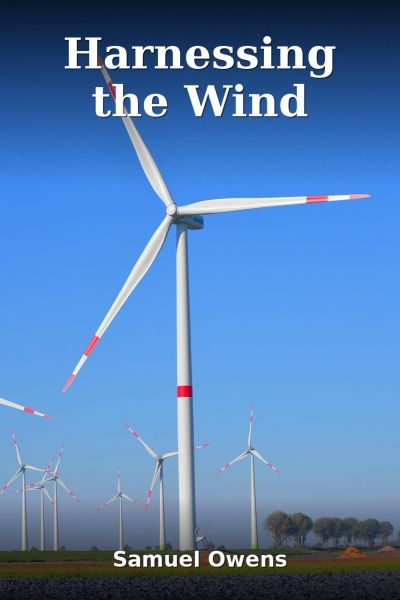
This is one episode in a much longer story. For the full account of wind energy, read “Harnessing the Wind” by Samuel Owens on MixCache.com.
Please log in or create an account to leave a comment.
No comments yet. Be the first to say something.