
On a crisp October morning in 1981, the telephones at Marathon Oil's Findlay, Ohio headquarters began ringing with a rhythm that signaled trouble. Mobil Corporation, one of the legendary "Seven Sisters" that dominated global oil, had just announced a hostile tender offer for Marathon at $85 a share. The bid valued the company at roughly $4.5 billion — a price Marathon's board considered a theft of its shareholders' assets. By nightfall, the independent oil company that had survived the 1911 Standard Oil breakup, the Great Depression, two world wars, and the 1970s oil crises found itself fighting for its life against a predator four times its size.
The Raider at the Gate
Mobil's move was hardly a surprise to anyone tracking the energy sector in the early 1980s. Oil prices had soared after the Iranian Revolution, and cash-rich majors were hunting for reserves. Marathon, with its prized North Sea fields, a growing Gulf of Mexico position, and a Midwest refining and marketing network anchored by the Speedway brand, was a plum target. Its stock, however, had not kept pace with its asset value, leaving it vulnerable.
Harold D. Hoopman, Marathon's president and chief executive, had taken the helm just a year earlier. A company man with three decades in the business, he faced a stark choice: accept Mobil's offer and watch Marathon disappear into a larger empire, or find a way to stay independent. The board rejected Mobil's bid unanimously, calling it "inadequate and not in the best interests of shareholders." But rejection alone would not stop a determined raider. Marathon needed a white knight — a friendly buyer willing to pay a premium and preserve the company's identity.
A Steelmaker's Gamble
The search was frantic and discrete. Investment bankers contacted major oil companies, but most were either unable or unwilling to challenge Mobil. Then, unexpectedly, U.S. Steel Corporation emerged. The Pittsburgh-based steel giant, struggling with foreign competition and a cyclical domestic market, had been quietly looking to diversify. Its chairman, David M. Roderick, saw in Marathon a source of stable cash flow and growth that steel could no longer guarantee.
U.S. Steel was an unconventional savior. It knew little about running an oil company, and Wall Street questioned the strategic logic of a steel-oil marriage. But Roderick moved with surprising speed. Within weeks, U.S. Steel had arranged financing and, on November 16, 1981, announced a counteroffer: $125 per share in cash and notes, valuing Marathon at $6.2 billion — a 47 percent premium over Mobil's bid. The deal was structured as a merger, not a tender offer, which gave Marathon's board the cover to recommend it.
Mobil, facing a significantly higher price and the prospect of a protracted fight, withdrew its offer. Marathon's shareholders overwhelmingly approved the U.S. Steel merger. By early 1982, the Ohio-born oil company had become the energy division of a new holding company called USX Corporation.
Life Inside the Conglomerate
For Marathon's employees, the transition was jarring. One day they worked for an independent oil company with a century of heritage; the next, they answered to steel executives in Pittsburgh who measured success in tons of hot-rolled coil. Yet the arrangement brought immediate benefits. USX's deep pockets funded the massive capital requirements of Marathon's North Sea developments, particularly the Brae field, which came online in the mid-1980s after billions in investment. Marathon's upstream portfolio expanded further into the Gulf of Mexico and West Africa.
Domestically, the refining and marketing operations continued their steady evolution. The Speedway convenience-store chain grew aggressively, funded by USX capital. Marathon's refineries were upgraded to handle heavier crudes and meet tightening environmental rules. The midstream pipeline network, always a quiet strength, expanded to connect new supply basins to the refining system.
Still, the cultural fit remained awkward. USX's steel division cycled through downturns, dragging down the consolidated stock price. Analysts argued that the market persistently undervalued Marathon's energy assets because they were buried inside a steel conglomerate. The tracking stock USX issued for its energy group in 1990 was a partial remedy, but it fell short of true independence.
The Long Road Back
By the late 1990s, the logic of the marriage had frayed. Activist investors pressed for a full separation. USX management, after years of resistance, concluded that the sum of the parts was worth more than the whole. The spin-off, when it finally came in 2001, was a model of corporate surgery. Marathon Oil Corporation emerged as a pure-play exploration and production company, debt-free and armed with a global portfolio. USX, renamed United States Steel Corporation, returned to its roots.
The 1981 rescue had cost U.S. Steel a hefty premium, but it delivered nearly two decades of Marathon's cash flow and, crucially, preserved an American oil champion that might otherwise have been absorbed by a rival. When Marathon Oil rang the opening bell at the New York Stock Exchange on July 18, 2001, its market capitalization stood at roughly $8 billion — a validation, after twenty years, of the white knight's gamble.
A Different Kind of Independence
The episode reshaped Marathon in ways that still echo. The USX years taught the company to operate under a parent with different priorities, a lesson that informed the 2011 decision to split Marathon Oil from its downstream sibling, Marathon Petroleum Corporation. That later separation, unlike the 1981 rescue, was a strategic choice rather than a defensive necessity — but it bore the same imprint: a belief that focused, independent entities unlock value that conglomerates obscure.
Today, the Findlay headquarters is gone, moved to Houston after the 2011 split. The Speedway brand was sold to 7-Eleven for $21 billion in 2021. Marathon Petroleum, the downstream successor, is the largest refiner in the United States. Marathon Oil, the upstream successor, explores in four continents. Neither exists in the form that Hoopman defended in 1981. Yet the corporate DNA — the instinct to survive, adapt, and restructure — traces directly to the autumn a steelmaker wrote a $6.2 billion check to keep an oil company out of Mobil's hands.
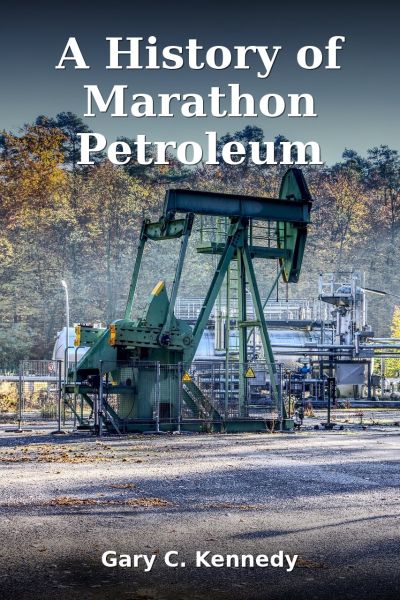
This is one episode in a much longer story. For the full account of the hostile takeover battle for Marathon Oil, read “A History of Marathon Petroleum” by Gary C. Kennedy on MixCache.com.
Please log in or create an account to leave a comment.
No comments yet. Be the first to say something.