
In the hours after a pope dies, the Vatican undergoes a transformation that has no parallel in any modern state. The Swiss Guard seals the entrances to the Sistine Chapel and the Domus Sanctae Marthae, the guesthouse where cardinals will live during the conclave. Then, on orders from the Vatican's security apparatus, the mobile phone networks that blanket Rome — and penetrate the microstate's open borders — are switched off inside those two buildings. For the duration of the election, the cardinals are cut off from the internet, from social media, from news alerts, and from any whisper of outside pressure. The blackout is total, deliberate, and temporary: a sovereign state voluntarily severing its own digital nervous system to protect a 13th-century ritual from 21st-century interference.
The protocol is not a relic. It was enforced during the 2013 conclave that elected Pope Francis and again in 2005 for Benedict XVI. The Vatican's Directorate of Telecommunications, which manages the city-state's internal networks and its fiber-optic links to Italian carriers, executes the shutdown in coordination with Italy's major mobile operators — TIM, Vodafone, Wind Tre, and Iliad. The order comes from the College of Cardinals themselves, acting through the Camerlengo, the cardinal who administers the Holy See during the sede vacante. The technical details are sparse by design, but the effect is absolute: no calls, no texts, no data. Even the cardinals' personal devices, brought from dioceses across the world, become inert bricks the moment they cross the threshold of the chapel or the guesthouse.
The Room Where It Happens
The Sistine Chapel is the conclave's beating heart. Michelangelo's ceiling looms above the cardinals as they cast ballots beneath the fresco of the Last Judgment. The chapel has no permanent telecommunications infrastructure; its thick Renaissance walls and leaded windows already dampen signals. But the Vatican takes no chances. Jamming equipment or localized network suppression — the exact method is never disclosed — ensures that not even a stray bar of 5G penetrates the space. The Domus Sanctae Marthae, a five-story guesthouse built in 1996, presents a harder target. It sits on the Vatican's southern edge, its windows facing Rome's bustling streets, fully exposed to Italian cell towers. Yet during the conclave, its 130 rooms become a Faraday cage. Cardinals eat, sleep, and pray there under a communications quarantine that extends to the building's landlines and Wi-Fi. The only permitted contact with the outside world is through the Vatican's own secured, monitored channels, controlled by the Secretary of State's office.
The blackout is not merely symbolic. In 2013, the Vatican confirmed that electronic sweeping devices were used to detect hidden microphones or recording equipment in the chapel and the Domus. The Swiss Guard, whose primary duty is the pope's personal security, extends its protection to the conclave's physical perimeter. The Gendarmerie, Vatican City's police force, manages access points and coordinates with Italian authorities to control the crowds in St. Peter's Square. But the communications blackout is an internal measure, a recognition that the greatest threat to the election's freedom is not a bug in the wall but a notification on a screen.
A Tradition Adapts
The conclave's secrecy rules date to the 13th century, when cardinals were locked in — cum clave, "with a key" — until they chose a pope. The communication blackout is the modern equivalent of that key. Pope John Paul II's 1996 apostolic constitution Universi Dominici Gregis mandated that cardinals "not communicate with anyone by letter, telephone, or any other means of communication" during the conclave. When the document was written, mobile phones were rare; by 2005, they were ubiquitous. The Vatican responded not by relaxing the rule but by hardening the technical enforcement. The 2013 conclave, the first after the smartphone era began in earnest, saw the blackout applied with full rigor.
Outside the sealed buildings, the Vatican's communications infrastructure operates normally. The Vatican Telephone Service, an IP-based system linking 5,000 internal extensions to Italian and international networks, keeps the Curia running. Vatican Radio and Vatican News continue broadcasting in dozens of languages. Poste Vaticane, the city-state's celebrated postal service, still moves mail through its yellow mailboxes in St. Peter's Square. The blackout is surgical: it targets only the conclave's physical footprint, and only for the days the cardinals are in session. Once white smoke rises from the chapel's chimney, the networks are restored. The new pope appears on the loggia, and within minutes his name trends worldwide on the very platforms that were silenced inside the Domus hours earlier.
The Only Room Offline
The blackout reveals a paradox at the heart of Vatican City. The state is one of the most connected places on earth: its ATMs offer Latin as a language option, its newspaper L'Osservatore Romano publishes digital editions, its media arm streams the Angelus to millions. Yet for a few days every decade or two, it creates the only deliberately offline room in the Western world. The cardinals — many of whom run dioceses with millions of followers on Twitter — submit to a discipline that no government, corporation, or university would impose on its leaders. They vote by handwritten ballot, burn the papers with chemical additives to produce black or white smoke, and wait for the Holy Spirit in a silence enforced by the deliberate absence of pings, vibrations, and alerts.
When the blackout lifts, the contrast is immediate. The pope's first tweet — or his first appearance on the Vatican News app — travels through the same Italian fiber that was momentarily severed inside the guesthouse. The world rushes back in. But for the brief period of the conclave, the smallest state in the world demonstrates a power no larger nation claims: the ability to unplug itself, completely and legally, in the name of a freedom that depends on silence.
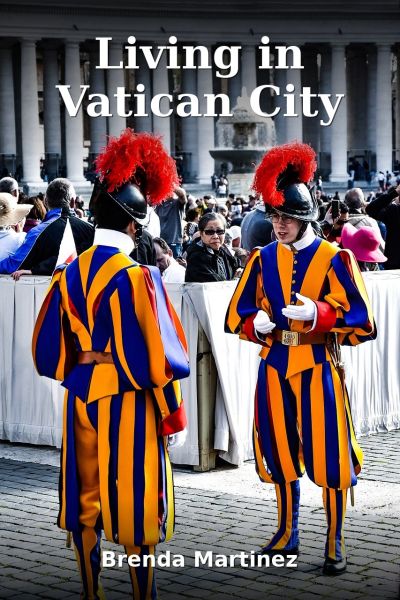
This is one episode in a much longer story. For the full account of life in Vatican City, read “Living in Vatican City” by Brenda Martinez on MixCache.com.
Please log in or create an account to leave a comment.
No comments yet. Be the first to say something.