
The house lights dim. A woman in a coarse 1850s dress — faded indigo, hem brushed with dust — walks onto the bare stage. She does not introduce herself. She does not explain the format. She simply begins to speak, her voice low and steady, about the night she crossed the Mason-Dixon line with eleven souls behind her and the hounds baying close enough to smell.
This is first-person historical interpretation: a performer who has spent years mastering every documented gesture, cadence, and silence of Harriet Tubman, now standing before a modern audience and refusing to break character. For the next hour, there is no lecturer, no slideshow, no mediating textbook. There is only the conductor herself, recounting the cold mud, the coded songs, the pistol she carried not for show but to threaten any fugitive who faltered and endangered the rest.
The Weight of the Research
Long before the costume goes on, the interpreter lives in archives. She reads Tubman's dictated memoirs, the testimonies of abolitionists who knew her, the reward posters that described her as "armed and dangerous." She studies the gait of a woman who suffered a traumatic brain injury in childhood — a blow from an overseer's weight that left her with lifelong seizures and visions. She learns to replicate the particular rasp of a voice damaged by childhood illness. She memorizes the routes, the safe houses, the signals: a quilt hung on a line, a lantern in a specific window, the owl call that meant "wait" versus the whippoorwill that meant "come."
Every prop is vetted. The pewter cup she drinks from matches excavated shards from a known Tubman site. The hymn she hums — "Wade in the Water" — is sung in the call-and-response style documented by the Fisk Jubilee Singers, not the polished concert versions taught in schools. When an audience member asks why she never learned to read, she answers as Tubman would: with a flash of wit about how reading passes was the master's trick, and she preferred to read the stars.
The Performance as Confrontation
The power of the form lies in its refusal to let history stay at a distance. When the interpreter describes the 1850 Fugitive Slave Act, she does not cite statutes. She tells of the night she drugged a baby with paregoric so its cries would not betray a hiding place in a Philadelphia attic. She speaks the name of the man who betrayed her parents to slave catchers, and her hands — roughened by years of demonstrating period chores — curl into fists.
Audience members report a physical reaction: held breath, tears that arrive before they can be suppressed. A middle-school teacher later writes that her students, usually restless during history units, sat motionless for the full sixty minutes. "They weren't learning about Harriet Tubman," she said. "They were in the room with her."
The Discipline Behind the Illusion
What looks like channeling is in fact a rigorous craft. The interpreter must field questions — "Did you ever meet Lincoln?" "How did you navigate without a map?" — without ever stepping out of 1860. She cannot reference the Emancipation Proclamation before January 1863. She cannot know the war's outcome. When a child asks if she's a ghost, she answers, "Child, I'm standing right here. Ghosts don't have rheumatism."
This discipline extends to the uncomfortable. Tubman held views on gender, religion, and violence that complicate modern hero narratives. The interpreter does not soften them. She portrays a woman who believed God spoke directly to her, who carried a revolver and threatened to shoot any runaway who wanted to turn back, who worked with John Brown and mourned his failure at Harpers Ferry. The goal is not comfort but truth — the messy, specific truth of a human being who changed history without waiting for permission.
The Living Bridge
After the performance, the interpreter finally steps out of character. She answers logistical questions: where to find the primary sources, how she constructed the dress, why she chose this particular episode from Tubman's nineteen trips south. But the most important exchange has already happened — the moment when a Black teenager in the front row met the interpreter's eyes during the story of the Combahee River Raid, and something passed between them that no textbook could deliver.
First-person interpretation is the most demanding form of historical storytelling. It requires the scholar's accuracy, the actor's craft, and the teacher's patience — all fused in real time, with no edit button. When it works, it does not merely inform. It haunts. The audience leaves not having "learned about" the Underground Railroad, but having felt the chill of the Maryland swamps, heard the hounds, and understood, in their bones, what it costs to choose freedom over survival.
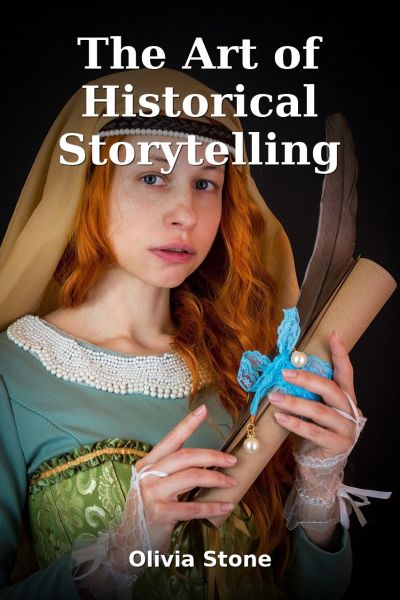
This is one episode in a much longer story. For the full account of historical storytelling methods, read “The Art of Historical Storytelling” by Olivia Stone on MixCache.com.
Please log in or create an account to leave a comment.
No comments yet. Be the first to say something.