
The statue of Joseph Stalin stood on a pedestal near the Vere River in Tbilisi, a colossus of bronze gazing out over the city that had given the Soviet dictator his name. On March 4, 1956, thousands of Georgians assembled around it. They carried portraits of Ioseb Jughashvili, the cobbler's son from Gori who had risen to rule an empire. They brought wreaths and banners mourning his death three years earlier. They came, they said, to honor a fellow Georgian.
Three days later, the same crowd was chanting "Free Georgia!" and "Down with the Russian Empire!" Soviet troops opened fire with heavy machine guns. The protest that began as a tribute to a tyrant ended as the bloodiest expression of Georgian nationalism in decades, leaving scores dead and a myth shattered.
The Secret Speech That Shook the Caucasus
On February 25, 1956, Nikita Khrushchev delivered his "Secret Speech" to the 20th Congress of the Communist Party, denouncing Stalin's cult of personality and the purges that had devoured millions. The speech was not meant for public ears, but its contents leaked instantly across the Soviet bloc. In Moscow, it sparked debate. In Tbilisi, it struck a nerve unlike anywhere else.
Georgia was Stalin's homeland. He had been born Ioseb Besarionis dze Jughashvili in the small town of Gori in 1878, educated at the Tiflis Spiritual Seminary, and cut his revolutionary teeth in the oil fields and railways of the Caucasus. For many Georgians, whatever his crimes, Stalin remained proof that a son of their small, ancient nation could stand at the center of world history. To hear him now vilified by a Russian successor felt like a second occupation.
The Georgian Communist Party leadership, cautious after decades of purges, tried to manage the fallout. They organized official mourning ceremonies for the third anniversary of Stalin's death on March 5, hoping to channel grief into controlled ritual. Instead, the population seized the moment.
The Vere River Gathering
On March 4, students from Tbilisi State University began marching toward the Stalin monument near the Vere River. They were joined by factory workers, teachers, pensioners — a cross-section of the city. By afternoon, the crowd numbered in the tens of thousands. Speakers mounted the statue's base, eulogizing Stalin as a great Georgian, a builder of socialism, a victor over fascism. The atmosphere was solemn, even reverent. Portraits of Lenin and Stalin hung side by side. The Soviet anthem was sung.
But beneath the official rhetoric, a different current ran. Students whispered about the secret speech. They passed handwritten leaflets quoting Khrushchev's accusations. By the second day, the portraits of Lenin began to disappear from the crowd. The speeches changed tone. Speakers started asking why Georgians should obey a Kremlin that now spat on their greatest son. If Stalin was a criminal, what was the system that made him? And if the system was rotten, why should Georgia remain in it?
From Mourning to Rebellion
On March 7, the protest swelled to perhaps 50,000. The slogans on banners shifted. "Long Live Stalin" stood beside "Long Live Independent Georgia." A student climbed the statue and draped the Georgian tricolor — the flag of the 1918-1921 Democratic Republic, banned since the Soviet conquest — over the bronze shoulders. The crowd roared. Someone shouted "Down with the Russian Empire!" and the chant spread like fire.
The transformation was dizzying. These were not dissidents in the Western sense. Many marchers genuinely revered Stalin. They had grown up under his portrait, credited him with victory in the war, saw him as theirs. Yet in the span of days, grief for a dictator had mutated into a demand for national sovereignty. The logic was emotional, not ideological: if Moscow could betray Stalin, it could betray Georgia. The only safety lay in self-rule.
Georgian Communist officials pleaded with the crowd to disperse. They warned of consequences. The protesters refused. By March 8, the demonstrations had spread to Kutaisi, Batumi, and Gori itself. In Gori, marchers stormed the local party headquarters. The authorities lost control.
March 9
Before dawn on March 9, Soviet troops moved into Tbilisi. They were not local garrison units — those were deemed unreliable — but divisions brought in from the North Caucasus and Transcaucasian Military District. Tanks positioned themselves on Rustaveli Avenue. Armored personnel carriers blocked the approaches to the Vere River. Machine gun nests were set up on rooftops overlooking the square.
At 9:00 a.m., a loudspeaker announced that the demonstration was illegal and ordered the crowd to disperse within fifteen minutes. The protesters, many of them teenagers, linked arms and sang the Georgian national anthem, "Dideba." They did not move.
At 9:15, the order to fire was given. Witnesses described not warning shots but sustained bursts from heavy machine guns into the dense mass of people. Some troops used submachine guns at close range. Others drove armored vehicles into the crowd. The shooting lasted twenty minutes.
Official Soviet figures later admitted to twenty-two dead and forty-seven wounded. Georgian historians and survivors estimate the toll at between one hundred and two hundred killed, with hundreds more injured. The bodies were loaded onto trucks and driven away before families could claim them. Arrests followed for weeks. Students were expelled, workers fired, party members purged. The statue of Stalin was quietly removed from the Vere River square that night, never to return.
The Long Shadow
The Tbilisi Massacre of 1956 did not spark a revolution. The Soviet state was too strong, the fear too fresh. But it broke something essential in the compact between Georgia and the Kremlin. For a generation of Georgians who had come of age under Stalin, the events of March 1956 revealed that loyalty to the Soviet project offered no protection — not even for their own idol.
The protest's leaders who survived prison became the nucleus of the dissident movement that re-emerged in the 1970s. The memory of the dead at the Vere River fueled the massive language protests of April 1978, when Georgians again filled the streets and forced Moscow to retreat. It echoed again on April 9, 1989, when Soviet troops again killed peaceful demonstrators in Tbilisi — this time twenty-one dead, and the independence movement became unstoppable.
Today, the spot near the Vere River where the statue stood is an ordinary intersection. No plaque marks the events of March 1956. But in Georgian memory, the days when they marched for Stalin and found freedom remain a founding paradox of the modern nation — the moment a people discovered that the path to their own dignity lay not in the glory of their most famous son, but in the rejection of the empire that had claimed him.
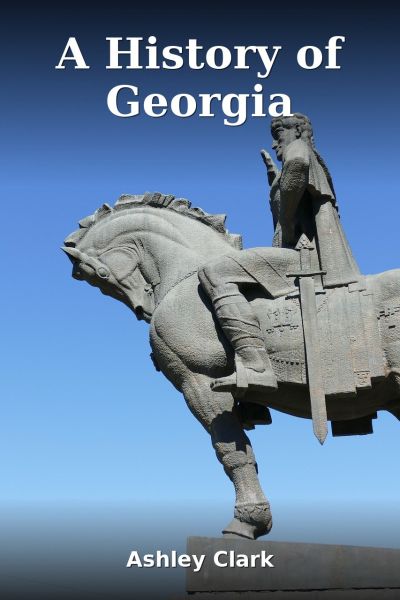
This is one episode in a much longer story. For the full account of the history of Georgia, read “A History of Georgia” by Ashley Clark on MixCache.com.
Please log in or create an account to leave a comment.
No comments yet. Be the first to say something.