
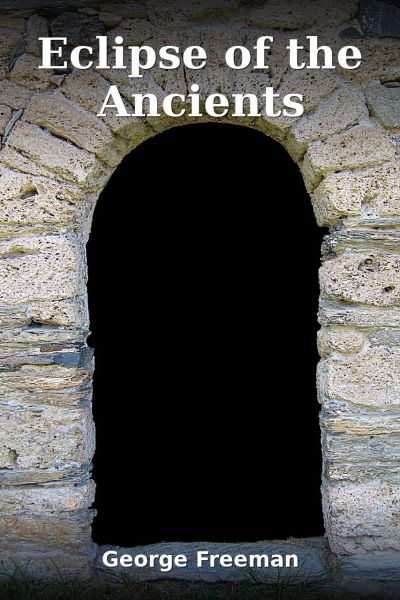
Most space operas begin with a ship, a weapon, or a prophecy. Eclipse of the Ancients begins with a brush and a dustpan. Talia Rosen is an interstellar archaeologist kneeling in the ochre sands of Aurelion IV, uncovering a seamless metallic orb that hums with secrets. What she finds isn't just another artifact — it's a distress signal millennia old, a key to a galaxy-spanning network built by a vanished civilization to warn the future about a recurring cosmic catastrophe. The novel builds its stakes not from battle fleets but from the slow, careful work of deciphering, then accelerates into a race against a literal eclipse engineered by entities called the Harvesters.
What the book is about
Eclipse of the Ancients is a 25-chapter science fiction novel that blends archaeological mystery with escalating cosmic conflict. The story follows Talia Rosen and her eclectic crew — pilot Rix, xenolinguist Jax, astrophysicist Aris, and K'tharr warrior Kael — as they flee corporate pursuers and Harvester fleets while activating Ancient relays across uncharted sectors. The narrative moves through distinct phases: discovery on Aurelion IV (Chapters 1–3), first contact with an Ancient archive (Chapters 4–6), defense of that archive against rival factions (Chapters 7–9), the burden of inherited knowledge (Chapters 10–12), deeper revelations about the Harvesters' nature and the Ancients' counter-plan (Chapters 13–16), diplomatic gambits with a galactic emperor and Harvester dissenters (Chapters 17–19), a surreal journey through wormhole labyrinths (Chapter 20), a climactic confrontation at the Harvesters' fortress world (Chapters 21–23), and a resolution that transforms the galaxy's power structure (Chapters 24–25). The prose favors clear, functional description over lyricism, and the dialogue carries exposition naturally through character voices — Jax's nervous technical chatter, Aris's measured wonder, Kael's grim pragmatism. Readers who enjoy competence porn, ancient-mystery puzzles, and ensemble dynamics will find the structure rewarding.
Archaeology as communion, not extraction
The novel's most distinctive idea appears in the Introduction and Chapter 1: archaeology as "an act of communion, a bridge between what was and what might become." Talia doesn't treat sites as resource nodes; she listens. When the orb pulses in response to her touch — "The moment her finger connected with the surface, the patterns intensified, swirling faster, the violet light brightening" — it's not a plot contrivance but a consequence of her methodology. The Ancients designed their technology to respond to "a resonance of purpose" rather than mere bio-signatures, as Aris later realizes. This reframes the typical "chosen one" trope: Talia earns her connection through decades of "deciphering archaeological whispers." The book respects the discipline enough to show the grind — dust, funding skepticism, sensor noise — before the breakthrough.
The Harvesters as ecological catastrophe, not cartoon villains
Chapter 5's archive sequence reveals the Harvesters not as evil for evil's sake but as a confederation driven by "a desperate, ancient fear of their own impending energetic collapse." Their eclipse weapon — "a colossal, artificial construct" that "weaponize[s] a celestial event" — harvests not just stellar energy but "the living beings within those systems… their minds and spirits somehow processed into a form of exotic energy." This makes the conflict existential and philosophical. The Ancients' counter-strategy — "a weapon of counter-resonance… a way to disrupt the Harvesters' eclipses" — is explicitly non-destructive: "They fought with resonance. With harmony. And with wisdom." The novel even grants the Harvesters internal dissenters (Valerius in Chapter 17), turning a potential genocide narrative into a story about whether a consumption-based civilization can choose symbiosis instead.
Knowledge as physical burden and narrative engine
Talia's download from the Sundered Archive (Chapter 13) and the Substrate of Warning (Chapter 15) isn't treated as a clean power-up. The text emphasizes cost: "The sheer volume of data threatening to overwhelm her," "her brain activity is off the charts," "the emotional resonance is too strong." Chapter 10 calls it a "burden of discovery" that "now defined her very existence." The knowledge fragments — temporal signatures of dissenters, relay locations, harmonic frequencies — become the mission's procedural backbone. Each activation (Xylos relay in Chapter 11, Shadow Nebula in Chapter 15, Voidborne Drifts in Chapter 16) requires her to channel that stored wisdom under fire. The climax in Chapter 22–23 makes this literal: she becomes "a living conduit, a focal point for the Ancients' galactic-scale defense network," her body seizing as "electricity coursing through her veins." The novel treats information as heavy, dangerous, and embodied.
Diplomacy and deception as valid gameplay
Chapters 17 and 19 pivot from combat to statecraft. On Pyraxis, Talia confronts Harvester dignitary Valerius in a neutral lounge, projecting "the undeniable truth of the Harvesters' own demise if they continue their current path." She wins not by force but by showing him "the Ancients' blueprints for a new energy cycle, a method of recycling stellar energy and fostering nascent star formation." Later, she engineers the Emperor's Gambit: disguising the *Aurelian Dawn* with "temporal camouflage," planting discovery beacons so the Imperium "stumbles upon" the relay, then sending a subliminal message keyed to Kaelen's "prophetic sensitivity" so he believes he's been chosen. Vargos, the corporate antagonist, is neutralized not by killing him but by Imperial decree placing him under Talia's command. The book respects politics as a terrain as consequential as any nebula.
Cosmic horror resolved by cosmic bureaucracy
The Cosmic Weavers' arrival in Chapter 24 reframes the entire conflict. These "entities of pure universal force" don't negotiate; they "unmake" the Harvesters and their eclipse weapon, "reintegrating Chronos Prime into the cosmic fabric." It's a sudden, almost administrative judgment: "The Cosmic Weavers punish those who violate the cosmic balance." The resolution doesn't come from Talia's final blast alone — that only "interrupts the Great Conjunction" — but from the system she activated drawing the attention of something older and impartial. The epilogue (Chapter 25) shows the aftermath as institution-building: Custodians learning stellar recycling, Covenant of Lumina joining a galactic council, Emperor Kaelen redirecting bureaucracy toward conservation. The galaxy is saved not by a final duel but by a new regulatory framework. It's an unusually structuralist ending for the genre.
Who should read this
Readers who enjoy ensemble-driven space opera with a procedural backbone — think The Expanse meets Stargate SG-1 — will appreciate the competence, the escalating scope, and the way archaeological puzzles drive the plot. Those looking for deep character interiority or stylistic experimentation may find the functional prose and plot-first pacing less satisfying. The novel rewards patience with its early chapters; the first three establish method and tone before the chase begins. If you want a story where deciphering a glyph matters as much as firing a plasma rifle, and where the fate of the galaxy hinges on a bureaucrat reading a translated blueprint, this delivers.
Read “Eclipse of the Ancients” on MixCache.com →
Please log in or create an account to leave a comment.
No comments yet. Be the first to say something.